Saronic is making a big splash down south.
On Wednesday, the autonomous surface vessel (ASV) heavyweight announced it’s making a $300M investment in its Franklin, Louisiana, shipyard, a move the company says will speed up its delivery of those robo-ships the Navy so desperately wants.
Future fleet, here we come.
Splashing around: Saronic has a knack for making waves. The Austin-based startup has raised a whopping $830M since it was founded just three years ago, including a $600M mega-Series C that valued the company at $4B back in February.
A few months later, they snapped up Gulf Craft, a shipbuilder on the Louisiana coast, with plans to invest $250M in the shipyard over the next 3–4 years. They broke ground on the shipyard construction last month, and in true Saronic fashion, that investment ended up being bigger and faster than expected.
Robo-boats: Saronic has a few ASVs on offer and in development, but the Franklin shipyard is focused on their biggest and baddest one yet: the Marauder.
- The Marauder, announced in April when they acquired Gulf Craft, will be 180 feet long—a big jump from their flagship 24-foot Corsair (Saronic’s largest ASV in high-rate production), 40-foot Mirage, and 60-foot Cipher. The latter two are still in development.
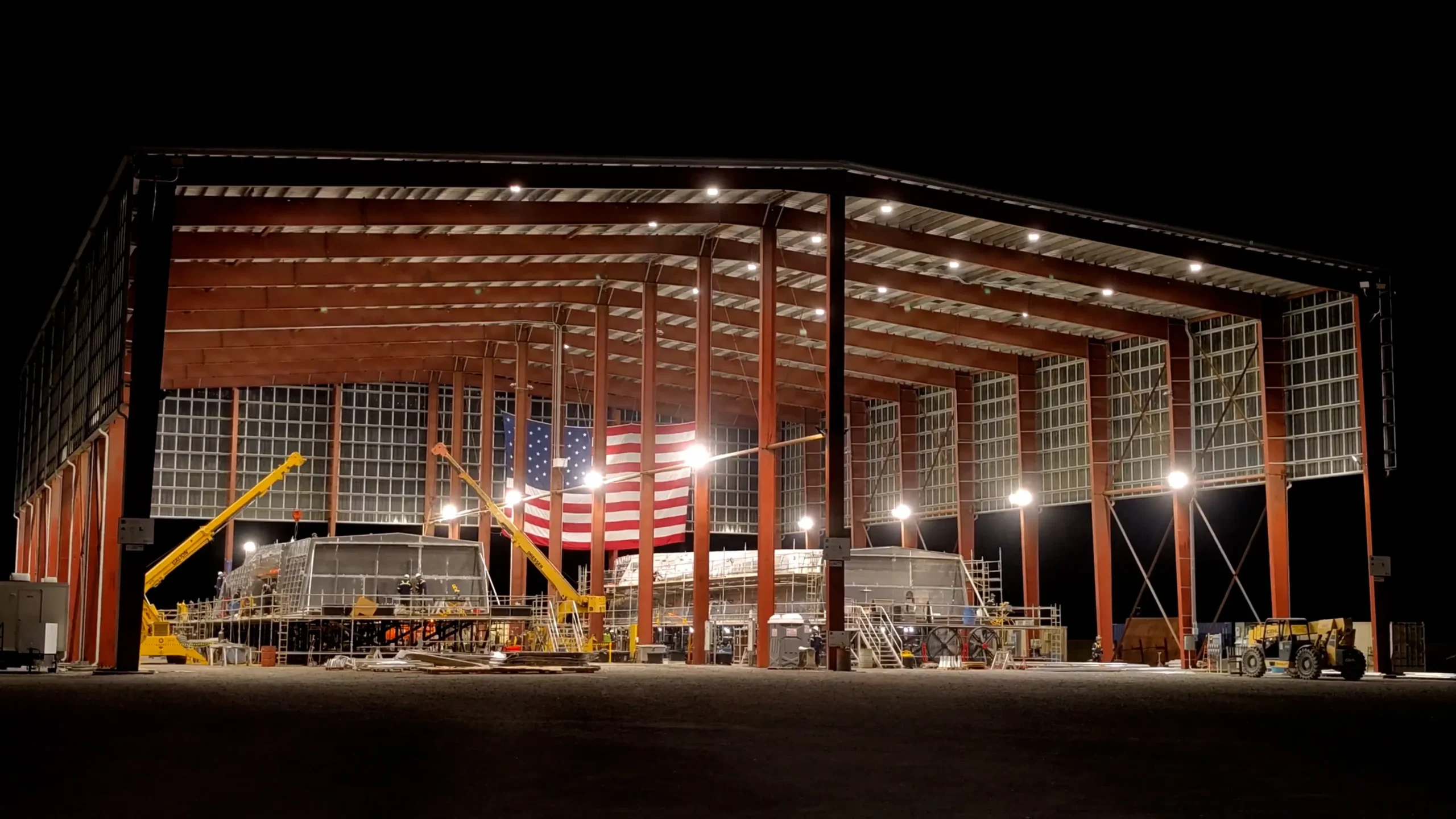
- Saronic has moved fast on the Marauder, laying the first keel in August. They have two of ‘em under construction in Franklin, with the first expected to be in the water by the end of the year before going through internal testing and a demo in Q2 of next year.
- With this $300M investment, Saronic will add more than 300,000 square feet of new production capacity in the Franklin shipyard, which is slated for completion by the end of 2026. That’ll enable them to build an expected 20 Marauders in 2027, co-founder and CEO Dino Mavrookas told Tectonic in an interview.
- That’s on top of the 400–500 smaller ASVs they now have the capacity to produce annually in their Austin facility, where they have a new production line “coming online literally as we speak” that’ll ramp up to 2,000 Corsairs per year, he added.
“This investment in Franklin is literally redefining how we’re building ships, and the scale at which we can build ships,” Mavrookas said. “When we talk about the investment we’re making in Franklin, that’s new capacity, not revitalizing an existing yard. Franklin is a 100-acre yard, 10 acres of which are built out and developed. We’re investing in building out the other 90.”
Seasick: Saronic shelling out the big bucks to boost manufacturing speed and scale is a pretty stark contrast to the broader, beleaguered shipbuilding industry, the defense industry’s favorite punching bag (not least after the Navy’s cancellation of the Constellation-class frigate program).
China’s shipbuilding capacity is estimated at 240X that of the US, and the Pentagon and successive administrations have struggled to revitalize the traditional industry. That’s bad news for anyone worried about a future naval conflict, say, over Taiwan, and that’s fueled a shift towards a hybrid fleet composed of manned ships paired with lower-cost unmanned vessels.
These big infrastructure investments, along with simplified hardware design, advanced manufacturing software, and “manufacturing lines that are actually optimized for the things that you’re building,” are the “only way we get the shipbuilding capacity we need in this country” and “the only way we close the gap,” Mavrookas said.
Shipyard of the future: Beyond their investment in Franklin, Saronic has long teased a futuristic shipyard they’re calling Port Alpha, which Mavrookas said will be “the largest and most advanced shipyard anywhere in the world.” The company plans to invest an eye-watering $5B into building Port Alpha, where he said Saronic will scale up to commercial-scale unmanned vessels.
“We’re still going through site selection, but we’re trying to go through just about as quickly as we can. We’re targeting to bring that online in 2026 and make that productive in 2027,” Mavrookas added. “But if you ask our head of manufacturing, we’re going to pour a concrete pad, put up a tent, and start building ships as we build out that infrastructure. That’s the speed at which we need to operate here, and that’s the speed at which the country really needs.”