Looks like the Europeans got the memo on the whole “prime-startup” partnership thing—and man, oh man, they’re not effing around.
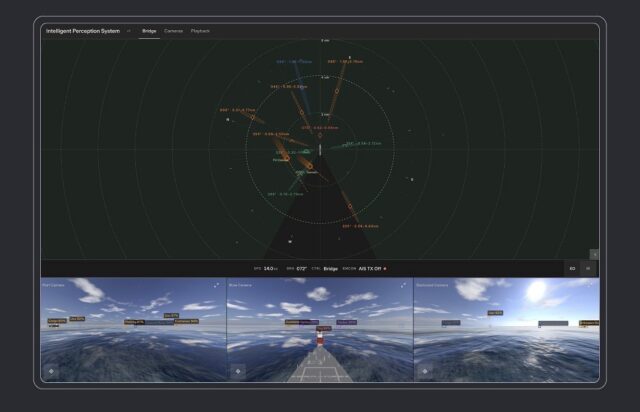
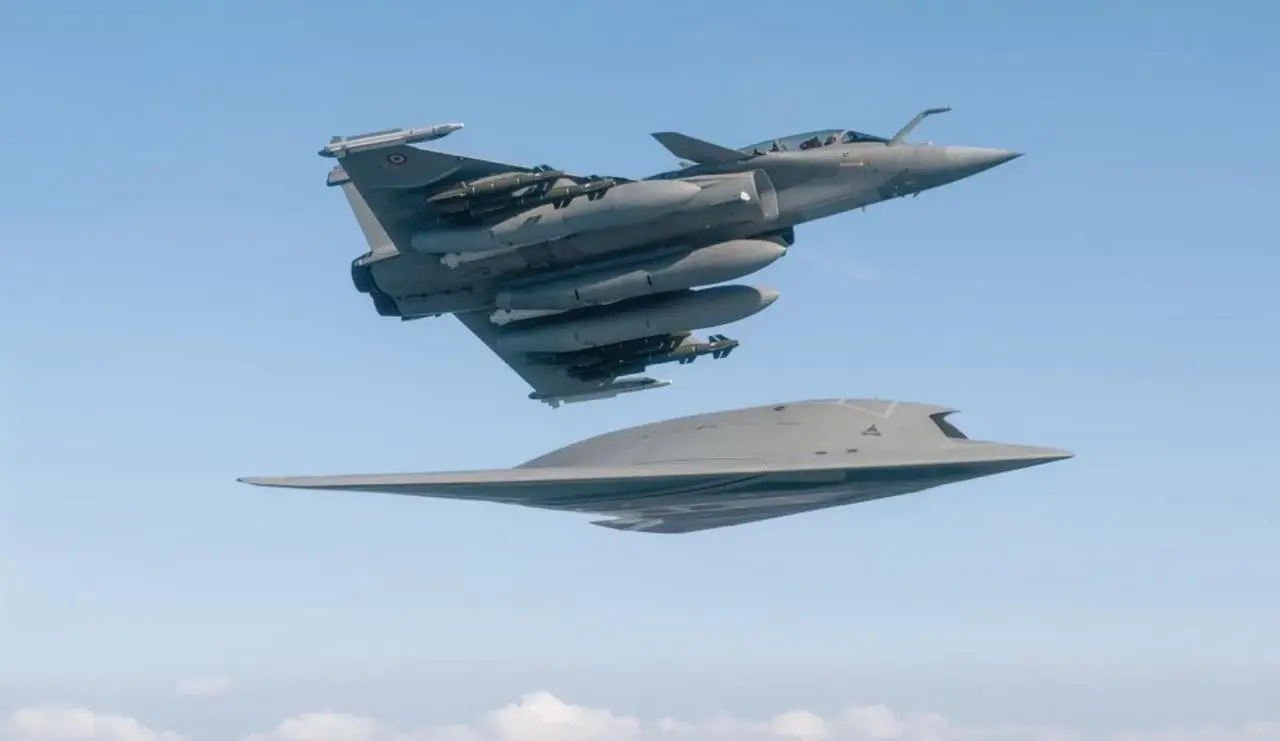
This morning, French autonomy startup Harmattan AI announced that it’s scored a $200M Series B at a $1.4B valuation led by French defense giant Dassault Aviation. Harmattan CEO Mouad M’Ghari told Tectonic that the two companies will work to integrate his company’s autonomy stack onto Dassault’s larger platforms—like the Rafale jet and future unmanned fighters.
“[This isn’t] only a fundraise. It’s also a strategic partnership to build the future of collaborative air combat, integrating our AI technologies into their platforms,” he said.
FWIW: Dassault has a market cap of over $24B and reported $6.2B in revenue last year. Unmanned fighters, here we come.
Super speedy: This ain’t the first time that Harmattan has appeared on the hallowed pages of Tectonic (it’s our birthday, be nice).
The company was founded by wunderkind Mouad M’Ghari back in April 2024, and since then has secured “multiple Programs of Record by the French and UK Ministries of Defence,” according to the company.
- Along with the announcement today, Harmattan revealed that it had raised a total of $42M before this Dassault-led round from investors including Atlantic and FirstMark.
- Back in July, the company announced that it scored a “multi-million-U.S.-dollar contract by a NATO government” for its small, AI-powered drones—but didn’t say exactly who.
- In September, they announced that the UK government had purchased 3,000 of its drones.
Harmattan builds a whole range of drones and drone-based systems out of its headquarters in Paris, including:
- Gobi: A high-speed interceptor drone meant to target other small drones.
- Sonora: A cheap, mini quadcopter designed primarily for training and ISR.
- Sahara: A Synthetic Aperture Radar (SAR) system that the company has designed to be built onto Group 2 drones. The system corrects and refines SAR imagery onboard to (put simply) make images way better without external processing.
M’Ghari told Tectonic that this new mega-pile of cash will help the company scale up its team and production, and play around with some R&D.
“[We’re investing] in product development, in scaling up manufacturing, as well as obviously in scaling globally, especially in our core geographies, which are the US, Europe, and the Middle East,” he said. In the future, he said they could look at other regions—say, Southeast Asia—but that they wanted to “solidify [their] footing in these areas” first.
When asked if his team plans to explore larger autonomous platforms (it’s the new hot thing these days, after all), M’Ghari said they would look at slightly larger kit—but nothing that couldn’t be considered “attritable.”
“All of the platforms that we will build are still in the more attritable domain, but that doesn’t mean we won’t grow the size of our platforms,” he said. “For now, we’ve been building very small and attritable [drones], but we are growing into group two [and] group three UAVs. We are also growing into other domains.”
He added that—in terms of scale—the company will be able to produce 10,000 of their flagship smaller drones a month by June 2026.
Legacy: We don’t spend a lot of time on “traditional” defense companies around here, but Dassault is worth a quick closer look—especially in light of this new partnership.
The company was founded all the way back in 1929, and over the course of the past almost-century has built up an empire of combat aircraft and private jets.
- The Rafale fighter—which comes in single-seat, two-seat, and Navy-specific flavors—is often pitched as a “European sovereignty” aircraft. A fighter without the headache of US export restrictions.
- Because of its private plane business, the company is able to self-fund a lot of its R&D.
- In addition to France, countries including Egypt, India, Qatar, and the UAE fly Rafale fighters.
- Back in November, France announced that it intended to provide Ukraine with up to 100 Dassault Rafale fighters.
And the company has dipped its toes into next-gen and unmanned aircraft and autonomy, as well.
- Dassault is the prime contractor on the FCAS program, but has had major beef with Berlin-backed Airbus. Basically, Germany and France both want to be center stage, and so far, they haven’t played particularly nicely.
- The company has developed a concept unmanned fighter called nEUROn—it took its first flight back in 2012, but was sidelined in favor of FCAS.
“Dassault Aviation has always placed technological excellence and sovereignty at the heart of its values,” Eric Trappier, Chairman and CEO of Dassault Aviation, said in a statement. “This partnership with Harmattan AI reflects our commitment to integrating high-value autonomy into the next generation of combat air systems.”
M’Ghari said that this gives them the chance to help build European next-generation aircraft–without building fighters themselves. “We don’t intend to build fighter jets,” he said. “We are focusing on other types of attritable systems … but our autonomy stack actually has a lot of value for legacy systems that are still very relevant on the battlefield today, especially fighter jets and unmanned fighters in the future.”
And for those worried that Dassault might just be gobbling up Harmattan and its tech: M’Ghari said that the way the deal is set up, Harmattan will be an external partner—they won’t be folded into the Dassault megalith.
“We’re keeping our full independence, and this raise was made on very classical NVCA terms,” he said. “On [Dassault’s] end, they actually want to work with us as an external partner. We see a firm commitment through this investment, but we are keeping our independence.”