Epirus loves a buzzy demo.
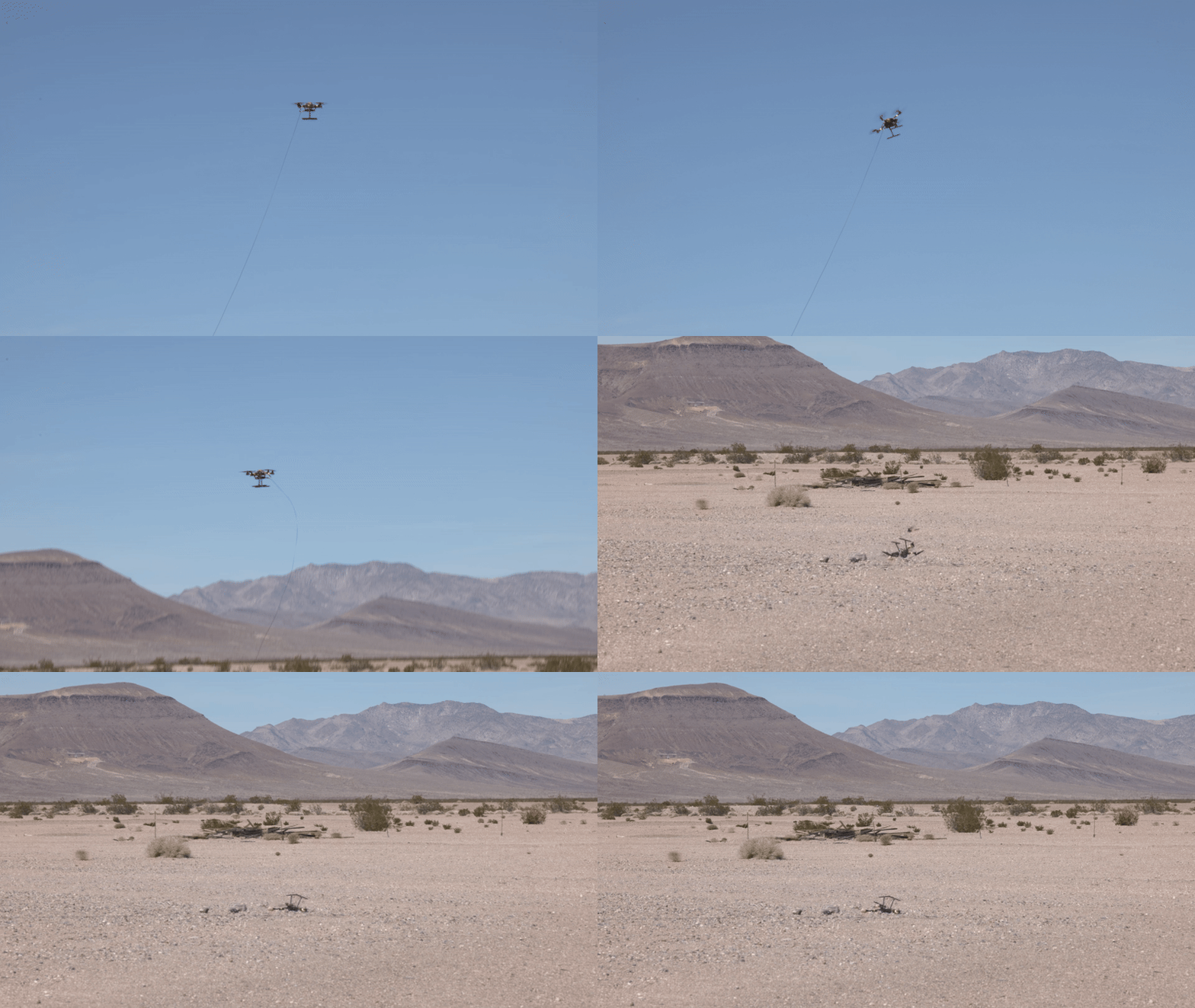
In an exclusive release to Tectonic, directed energy counter-drone startup Epirus revealed that a smaller variant of their flagship Leonidas HPM downed a fiber-optic drone at a government test site in December, which the company called the “first known instance of a weaponized electromagnetic interference system defeating a fiber-optic guided drone.”
Buzzkill: If you’ve been paying attention to the counter-drone space, you’ve probably heard of Epirus. Between raising a $250M 8VC-led Series D last March, securing some serious Army contracts, and developing a knack for going viral with drone swarm-takedown videos, the company has quickly picked up steam with their unique take on how to best defeat small drones.
Instead of jamming, shooting, or hijacking drones, Leonidas pretty much fries their components from the inside, causing them to—ideally—fall out of the sky en masse. Here’s how:
- Leonidas is a vehicle-mounted high-power microwave (HPM) directed energy system that projects intense microwave energy at nearby drones, disabling their electronic components and dropping them out of the sky.
- Its software-defined design allows Leonidas to alter waveforms, adjust energy output, define safe zones, and update the system in the field.
- So far, the Army’s been all over Epirus, awarding them over $120M in contracts for Leonidas under the Integrated Fires Protection Capability High-Power Microwave (IFPC-HPM) program since 2023, including a $43.5M contract last July.
Fun-sized fryer: In their test against fiber-optic drones in Nevada last December, Epirus used a pickup truckbed-mounted, mobile variant of Leonidas called the Leonidas Vehicle Kit (VK), which is a third of the size of the full version.
- Epirus declined to comment on the range of the Leonidas VK, but we’re guessing it’s more designed for close-quarters drone defense than the full-size one.
Jammed up: In super-contested and EW-saturated environments, like the battlefield in Ukraine, fiber-optic drones have emerged as a more effective and resilient weapon than RF-guided drones. According to Ukrainian Deputy Prime Minister and Minister of Digital Transformation Mykhailo Fedorov, Russian forces are using fiber-optic FPV drones with a range of 31 miles that can penetrate standard EW jamming and spoofing countermeasures.
However, they’re still vulnerable at the electronic level, and, according to Epirus, the demonstration showed that “weaponized electromagnetic interference can close a growing operational gap exposed by fiber-optic and autonomous dark drones,” CEO Andy Lowery told Tectonic via email.
“Non-kinetic approaches like high-power microwave offer scalable, one-to-many effects, complementing kinetic defenses by reducing cost, collateral risk, and reliance on interceptors,” Lowery added. “There is no silver bullet in drone warfare, but we believe the Leonidas HPM platform will be an essential part of future force structure to protect personnel, assets, and critical infrastructure from rapidly evolving drone threats.”