HavocAI is putting the collab in collaborative autonomy.
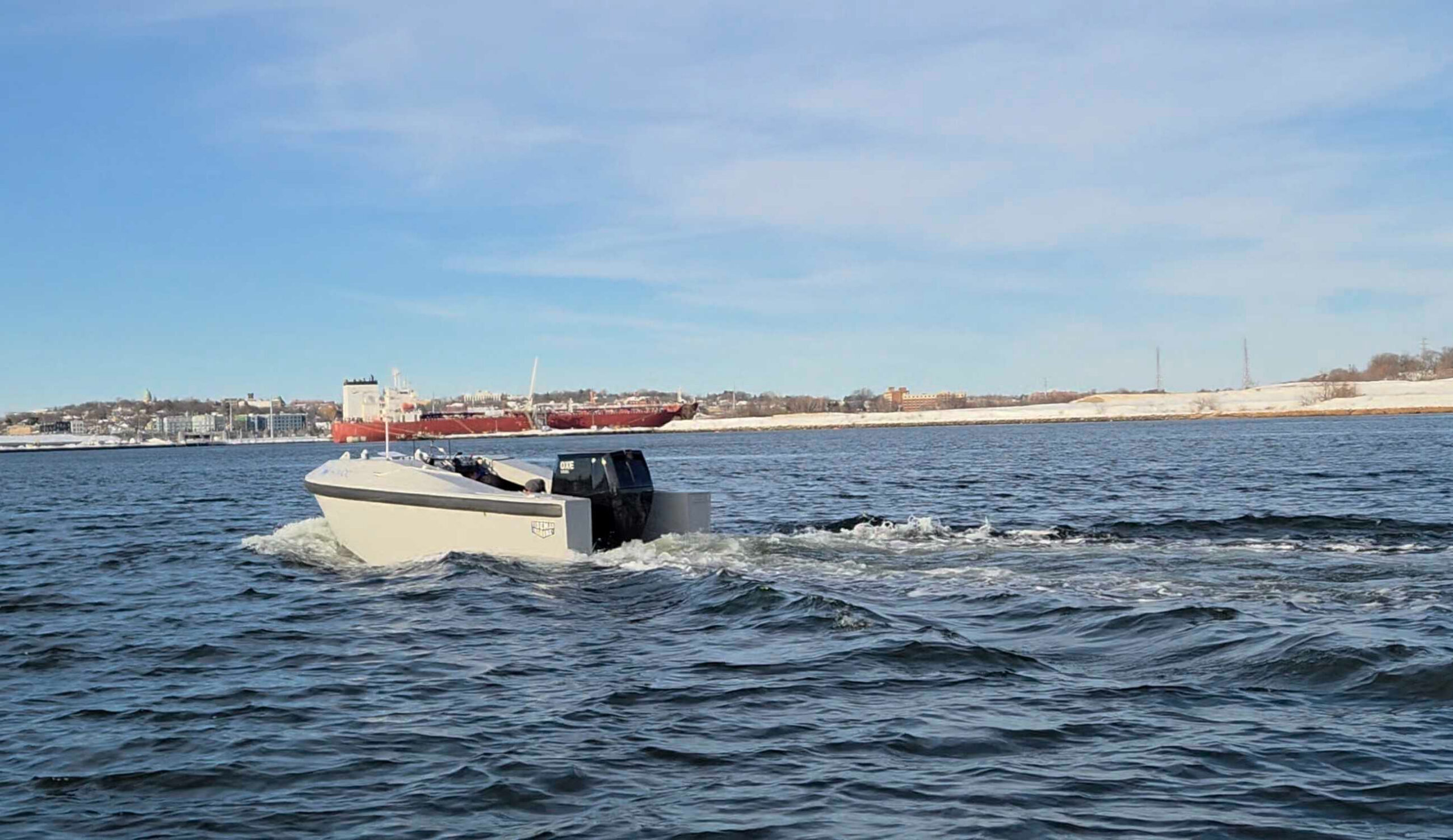
This morning, in an exclusive release to Tectonic, Rhode Island-based maritime autonomy startup HavocAI announced a partnership to put its collaborative autonomy software on Tideman Marine’s six-meter Viper unmanned surface vessel (USV).
Boat buddies: In case you’re new around here, HavocAI, which raised $85M in October, has been making friends all over the place. Among (many) others, they’ve partnered with:
- Lockheed Martin to put Lockheed’s advanced sensors and payloads (read: things that go boom) onto Havoc’s 100-foot USV last July.
- SAIC in November to integrate the defense software giant’s multi-domain comms and data system with Havoc’s USV fleet.
- The US subsidiary of Korean defense giant Hanwha Defense to build a 200-foot-long drone boat last month.
Team up: HavocAI has its own fleet of autonomous USVs—which includes the 14-foot Rampage, 38-foot Seahound, 42-foot KaiKoa, and 100-foot Atlas—but their real calling card is the “ability to turn any boat that meets the customer’s requirements into an autonomous vessel,” CEO Paul Lwin told Tectonic.
“We’ve shown the ability to go from 14-foot to 100-foot [USVs], and we have the software to make any USV an autonomous surface vessel,” he added. “We are open to doing this for anyone, even if competitors need our [collaborative autonomy] software, we will integrate. We don’t play the exclusive game.”
Talkin’ Tide: That clearly caught the attention of Massachusetts-based Tideman Marine, a shipbuilder that specializes in High-Density Polyethylene (HDPE) hulls, a cheaper and more corrosion-resistant material than steel or fiberglass.
Last year, Tideman unveiled its nine-meter Vehicle for Expeditionary Naval Over-the-Horizon Missions (VENOM) USV, which was built and tested for an undisclosed DoD customer, but they’re bringing HavocAI onboard to provide the autonomy stack for a six-meter (roughly 20-foot) variant called the Viper.
- The Viper, conveniently, fits into a 20-foot shipping container , which the company says makes transport and logistics a heck of a lot easier “compared to similar vessels requiring 40-foot containers.”
- It has a 1,300+ nautical mile range at six knots, with sprint speeds up to 41 knots.
- The team kicked off integration and testing of HavocAI’s autonomy software on the Viper two weeks ago.
“This is a USV that they’ve provided to other customers, but it’s more remote control than autonomous. We can easily turn that into an autonomous surface vessel,” Lwin said. “That’s what we’re excited about, and that’s our strategy. With the 14-foot Rampage, we saw a need that no one was filling, but we don’t have to recreate things from scratch that already exist.”
While the Viper is “perfect for kinetic missions” (integrations TBA), the big thing is that it can “collaborate with all our other assets [to create] this heterogeneous fleet,” he added. “This is how we build thousands of vessels over the next two years. They’re going to be all different vessels doing different things, and our strategy is to enable that.”
This article has been updated to correct the name of the USV in the first paragraph to Viper