
Today’s a pretty big day for all of the companies that make the defense tech world we know and love tick.
This morning, cybersecurity company RADICL announced that it’s raised a $31M Series A led by Paladin Capital Group, with participation from funds including Access Venture Partners, Denver Ventures, and Cervin Ventures.
RADICL Co-Founder and COO Dave Graff told Tectonic that the new cash money will be used to scale up development and go-to-market for the company’s flagship AI-powered “virtual security operation center (vSOC),” designed to keep small and medium businesses in critical industries safe from cyber attacks.
“Small and medium-sized businesses are woefully unprepared to handle the adversary threats that are coming at them,” Graff said. “That’s especially when we look at the defense industrial base, which is a passion of ours.”
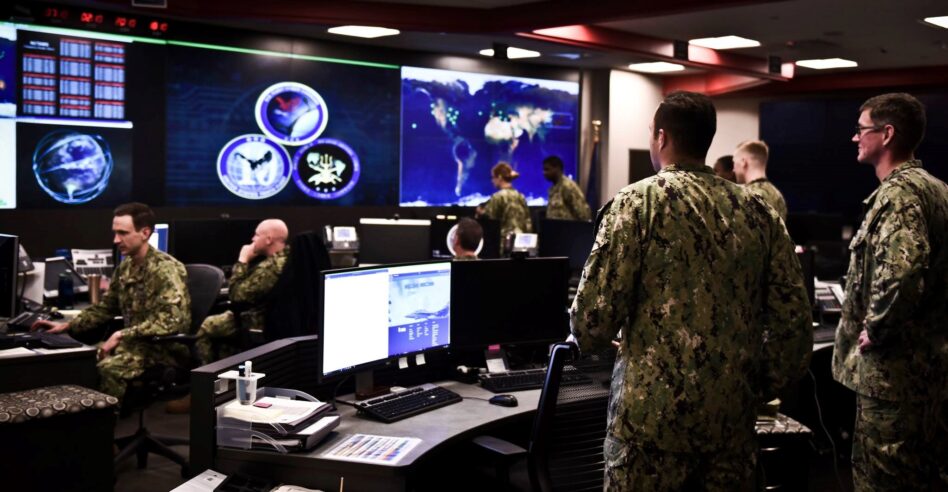
Force multiplier: RADICL bases its model on a pretty standard concept in cybersecurity—the security operations center (SOC), a centralized, dedicated unit of IT dudes who monitor, detect, analyze, and respond to security incidents in real-time. Except in RADICL’s case, those IT professionals are actually AI-powered agents.
- The lack of human constraints means that even as a business scales, companies don’t need to up their cyber team.
- Graff said that larger cybersecurity companies and services are focused on enterprise: Their platform is specifically designed for teams of up to about 500.
- And about 80 percent of their 100 or so customers are from the defense-industrial base, including startups like Red 6, Allen Control Systems, HavocAI, VATN, and Firehawk Aerospace. Makes sense, considering Graff himself is a former fighter pilot and Skunk Works employee.
The Colorado-based company calls the whole shebang “Cybersecurity-as-a-Service (CSaaS),” and handles everything from threat detection, investigation, response, and remediation. They also provide compliance support and embed things like CMMC (Cybersecurity Maturity Model Certification) and NIST 800-171 into their operations.
- If it hasn’t clicked for you yet: The compliance side of things and the cybersecurity side of things go hand in hand. When a company realizes they’ve got a hole or weakness, RADICL is right there to help protect them. “We’re able to bridge [compliance and cybersecurity] together to give [customers] that full, single-screen capability set,” Graff said.
RADICL also works for other compliance-heavy industries (think critical infrastructure), but the focus is definitely on the defense side of things.
Threat assessment: And why is this all so important? Well, Graff says that the fairly transparent nature of the DoD regarding the work it’s doing with small and medium companies makes them a pretty easy target.
“They publish lists of…these up-and-coming technology companies, and it’s before the point that they’ve really hit a maturity level where they can defend themselves,” he said. “So, if I’m a threat adversary, I’m looking at this as a target list.”
Plus, he added, with the spread of AI, cybersecurity is becoming ever more difficult to maintain with a human team. “We are getting to the point where we’re going to have adversarial AI against defensive AI,” he said. Better to make sure you’ve got trained-up AI cyber agents now, rather than later.
RADICL’s team is currently at around 50 people, and Graff said that this funding will fund expansion both in R&D and go-to-market—though they haven’t set an exact target for team size yet.
He also said that a big chunk of the funding will be used to make sure that in-house developed automation and AI are tip-top. They’re also planning to expand the threat assessment function and bring on more customers.
Rise of the robots, indeed.