Defense tech isn’t all drone swarms and software. Sometimes the basic stuff is the most important.
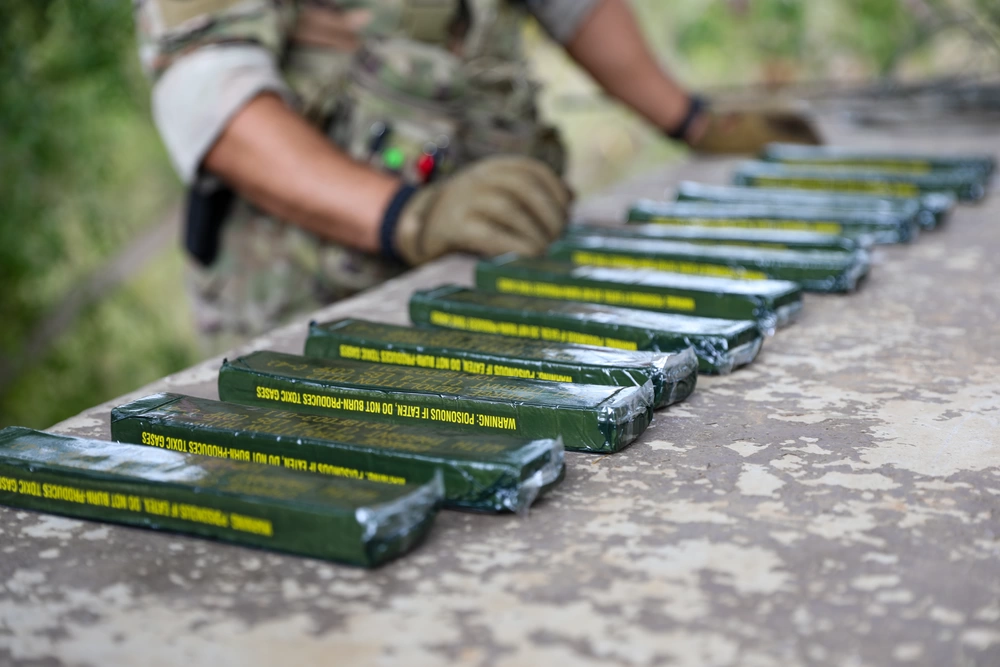
Today, in an exclusive release to Tectonic, Texas-based energetic material startup Critical Materials Group (CMG) emerged from stealth to solve an old problem with new tech: Making more of the stuff that makes things go boom, starting with C-4, using automated manufacturing processes.
CMG, led by former Mach Industries President and Chief Strategy Officer and longtime Army Special Forces operator Kevin Capozzoli, was founded, simply, to produce “military-grade energetics at scale,” he told Tectonic.
All about that base: That’s good news for the Pentagon, which has repeatedly identified energetics production as a “single point of failure.”
- The Army’s Organic Industrial Base (OIB) and the Defense Munitions Industrial Base (DMIB), especially for basic explosive material like C-4, face “systemic issues with supply chain fragility” and are “struggling to ramp up the production of munitions,” a 2023 Army report found.
- Right now, the bulk of the Army’s C-4 and its primary ingredient, RDX, is produced at a single keystone plant: The Holston Army Ammunition Plant in Tennessee, a government-owned facility operated by BAE.
- Like the rest of the defense industrial base, dozens of mergers and acquisitions have left a handful of primes in control of the energetics market, and “inconsistent funding has discouraged industry investments,” the Army said.
- That’s led to production chokepoints, demand far outstripping supply, and antiquated manufacturing processes.
Bringing the boom: That’s where CMG comes in. The startup, which has a bootstrapped plant coming online in the next few months and deliveries starting this summer, is on a mission to make energetics production safer and more efficient by bringing some of the new-age manufacturing tech we all know and love into an industry that still relies on manual (read: dangerous) processes.
“There are relatively large singular points of failure, so we’re looking to decentralize [production], bringing automation into play, and take advantage of competitive processes that allow for faster, safer, and more significant production rates,” Capozzoli said. “For C-4 production, we have a semi-automated process that’s built to be automated, and we’re under a proposal right now that’ll help us fully automate the process.”
Seller’s market: Given both the US and allied militaries’ appetite for explosive material, they’ve found suitors right out of the gate. According to Capozzoli, CMG is currently under one contract with a foreign government (he wouldn’t say who), and they’re “talking to US stakeholders, who are super excited about what we’re building.”
Even though the market is super consolidated (and hating on the primes is in vogue), CMG isn’t trying to take anyone down. “This isn’t about competition—this is about increasing capacity,” he added. “There isn’t an incumbent we’re trying to displace. We’re commercializing technologies that allow for faster and more distributed production, and I think there’s plenty of room for other folks.”
What do they say about a rising tide?