The state of the UNION is growing. (Bada-bing!!)
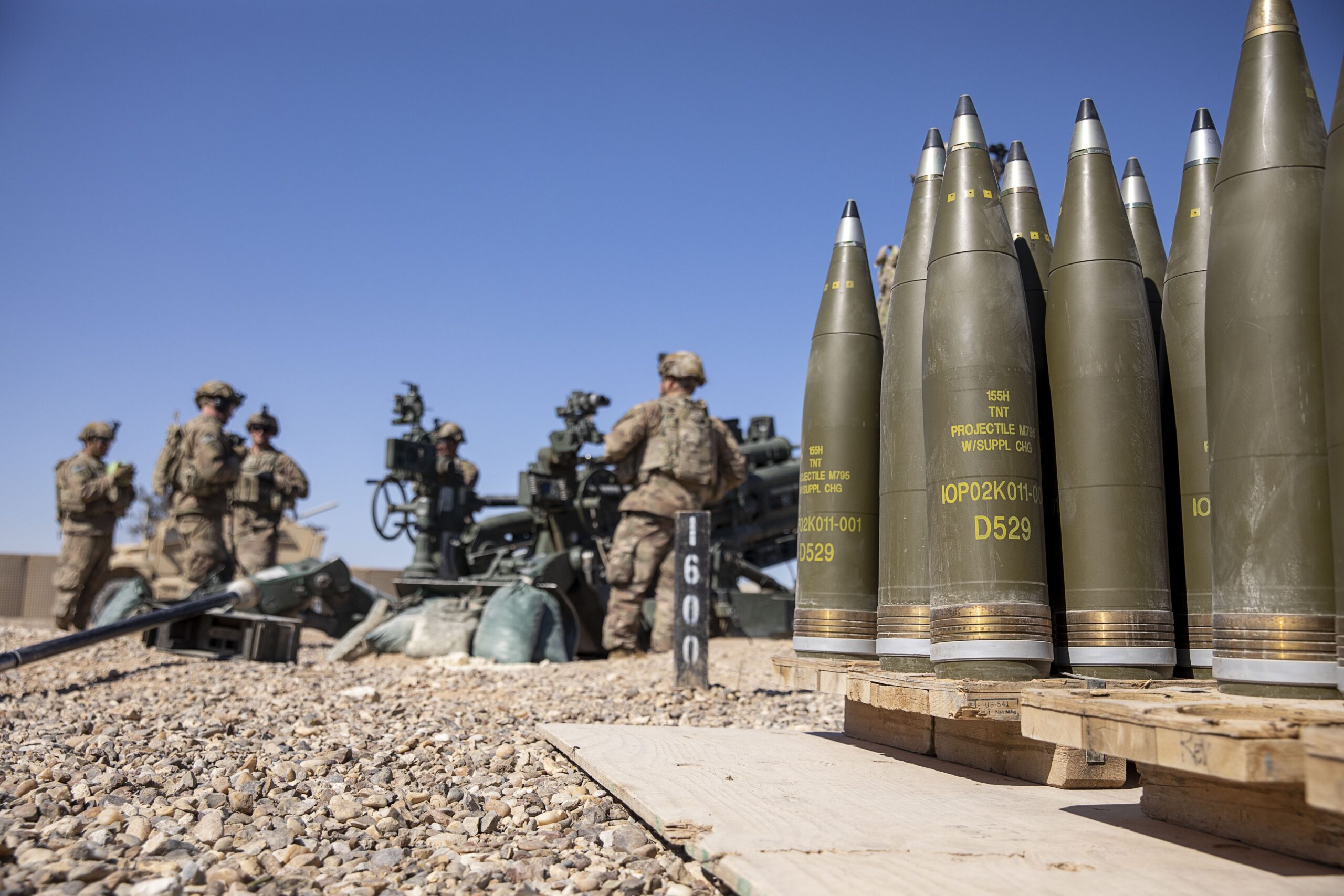
Yesterday, Texas-based software-defined factory startup UNION announced a partnership with Hanwha Defense USA, the US arm of the South Korean mega-prime, to speed up production of 155mm shells.
Hegseth may be saying the US has plenty of munitions—but sounds like UNION’s betting we’ll want even more.
Rippin’ rounds: Since 155mm rounds weren’t extensively used in Iraq and Afghanistan, a lot of Pentagon planners thought the century-old munition was growing obsolete in modern warfare.
Like a lot of defense thinking, Ukraine has flipped that upside down—the country’s military fires more than 5,000 rounds a day, on average, and around 2M annually.
The exploding (get it?) use of this artillery has shown how important the munition could be in a future conventional fight, and the US Army has rushed to pump out 100,000 155mm shells per month by late 2025. Production (and spending) has ramped up, but the US is still below that target.
Munition moves: UNION, which raised a $51.3M seed (yes, seed) led by Regulus Global and BVVC last year, wants to use software-defined manufacturing, modular production lines, and smart factories to close that gap, with a little help from their friends at Hanwha.
According to UNION, the startup’s secret sauce is in its two flagship software products:
- Faction: UNION calls this its “command” platform. Basically, it’s a factory-controlling system that “replac[es] disconnected legacy systems with intelligent agents that take action in real time.”
- Fabric: This is what UNION calls “the execution layer,” where machines can learn from changes and mistakes. It “transforms disconnected machines into responsive systems” and helps them configure and adjust without a ton of human input.
On the 155mm front, UNION can “gather the data at each machine and tell you what time it went in, what steel lot it came from, how much energy went into it, what the exact temperature was, what the state of the tooling was in CNC, and all of the data contained in that one part,” CEO and former Navy SEAL Garrett Unclebach told Tectonic. “It’s certainly a new approach to defense manufacturing that we’re bringing to the 155mm, so it’s very attractive to Hanwha.”
The initial focus will be on metal parts and components before potentially moving into other areas, including energetics. (UNION also announced a partnership with 3D-printed propellant hotshot Firehawk, another Hanwha partner, last month.)
On Hanwha’s side, they make the barrel, fuses, and other components to deliver a fully integrated munition, instead of the fragmented approach most other US government-owned plants take to assembly.
Before we get ahead of ourselves, UNION’s factory isn’t yet pumping out 155mm parts just yet, but once the production line is set up, “we’ll be putting our first rounds out in September,” Unclebach said. Even though the focus of the startup’s partnerships with Hanwha and Firehawk has been on the 155mm, “UNION doesn’t just make artillery—we make factories, and this is just the first one.”