In case you weren’t aware, defense isn’t always about the stuff that goes boom. Sometimes it’s about the (arguably much scarier) stuff we can’t immediately see. Lucky for us, a newly funded startup is here to help.
This morning, Dutch biotech company Inbiome announced that it has raised a $16M Series A co-led by the NATO Innovation Fund (NIF) and a group of investors led by Michiel Boehmer and Slingshot Ventures.
The company says it will use the funding to expand its IVDR-certified Molecular Culture ID platform, which is basically an ultra-fast and low-lift way to figure out what is causing a bacterial infection. Currently, the platform is approved for use in Europe and is gunning for FDA approval in the US.
This supports NATO’s mandate to strengthen both civilian resilience and military medicine readiness for antimicrobial resistant pandemics and bio threats,” NIF Partner Erin Hallock told Tectonic. ”We know that during conflicts, infections increase, both for civilians and for war fighters…this technology enables fast and accurate detection so that you’re not effectively playing roulette.”
Buggy: You might be sitting there thinking, like, why is Tectonic talking about medical testing and why the heck has the NIF invested in it? Well, friends, do we have some news for you. Biothreats are real, infections on the battlefield are getting nastier and more widespread, and it’s all really, really scary.
Inbiome was set up to try and identify and treat these pathogens more quickly and more effectively.
- The company was founded in the Netherlands back in 2019 by brothers Dries (CEO) and Jord Budding.
- Basically, they saw everyone making testing more in-depth, but more and more complicated. “[People were] going into new sequencing technologies to sequence the whole genome, and we had the idea early on [that] this is not going to make things easier, just going to add complexity. So we went in a completely opposite direction,” Dries told Tectonic.
- Instead, they wanted to build something that would use existing hospital tech and testing infrastructure—just churn out better results, and faster. “Everybody thought we were crazy, but now…we turn out to have chosen the right path,” he added.
Speedy quick: The result? A nifty platform that basically tells you what is making someone sick—and why, based on genetics.
- Typical microbiology relies on “culture-based methods” that were developed over a century ago. Basically, you take a sample and see if certain bacteria grow in it—that takes days. Plus, it also often fails.
- Plus, another plot twist—bacterial infections are increasingly antibiotic resistant, especially in conflict zones (largely due to the overuse of antibiotics and other mutations).
Futuristic: Instead, Inbiome has built a PCR-based platform that can identify a bacterial infection within five hours using AI analysis—plus, they’ve got a 50 percent higher hit rate than their old-school counterparts.
- Though it’s built on PCR, the platform gives a much more detailed response than the “positive/negative” results we got used to during COVID. It gives a full readout of the bacteria present in a sample—and tells you what, exactly, is causing the infection.
- The company uses existing testing infrastructure—that means no added overhead costs.
- The tech was IVDR certified—medical device certified for the EU—last year and is deployed in hospitals throughout Europe.
- The company has received FDA Breakthrough Device Designation in the US and is working towards full approval.
On the frontline: In case the dots haven’t connected yet, this kind of tech could be a game-changer on the battlefield.
- On the frontline in places like Ukraine, bacterial infections are rampant. Antibiotics are blanket-prescribed, which then leads to the growth of drug-resistant infections.
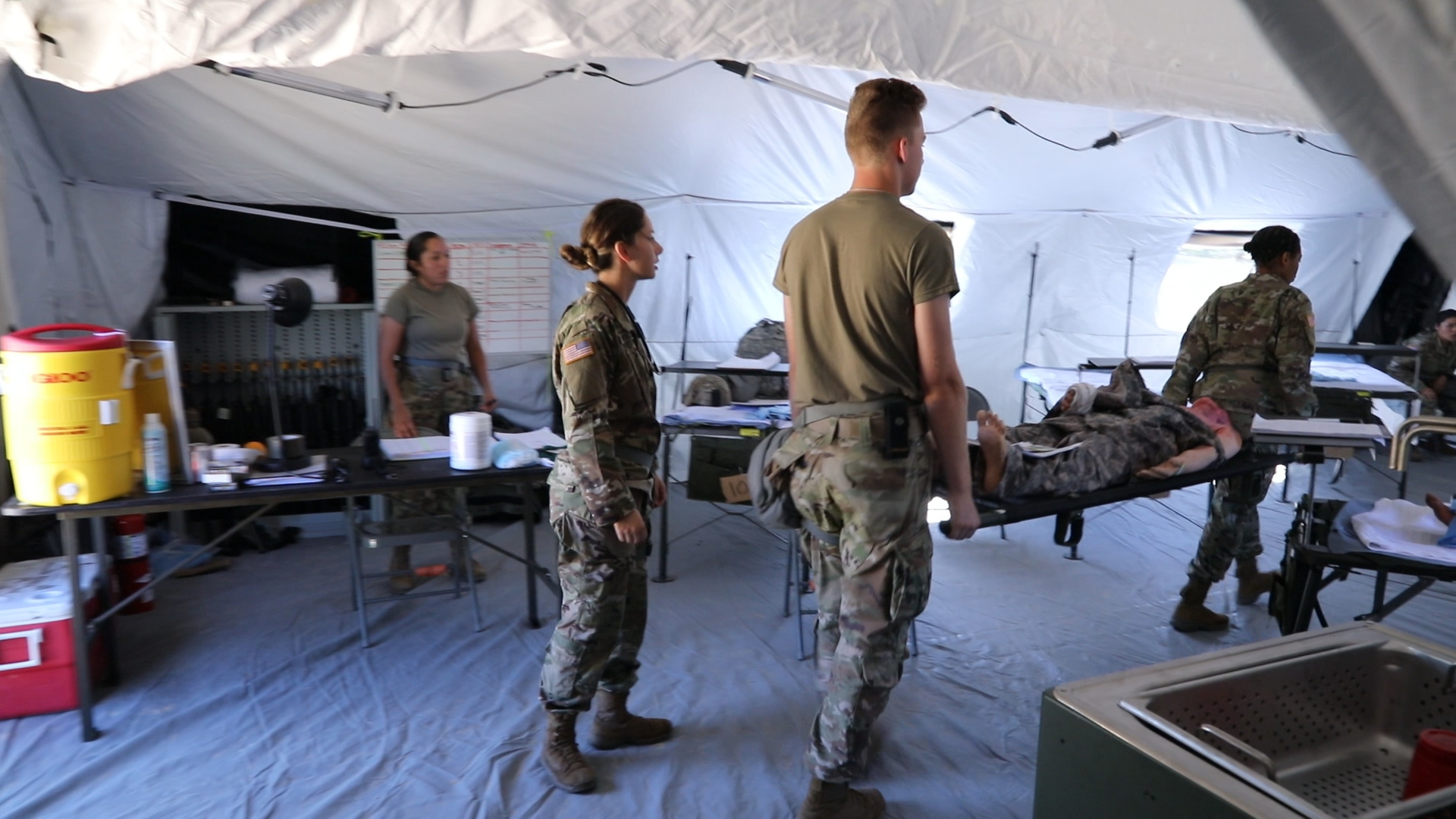
- If people in frontline hospitals and forward-deployed medical testing units (the company is working to build these, too) can figure out what, exactly, is making someone sick so they can treat it with the right drug or antibiotic.
- The test could also be used to screen for a wide range of pathogens, like, say, new and unknown ones that show up on the frontline and seem pretty suspicious.
“Antimicrobial resistance has risen to such high levels that we now see that on the battlefield in Ukraine, for example, 80% of wounds are affected with multi-drug-resistant bacteria,” Dries said. “A lot of people are now again dying from these…simple bacterial infections.”
The money is pretty much going to go towards getting that FDA approval (because they have the breakthrough device designation, they “get an accelerated pathway through the regulatory approval there,” Judd told Tectonic) and growing the team.
They’re also working on other “novel applications,” Dries said. “One of the things we’re now making is also an add-on application that can actually identify the specific genes that are contributing to resistance,” he added by way of example.
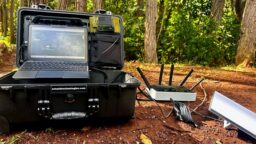
- They’re also working on a testing setup that would fit inside a shipping container and could handle up to 500 of these tests a day—basically the flow of your standard hospital.
Hallock said that the reason why they invested—and why Inbiome is primed to scale—is that it’s managed to make something revolutionary quite simple.
“It’s been 70 years, and the technology hasn’t fundamentally transformed,” she said. “Inbiome has identified something which is fairly simple, superficially, but it dramatically improves outcomes.”