Well, the dronemakers are certainly stepping up their game.
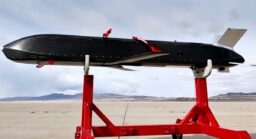
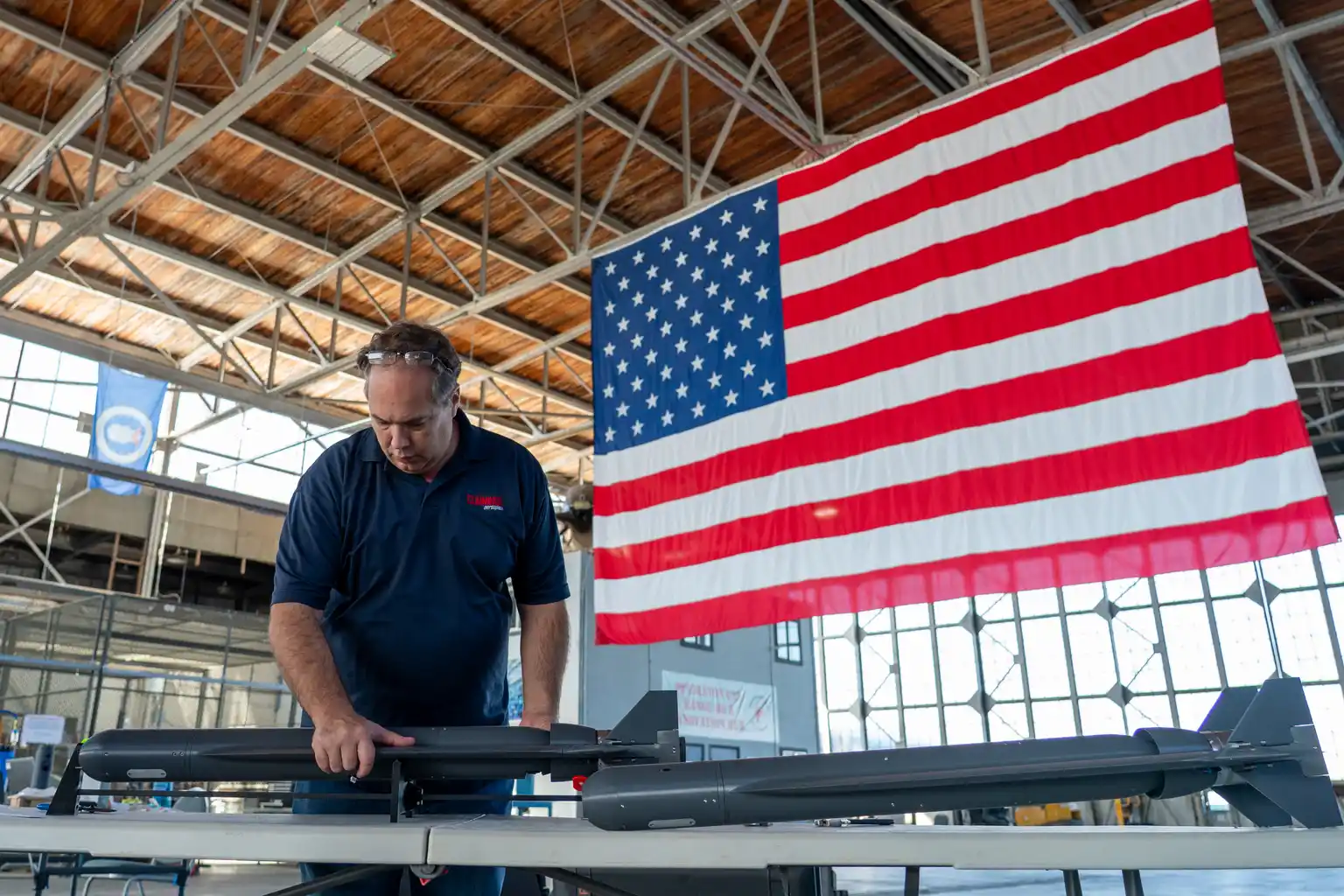
This morning, Huntsville-based Cummings Aerospace announced that they’ve successfully completed arena testing for an anti-armor warhead for their three-foot-long Hellhound S3 drone.
Cummings founder and CEO Sheila Cummings told Tectonic that the warhead-equipped drone was able to blast through several sheets of steel—mimicking a tank or iron-clad building.
“We can now very confidently show that, based on not only our analysis but our test results, we have an anti armor loitering munition multi mission capability for the warfighter,” she said. “[It demonstrated] our ability to engage heavy armor, vehicles and…structures with heavy armor.”
Down south: Cummings doesn’t have a name that comes from LOTR, so you may not have heard of it.
The company was founded back in 2009 by Cummings and made a name for itself helping the US government build, design, test, and model A&D systems.
- They’ve got a couple of patents, including one for a ballistic guidance method (2019) and a modular aircraft structure (guessing that’s Hellhound, in 2025).
- They’ve received about $39.5M in prime contracts and $123M in subcontracts, according to Obviant data.
Go hard: The company unveiled Hellhound as its first in-house hardware product last spring.
- The drone is a loitering munition/one-way effector meant to inflict a lot of pain in a pretty small package.
- They’ve got two variants, the S3 (three feet and less than 25 pounds) and the S4 (56 inches and less than 45 pounds).
- The S3 has a range of 60km and a top speed of 384+ mph; the S4 can be launched from 130-140 km and has a flight time of 1.5 hours.
- The whole thing is designed to be modular—they’ve got preferred warhead suppliers (three for the anti-armor warhead, for example) but can integrate third party systems and (importantly) into third-party C2.
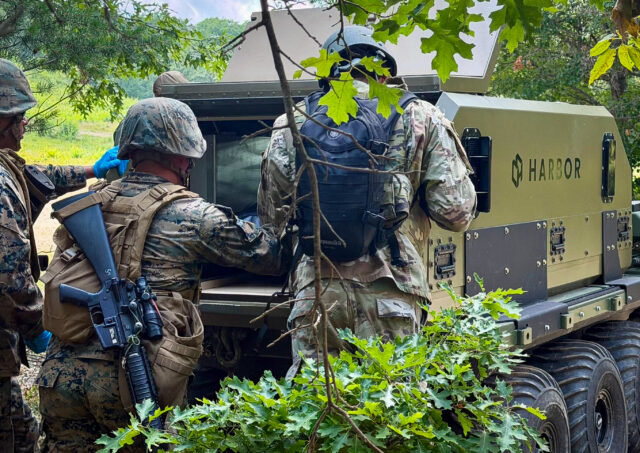
Plus, they can be hand or ground-launched, which makes them a pretty good option for forward-deployed operators in the field. Cummings talked us through an ideal use case.
“You’ve got an operator in the field. He’s got a man portable hellhound with an anti-armor warhead as one of the payload options in his rucksack,” he said. “He gets a call to take out a target, sets up his Hellhound, integrates the payload with the anti-armor warhead, launches the vehicle, gives it the target location, and the vehicle flies to that designated spot and engages that target.”
The company uses its own guidance system (they’ve got a patent, after all), but works with other suppliers for components throughout the aircraft.
Plug it in: To date (like, pre the anti-armor warhead), they’ve successfully integrated a couple of different payloads:
- Armor-piercing module
- Electronic warfare module
- Decoy module
- Blast-fragmentation module
Build up: Right now, Cummings is working on scaling up manufacturing capacity for Hellhound—they’re currently at about 1200 for an aircraft with the light-armor payload, and 2000 for ISR or EW (no warhead). They’re also demoing for a range of customers (like, most of the services) in the next year, and gearing up for an anti-armor flight test in the coming months.
Cummings is betting that speed combined with that steel-blasting capability will be, erm, impressive to users.
“There’s not a system out there that goes at the range that we go, at the speed that we go, and carries the payload capabilities that we offer, and delivers that in both the man-portable and aware ground mobile system,” she said.