There’s a lot of energy around fusion lately.
Yesterday, Avalanche Fusion, a Seattle-based fusion startup making teeny tiny desktop-sized fusion reactors, snagged a $5.2M contract from DARPA to turn nuclear radiation into electricity for nuclear batteries under the Pentagon research agency’s Rads to Watts program.
Teeny tiny: Most fusion startups are thinking pretty big, working towards reactors that produce enough power to feed into a grid or entire military installations. Avalanche is going small.
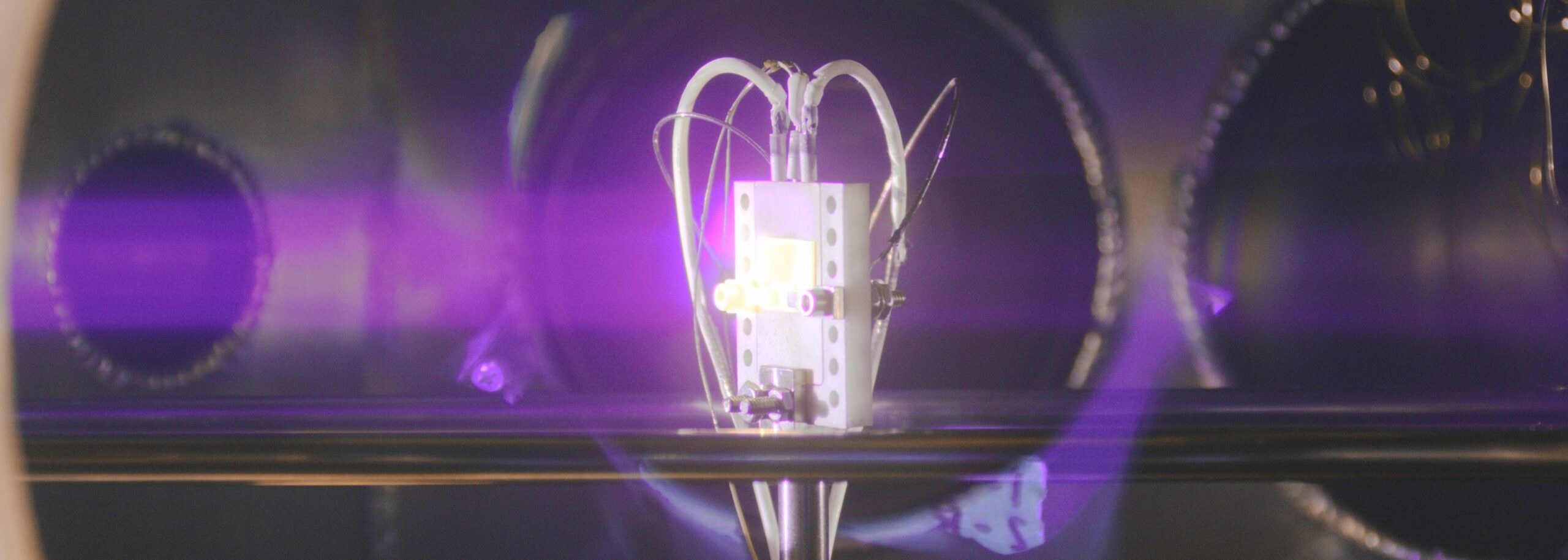
The company is developing a “beer keg-size reactor” called Orbitron, designed for applications ranging from remote power for forward operating bases to in-space propulsion and defense systems, particularly underwater vehicles, Avalanche materials science lead Daniel Velasquez told Tectonic.
“Our device is going to operate at about 600 kilovolts, and in the last couple years, we have achieved a number of milestones,” Velasquez said. “We’re the first fusion company to reach 300 kilovolts last year. That’s something that’s never [been] done before, so we’re kind of halfway there.”
Pretty rad: DARPA says Rads to Watts is designed to develop radiovoltaic capabilities that directly convert nuclear radiation into electricity for more efficient and modular radiovoltaic batteries. Here’s how that works:
- Radiovoltaic batteries convert radioactive decay directly into electricity by striking a semiconductor, releasing electron-hole pairs (the fundamental electrical charge carriers in semiconductors), and creating a current similar to a solar panel using radiation instead of light.
- The problem is that these nuclear batteries are “historically very low efficiency [and] have a very [short] lifetime,” Velasquez said. By downsizing the unit’s footprint, Avalanche increases the gradient—the combined force of an electrical potential difference and concentration of electrodes—which allows ions “to travel around and produce a large number of ionization events” because of the higher probability of fusion reactions.
- The power output would be lower than that of the microreactors other startups are developing, but Avalanche’s bet is that many Orbitron units can operate as a modular and distributed resilient energy supply that can be combined to scale up output for different applications.
Pretty rad: DARPA’s Rads to Watts program and Avalanche’s contract for it aren’t exactly to build Orbitron itself, but they support Avalanche’s broader goal of developing small-footprint fusion power systems and the direct energy-conversion tech that powers them.
Specifically, Avalanche will develop and validate solid-state, tiny energy conversion cells that aim to deliver more than 10 watts per kilogram—enough to continuously power a laptop-type system for months—in environments ranging from space to the subsea.
“The direct energy conversion technologies we’re developing under Rads to Watts will be essential for extracting power from fusion reactions efficiently,” Avalanche CEO Robin Langtry said in a statement. “We’re building the capabilities today that will enable tomorrow’s fusion systems to deliver reliable, portable energy for defense, space, and commercial applications.”