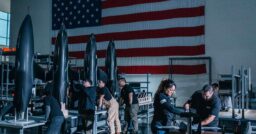
Advanced manufacturing might be all the rage in 2026, but (yet another!) startup out of El Segundo has a different take on it.
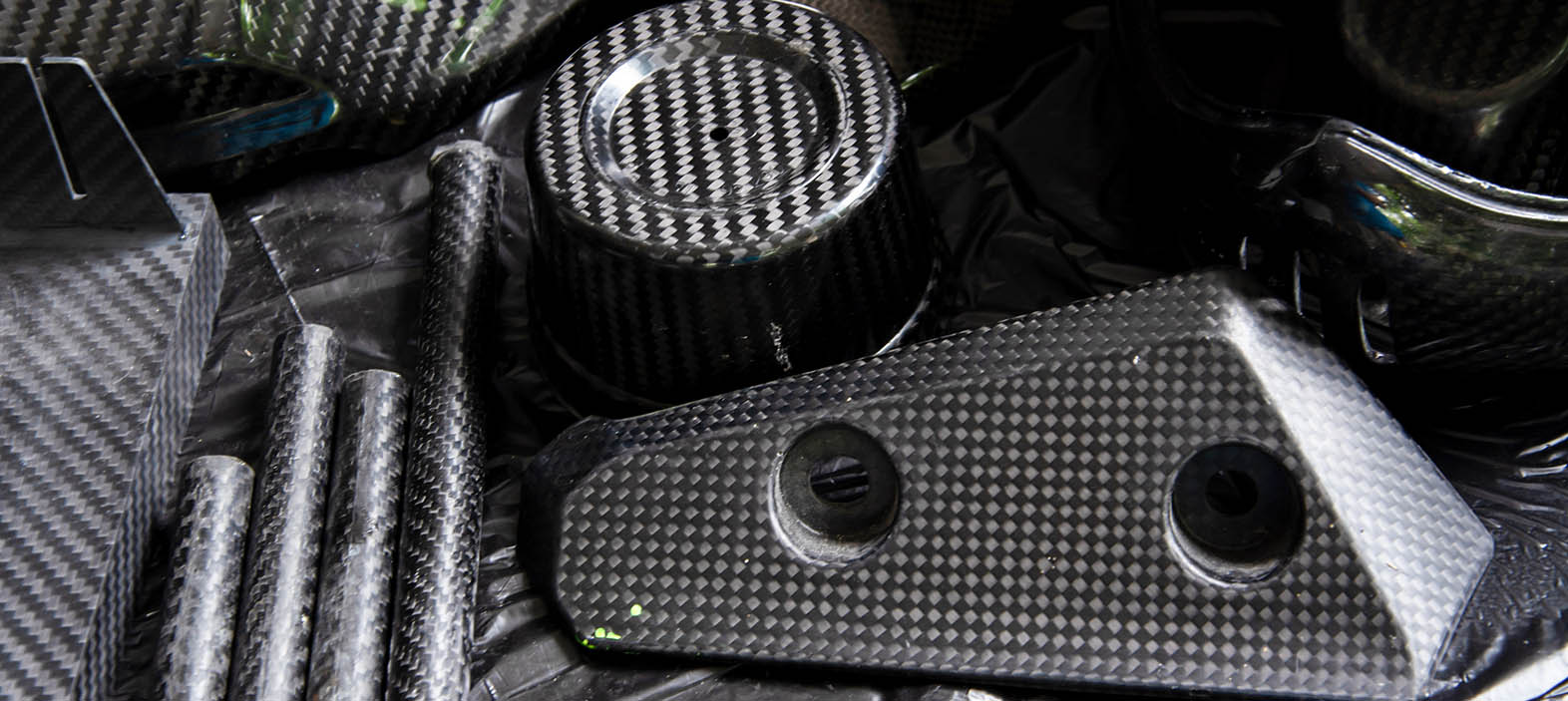
Late last week Hybron—an advanced composite manufacturing startup producing carbon fiber components to replace steel and other raw materials in everything from jet engine blades to 155mm shells—announced that it’s raised a $25M seed round led by Marque Ventures.
And they ain’t just raking in funding for the hype. CEO Brennan Lieu told Tectonic that the company already has a nine-figure contract on the books.
Factories of the future, baby.
Material world: Most of the advanced manufacturing companies that have been dominating headlines this year are focused on building those factories of the future using robotics, AI, and automation software. Hybron doesn’t think that’s quite enough.
The problem, according to the company, is that, because of the raw materials supply chain, even if you bring a bunch of robots onto the factory floor, “you’re only really automating how to dig a deeper hole of dependence on the CCP,” Lieu said.
“If you’re trying to automate production with CNC machining or metal 3D-printing, those are all just speeding up [manufacturing] while not solving the underlying dependence problem with China.”
That’s what Lieu and his co-founder, Aaron Guo, are working to fix. The pair met in high school while working at a small composite company building components for racecar engines and “saw that these composite materials are a lot stronger, lighter, and more corrosion-resistant than metals, but they’ve only really been used for exquisite systems where cost and production scalability are not an issue,” Lieu said.
They’re looking to make their composites mainstream in the military.
- The startup uses carbon fiber composites and high-pressure molding to replace metal parts in systems ranging from jet engines to artillery shells.
- The result, they say, is “repeatable production cycle times of 10 to 15 minutes—after having made and tested over 4,000 parts—five times cheaper and 100 times faster than traditional manufacturing.”
Composite cash: That approach has secured them some serious interest from customers.
- Their first products off the press were carbon fiber composite compression blades used to “convert old aircraft engines for power generation use in AI data centers,” Lieu said.
- Jet engine blades are cool and all, but the US Army had a different idea, and “basically said, ‘You need to apply this technology to build composite 155mm shells,’” he added.
- That traction has led to a big-time contract—we’re talking nine-figures big—with a major European munitions manufacturer to build 155mm shells made from carbon fiber composites.
“You’ve seen a lot of IDIQs—this is not an IDIQ,” Lieu said. “The floor of the contract is over $100M, and the ceiling is $600M.”
Seeing green: That contract was a big reason Hybron decided to raise $25M in fresh capital—and a big reason why the seed round was oversubscribed.
- Marque Ventures led the round, with participation from First In, DTX Ventures, Veteran Ventures Capital, Ultratech, Bravo Victor Venture Capital (BVVC), Gaingels, and others.
- That capital brings Hybron’s total funding to roughly $30M.
Coming out of the seed round, Hybron’s laser-focused on that European contract and is directing that new money towards “artillery shell qualification and scaling production to reach low-rate initial production of 1,000 shells per month before we start to hyper-scale,” Lieu said. “It’s really to start executing on the contract we already have, as well as to expand the team and build capacity for other products.”