If you’re a regular reader of Tectonic, you’ll know that there’s no shortage of companies promising to automate aviation.
But before robots take over the cockpit, the US military’s human pilots could use a bit of AI assistance to solve a much more basic problem: Scheduling flight plans and managing disruptions without needing a whiteboard and marker to keep things on track.
Luckily, Austin-based startup OpsLab is here to help–they’re building an AI-powered scheduling tool to keep flights on track. And this morning, the company announced in an exclusive release to Tectonic that it’s officially scored its first contract with the Navy to deploy its software to the service’s largest F/A-18E/F Super Hornet squadron.
This comes on the heels of more than a dozen contracts with the Air Force that have put the software in the hands of over 3,000 pilots across 70 squadrons.
Old school: OpsLab was founded in 2019 and, since then, has remained pretty firmly focused on the defense side of aviation.
If you’ve recently experienced a six-hour delay in middle America and are sitting there thinking, like, “Wait, why?” well, the Pentagon’s pilots—unlike their commercial counterparts—are pretty much forced to schedule and plan flights by hand.
“Unfortunately, for whatever reason, in the Air Force and Navy, even in NATO member nations, it’s the pilots who do all of this admin work. They fly all day, then they’re stuck in the scheduling shop, fixing the schedule for the following day,” OpsLab co-founder and CEO Arun Nair told Tectonic. “You would never see this in the commercial airline sector, where you have an army of schedulers doing this for you.”
- Nair spent 11 years on Wall Street designing and programming trade execution platforms before launching OpsLab with his co-founder and grad school classmate Sujeev Sanjeevi.
- Sanjeevi (OpsLab CTO), a PhD mechanical engineer, spent his pre-OpsLab career in commercial aviation building software for “algorithmically solving routing challenges.”
- The two initially focused on commercial aviation, but pivoted when the Air Force saw their early work and gave them some R&D funding to get off the ground.
In the lab: With that early backing from the Air Force, OpsLab built out their core software platform, SkySchedule.
- The tool automates flight scheduling, reworks schedules due to weather disruptions, forecasts readiness shortfalls, and keeps track of pilot availability.
- It’s integrated with a bunch of the legacy systems airmen use to pull data into the platform automatically to create an “end-to-end Enterprise Resource Planning (ERP) tool so they don’t have to go to 10 different systems anymore or do all this integration work manually,” Nair said.
That’s been a bit of a hit with the Air Force, and now the Navy wants to get involved.
- OpsLab has secured a dozen contracts with the Air Force, including with squadrons operating a range of manned aircraft and unmanned systems, including MQ-9 Reaper and RQ-4 Global Hawk drones.
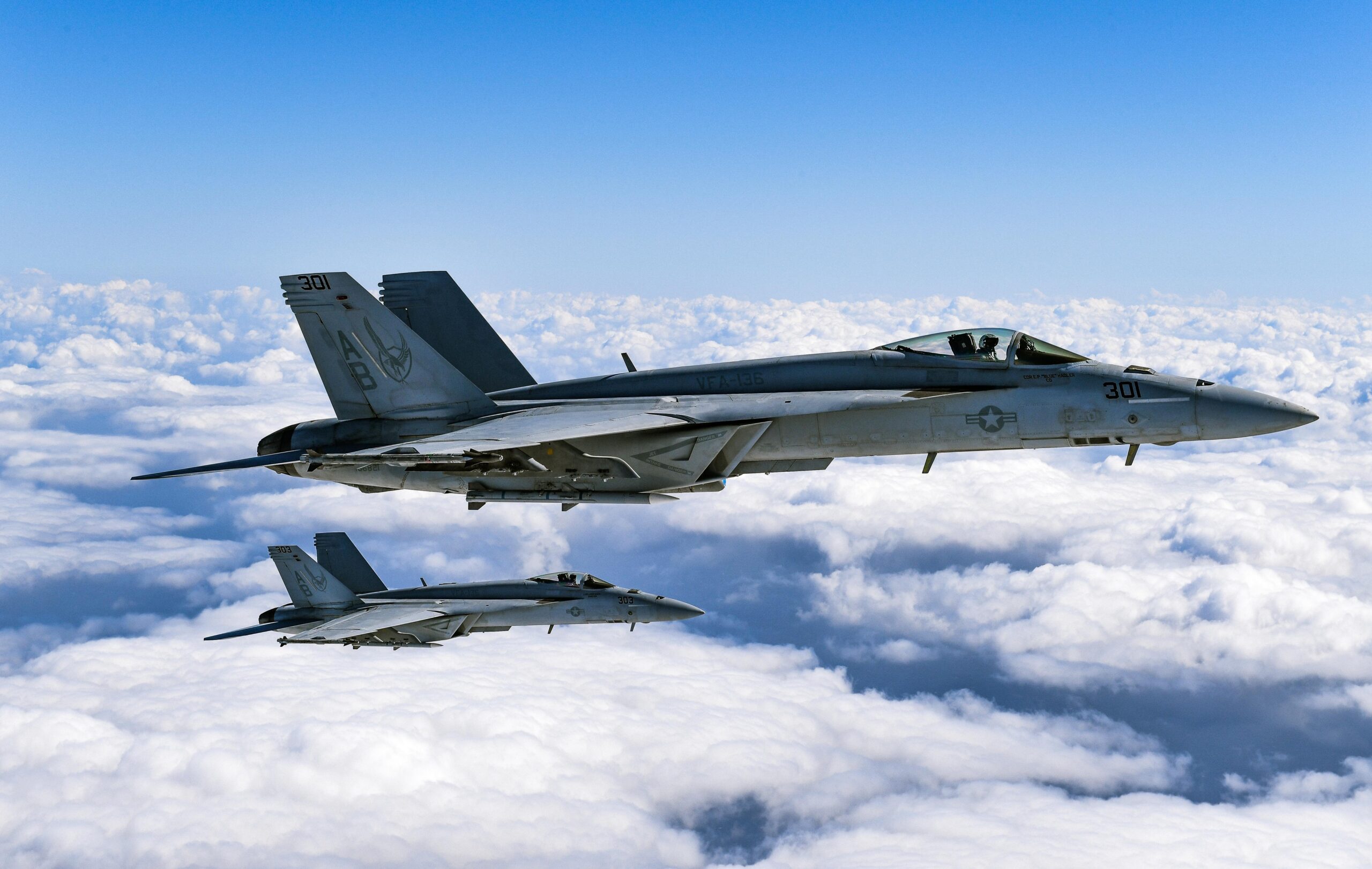
- Under their first Navy contract (an SBIR Phase III), the service’s—and the world’s—largest F/A-18E/F Super Hornet squadron at Naval Air Station Oceana in Virginia Beach, Virginia, will get their hands on SkySchedule. Nair couldn’t disclose the total contract value.
- In total, SkySchedule is in use with over 3,000 users across more than 70 squadrons at air bases across the country, along with a handful of allied air forces.
Going to work with the Navy is “very different, and Navy culture differs from Air Force—they run their planes into the ground and run them really hard,” Nair said. “We had never seen that kind of rough usage and equipment [failures], so in the case of the Navy, how we handle the mission changes is a bit more nuanced, but it is pretty exciting.”
Ultimately, OpLab is looking to become a kind of “operating system” for allied air operations, rather than just a one-off scheduling tool for individual squadrons.
“The next phase is focused on the larger aircraft with multiple compartments, like the B-52 bombers, and the C-130 and other cargo aircraft,” Nair added. “Over the last two years, we made a big push to start working with NATO member nations, and last year, we started working with the UK Navy as well…That’s kind of the journey we’re on.”