We told y’all the Europeans were coming.
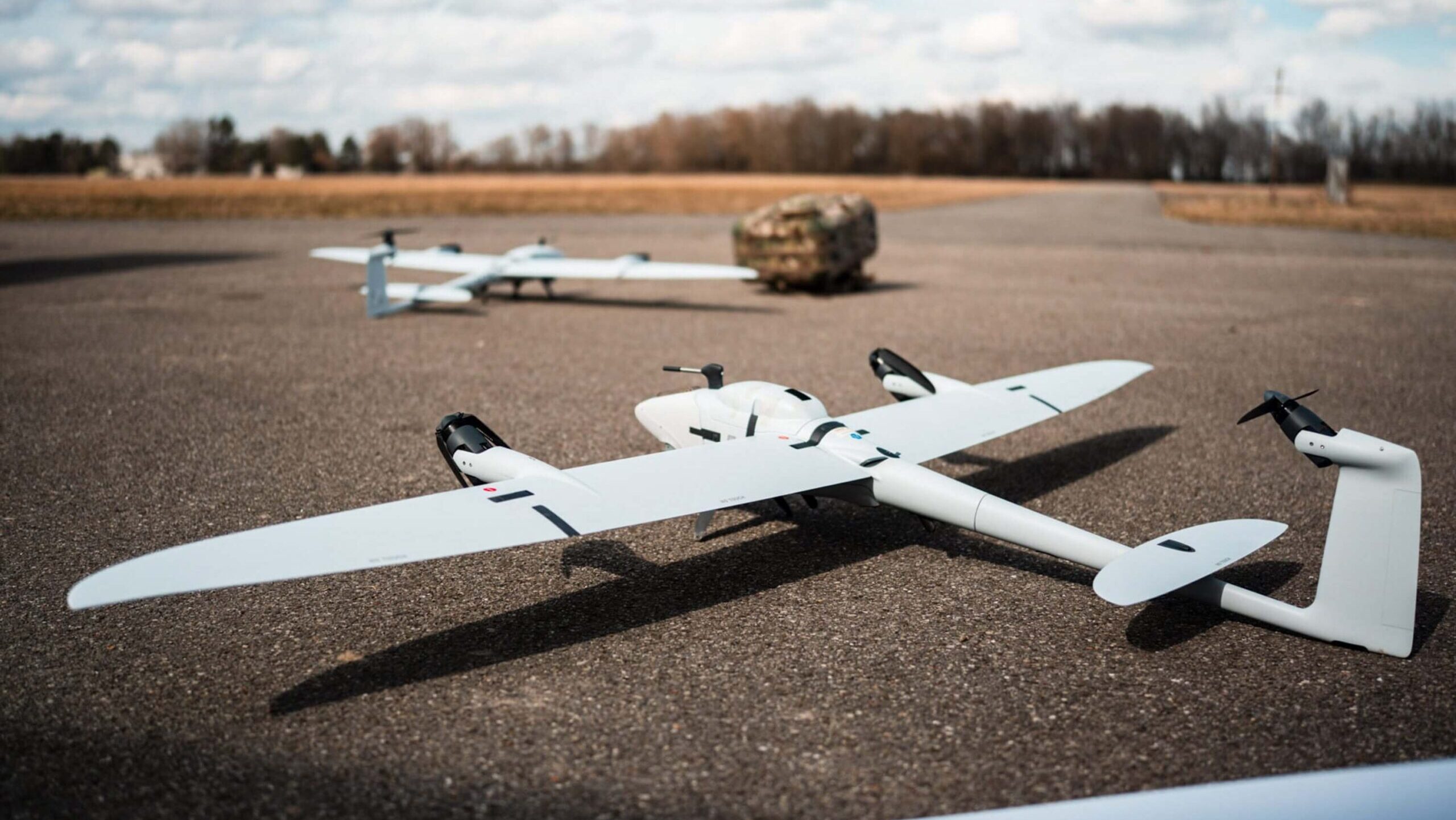
Yesterday, German drone (but, importantly, not strike drone) giant Quantum Systems announced that it’s scored a $15.3M contract for its Vector AI drones with the US Army to deliver “advanced aerial intelligence capabilities to Brigade Combat Teams of the U.S. Army.” This marks the company’s first major Pentagon order.
The drones will be purchased under the Company-Level sUAS Directed Requirement (DR) 2 initiative—basically a fast-track program to field small drones to maneuver units, like, now, to see if they’ll work for the planned Medium Range Reconnaissance (MRR) program.
- MRR is the Army’s future program of record for company-level drones for reconnaissance. DRs are laying the groundwork for MRR, according to the service.
“Today’s battlefield demands unmanned systems that are adaptable, resilient, and proven in real-world operations,” said Dave Sharpin, CEO of Quantum-Systems Inc (the US subsidiary of Quantum Systems). “The Vector platform has logged more than 20,000 operational flight hours in Ukraine alone, where operational use has helped refine its autonomy and mission adaptability in contested environments.”
Between this and the Ukrainians killing it at Drone Dominance, it sounds a lot like the trans-Atlantic competition might be heating the f up.
Alles gut: You probably know Quantum Systems as a German drone hotshot, but the company has actually had operations in the US since 2022.
- The US setup is headquartered out of Moorpark, CA, where they’ve also got a ~135,000 sq ft production + integration facility.
- To date, the US subsidiary has scored about $60.4M in contracts with the USG government (according to Obviant data), a lot of it with the Bureau of International Narcotics.
- The company (like the whole international shebang) also has contracts with countries including the US, Germany, Spain, Romania, Australia, and Ukraine. The largest of these is a $246M drone order with the German Armed Forces, announced last year.
Pie in the sky: Quantum Systems—run by co-CEOs Florian Seibel and Sven Kruck—makes a few different drones. Worth noting—they do less of the “go boom” strike stuff and more “eye in the sky” ISR kind of stuff. Here’s what they’re working with:
- Vector: A mid-range ISR eVTOL drone
- Trinity: A fixed-wing drone for mapping
- Twister: A short-range ISR drone
- Reliant: A long-range ISR drone
In February, they also unveiled a new UGV (cross-domain, baby) called MANDRILL. All of this runs on a bespoke “multi-domain command and control platform” called MOSAIC UXS.
Big bucks: And the company (can’t really call it a startup anymore) has been absolutely raking in cash.
In December, they raised a €180M Series C extension at a €3B valuation led by Balderton Capital, followed by €150M ($178M) in financing backed by the European Investment Bank (EIB), Commerzbank, KfW, and Deutsche Bank in February.
In total, the company has raised over $738M, according to Pitchbook data—most of it in the past year.
- They’ve used a lot of that money to buy up companies, including Fernride (ground autonomy), AirRobot (copter drones), Unmanned UK (drones), and Spleenlab (autonomy and AI).
Head of the pack: Quantum Systems says Vector was selected for this new, shiny Army contract after “a competitive evaluation process that assessed aircraft performance, payload integration, and interoperability with emerging Army software architectures.”
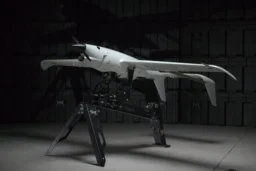
- The eVTOL drone is essentially a super-charged extra set of eyes in the sky for maneuver forces. The 1.5-meter-long drone can operate at maximum altitudes of about 4,000 meters (13,123 feet) and “supports reconnaissance, surveillance, and target acquisition through AI-enabled mission planning, advanced electro-optical sensing, and vision-based targeting,” even in contested and jammed environments.
- The whole thing can be sent skywards by one operator, takes about five minutes to set up, and can fly for 180+ minutes at a range of over 40 km.
- Vector reportedly costs around $200K (though not confirmed by the company), and while that may sound like a lot, it’s a hell of a lot less than a $15-30M MQ-9.
Look out y’all—that trans-Atlantic wave looks like it’s starting to head the other way.