Tag, you’re it!
In an exclusive release in Tectonic this morning, big-time prime KBR announced that it’s tapped Tagup’s AI-powered defense logistics software to bring some startup spice to its “global logistics mission sets,” starting off with ground equipment maintenance and logistics planning operations.
In 2026, the unsexy side of defense is turning out to be one of the sexiest. No flash or boom needed.
Manifesting it: After spinning out of MIT in 2017, Tagup launched its flagship inventory management platform, Manifest, to provide military logisticians with an easy-to-use tool for simulating and generating mission planning options based on historical maintenance and supply data and regular stock updates.
- With platforms like helicopters (or, in the KBR partnership case, ground vehicles), for example, that might include data on past and future maintenance rates; spare parts needed, their weight, and their availability in a certain installation’s inventory; fuel usage; delivery timelines; budgets; and tools needed for upkeep on the mission.
- For critical supplies like medicine, that might include shelf life, purchase rates and budgets, availability, quantity needed for the mission scale, and storage requirements.
- Tagup has worked with Marine Corps units on both use cases—starting in 2024 on the medical logistics front and since last year on aircraft readiness.
Here’s how it works:
- Users on Tagup’s Manifest platform can see and select available equipment at an installation needed for a certain mission.
- They can input the mission length, budget, time to reliably replenish (TRR), and other information, either by manually selecting and inputting the variables or by writing it out in plain English in their newly released chatbot, Argus.
- The platform then spits out all of the supplies needed for maintenance and performance, with options based on different priorities, to help planners visualize tradeoffs and settle on the best course of action.
“In the medical context, you might have things that are somewhat unique, like cold storage for narcotics,” Tagup CEO Jon Garrity told Tectonic. “You don’t have to worry about that for ground vehicles, but you still have to think about how many of these parts you stock or purchase in this location, so although the domains seem very different, the concepts are exactly the same, and it does work very readily for additional applications.”
Right now, that’s pretty much done on spreadsheets using basic averaging functions. Tagup’s pitch is that their AI model can help logisticians manage uncertainty and competing missions to allocate scarce parts, labor, money, transportation, and time. Unsexy, but pretty dang important.
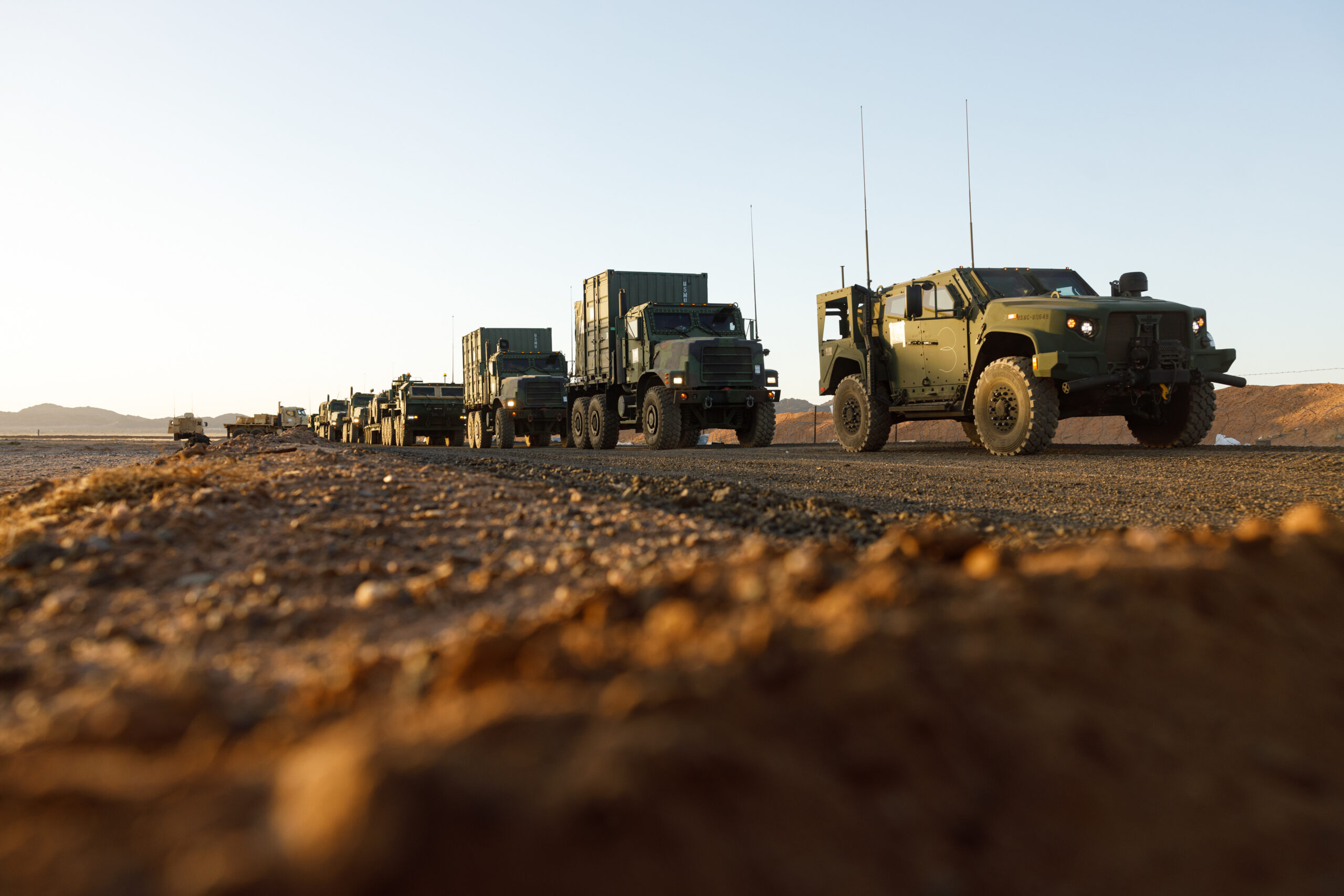
On the ground: On the KBR front, Tagup’s tech will start out with predictive maintenance for ground vehicles (the companies couldn’t confirm customers or which contracts they’ll be working on), but they’re viewing that use case as the starting point.
“When there’s a given requirement for an exercise or a mission, what material should be mobilized to support that operation?” Garrity said. “Those are all sorts of decisions that we’ll support working with KBR, and those are the decisions KBR makes every day at scale, and we’re helping them make them surgically.”
“If you look at examples in the Middle East right now related to maintenance challenges, for example, a lot of those incidents are driven by one, lack of visibility, but two, the lack of the ability to plan effectively and adapt to the challenges at hand,” he added. “It’s an imperative for us or any other company, [especially] the big logistics services providers, to adopt these technologies to drive higher levels of productivity, efficiency, and capability for the end customer.”