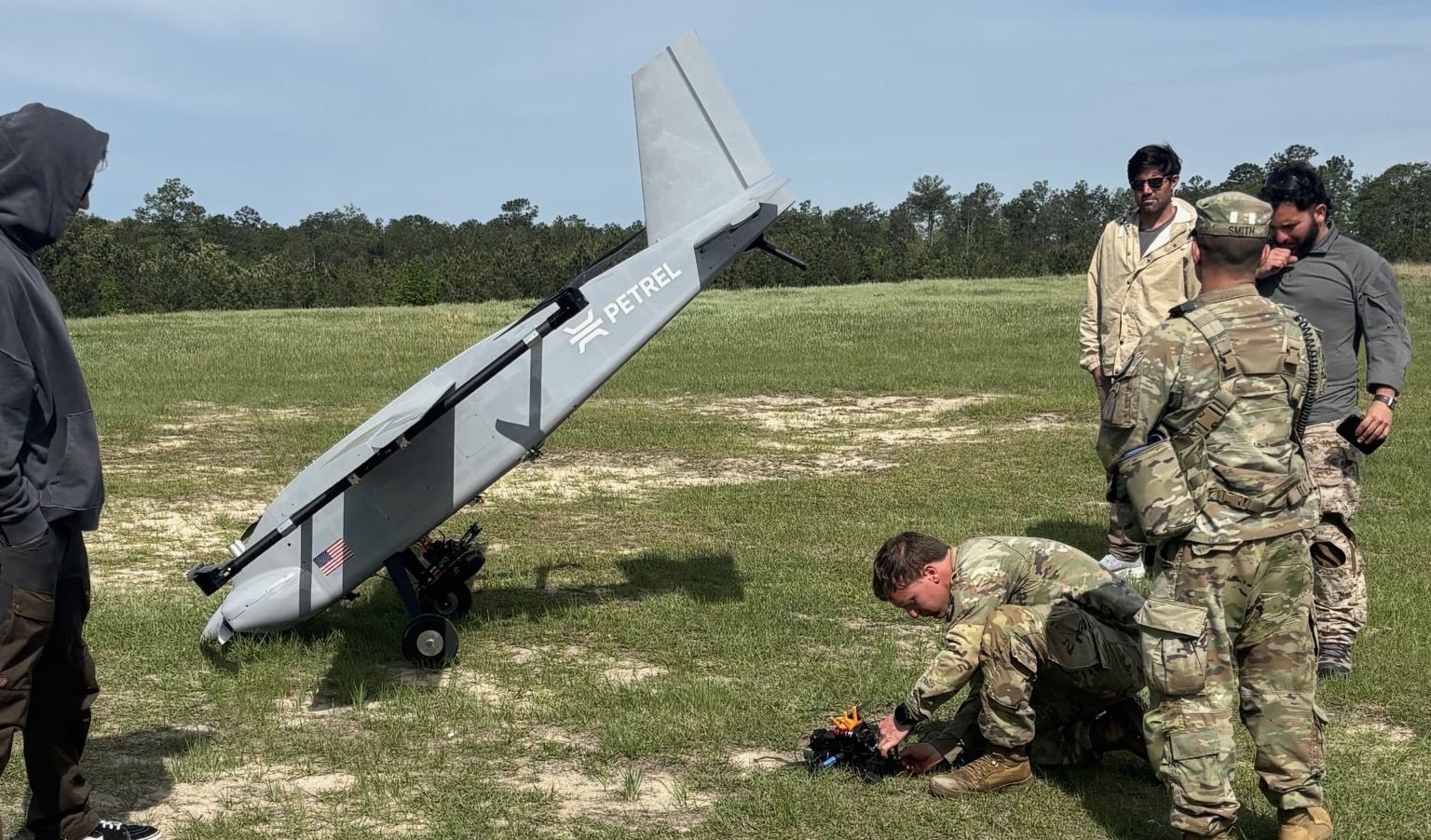
The Army, to put it simply, is pretty into its drones these days. They’re so into drones that they’re even testing out big drones that launch small ones.
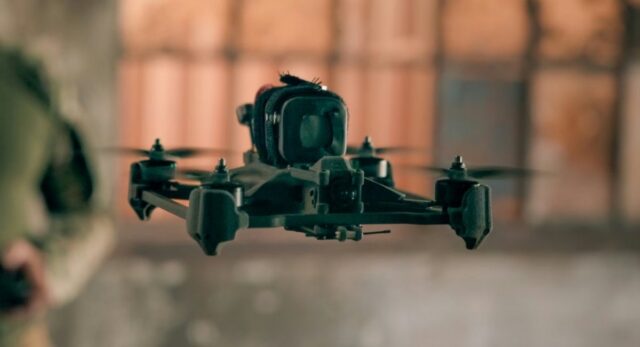
During recent live-fire exercises down at the Joint Readiness Training Center (JRTC) in Fort Polk, Louisiana, the Army’s 101st Airborne Division turned Petrel Technologies’ Group 3 UAS, AERO Sky, into a mothership for small FPV one-way attack drones, the Florida-based startup told Tectonic.
Banners to bombs: To back things up, Petrel, which came out of stealth in February, has a bit more of a unique origin story than the ones you might be used to. The company got its start in aerial advertising four years ago under the name Sustainable Skylines, building drones to tow banners over Miami Beach.
When Petrel COO and former Green Beret Chris Rothe left the military, he reunited with his old college buddy Jacob Stonecipher and saw the obvious military applications of the super lightweight, cheap, and long-range drones Sustainable Skylines was building. The two decided to pivot, and Petrel was born.
Eyes in the sky: Backstory aside, their flagship UAS, AERO Sky, is also a little different, mostly because it’s made out of a blend of carbon fiber and balsa wood, which has one of the highest strength-to-weight ratios of naturally occurring—and inexpensive—materials on earth.
- The Group 3 drone has an 11-foot wingspan, a maximum takeoff weight of roughly 100 pounds, a payload capacity of 30-50 pounds, and six to eight hours of endurance based on configuration.
- Because of the simplicity of the material and design, the drone comes in at around $90,000 per unit, and Petrel says it can be assembled in four minutes.
- It’s also powered by Petrel’s in-house launch-to-land autonomy software, and, as the team told Tectonic back in February, they’ve built “mission-specific autonomy software for things like [small drone] mothership platform configuration.”
Drone-ception: The last one is what the 101st Airborne had their eyes on.
At the JRTC, the 101st ran the AERO Sky through a couple of use cases during the force-on-force exercise last month, the first focused on long-range ISR operations, and the second turned it into a mothership for FPV strike drones. Drones inside of drones—welcome to 2026.
“For four or five days, we were practicing live drops with [the 101st’s in-house manufactured] FPVs, dropping two live kinetic effects on targets—both successful—basically for breaching [and allowing] deployed folks to move through,” Petrel CEO Jacob Stonecipher said.
Once the target was identified, the FPV pilots took over to guide them to their final destination before ground forces moved through. Normally, this kind of “prepping” is done by artillery. The 101st—using larger UAVs like Petrel’s—thinks the thousands of FPVs the Army’s getting its hands on could do the trick.
“The mothership capability comes down to the ability to bring those smaller [autonomous] systems longer distances and have the command-and-control layer closer to the frontline,” Rothe said. “Looking at conflict in the Pacific Theater, your cheaper, attritable systems can’t make it longer distances, and the mothership is giving those small one-ways the ability to reach 100, 200 miles-plus and act as a standoff extender.”
They’re already working with US Special Operations and a few Army units, but after a strong showing with the 101st, Petrel sees an opportunity for broader deployment of the Aero Sky, especially as a mothership.
“We had folks from across the Army that came out to see this, so validating this in an operational environment obviously just bumps our [Technology Readiness Level] pretty significantly,” Stonecipher said, “so we’re likely to deploy this capability across other Army units.”