Well, looks like the Pentagon is getting super-serious about c-UAS, what with everything happening in the Middle East.
Late yesterday, Joint Interagency Task Force 401 (JIATF 401) announced that it’s awarded a $500M IDIQ to Perennial Autonomy—the super-secret startup reportedly launched by former Google CEO Eric Schmidt—to provide “enterprise-wide counter-unmanned aerial system operations.”
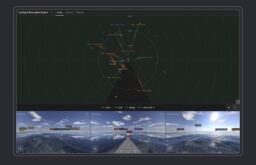
The company—which has stayed relatively under the radar despite being pretty active in Ukraine and CENTCOM—will provide “a range of artificial intelligence-enabled counter-UAS, including Merops interceptors, Bumblebee quadcopters and Hornet midrange strike drones, which are currently being employed by forces operating in U.S. Central Command.”
Everyone in Silicon Valley really is jumping on the defense tech train, huh?
It’s a bird, it’s a plane: You might be sitting there scratching your head, like, wait, wasn’t Schmidt’s drone company called something else?
You’re right—the startup was reportedly founded in 2023 under the name White Stork, then pivoted to Project Eagle, and is now operating under the name Perennial Autonomy. The company has stayed, like, very quiet, but here’s what we know.
- Schmidt launched White Stork after a few trips to Ukraine and conversations with frontline operators who were (put simply) having a bit of an interceptor problem.
- His team (reportedly assembled from giants like SpaceX, Google, and Apple) worked with those same operators to develop an AI-powered super-low-cost interceptor system designed to take down things like Shaheds. The math is the same math a lot of y’all are using: It’s, like, super dumb to take down a $30K-ish drone with a Patriot.
- According to reporting by the Wall Street Journal, the company says its tech is widely deployed in Ukraine and that it’s taken down more than 4,000 drones in-country.
- They scored a $5.2M contract with JIATF 401 back in February, have reportedly been deployed on NATO’s eastern flank, and have interest from Gulf States. The Pentagon also says the tech is being used in CENTCOM. Drones do be everywhere these days.
- On that NATO interest—Perennial Autonomy reportedly teamed up with Twentyfour Industries in Germany earlier this month to produce systems in Europe.
Here’s what they make:
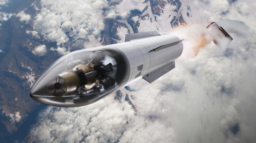
- Merops: The company’s flagship low-cost interceptor system, designed to take down things like Shaheds and Gerberas. We’re talking fixed-wing interceptors sent flying out of a truck-portable launcher, with radar/RF/EO for targeting and onboard AI-powered terminal guidance. Each of these bad boys costs around $15K currently—the goal is to get them down below $10K (or even as low as $7K) at scale. These are the platforms being used by NATO and (reportedly) by US forces in the Middle East.
- Bumblebee: A quadcopter interceptor already tested out by JIATF 401 under that $5.2M contract. It’s a semi-autonomous hit-to-kill drone that can also be used for reconnaissance and target tracking.
- Hornet: A pneumatic-launched (compressed air, baby), AI-powered, long-range strike drone also reportedly being used by the US Army and allied forces.
All of the company’s products are designed to be super-resistant to jamming, what with the whole “developed in Ukraine” thing.
Big leagues: Under this new contract, JIATF 401 will buy up to $500M of these systems (remember, it’s an IDIQ) as needed so they “can be rapidly scaled and sustained in response to evolving threats.”
“[JIATF 401] continues to advance our counter-drone capabilities by fielding systems that can operate across multiple domains and integrate with existing command and control architectures,” JIATF 401 Director Brig. Gen. Matt Ross said in a statement. “This partnership provides the joint force with state-of-the-art, counter-UAS capability to remain lethal on today’s modern battlefield.”