Turns out at least one old dog can, in fact, learn new tricks, or at least can find a young gun to teach it.
This morning, robo-manufacturing startup Machina Labs announced that it’s inked a qualification contract with mega-prime Lockheed Martin (which, conveniently, also sits on Machina’s cap table through its venture arm) for Joint Air-to-Surface Standoff Missile (JASSM) components.
The robo-dojo: Machina Labs—which raised a $124M Series C from Lockheed and other investors, including Toyota’s venture arm, in February—is, put simply, using AI-powered, metal-forming robots and “intelligent factories” to rethink how everything from car parts to missile airframes is made.
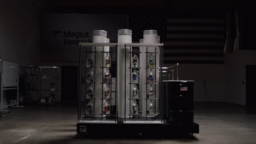
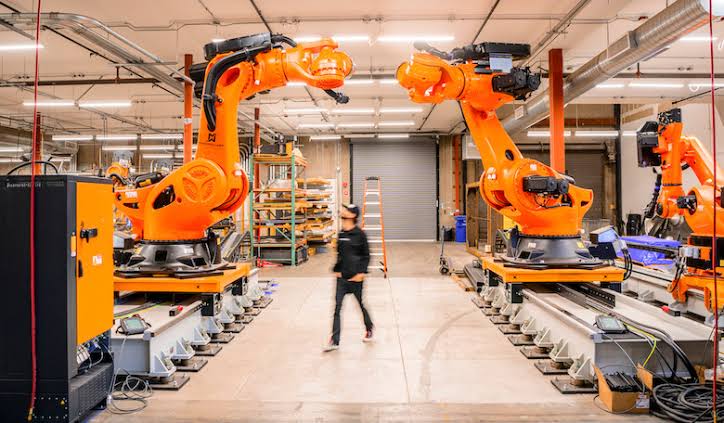
- Their proprietary RoboCraftsman manufacturing cells (the robots) autonomously handle loading, metal forming, scanning, trimming, and drilling to turn digital designs into production-grade metal parts.
- Each RoboCraftsman has two robotic arms that integrate multiple manufacturing operations within a single containerized cell.
- The flexible platform can be updated at software speed to add new tools and workflows based on customer demands and the unique needs of different metal parts, whether that’s a missile structure, fuel tank, or drone airframe.
JASSM juice: Under the qualification contract, Machina and its small army of RoboCraftsmen will deliver “metal structures, specifically fuel tanks” to Lockheed for testing and integration into the broader JASSM platform, Machina CEO Ed Mehr told Tectonic, though it sounds like they have more cooking up with the prime. “We’ve been exploring a whole lot of different projects [with Lockheed], and this was one of many.”
- “We can’t talk about the other ones, but this is the first one that’s officially going to qualification, and hopefully production starts next year,” he added. Mysterious, indeed.
- The contract is structured on a per-unit basis: Lockheed pays for the fuel tank units that’ll be integrated, flight-tested, and qualified. When it comes time to get into production, “Machina will deliver certain volumes of tanks per year at a firm-fixed price.”
- As an “advanced Tier One supplier,” those units—and whatever else Lockheed wants spun up in a Machina factory—can “go into any JASSM missile that Lockheed produces.”
Big flex: That flexibility part is key to Machina’s whole pitch. Compared to the old-fashioned way of producing metal structures—which requires spending a lot of time and (taxpayer-funded) capital put into building out a factory with “tooling and equipment that are specific for that [structure’s] geometry before you even get started into production,” Mehr said—Machina’s robots can switch between fuel tanks, nose cones, airframes, or whatever else Lockheed and other customers want pretty much at the drop of a hat.
“We can easily change design, and that’s, I think, the main reason Lockheed is working with us on this,” he added. “For other programs, or when they want to change the design of the JASSM, we’re not going to charge them facilitation,” just for the end-product. Sounds like a good deal as it is, but especially given they’re paying a portfolio company for ‘em.
Building out: The initial JASSM parts will be produced at Machina’s flagship factory in California, where they have immediate capacity, but they’ll move it to their upcoming, 200,000-square-foot “Factory 3,” which will get a “higher volume of the production” for the JASSM work and other defense programs, Mehr said. That’s “most likely [going to be] in Huntsville,” and the first cells will be in by the end of the year, with an ultimate goal of 50 in the next couple of years.
That’s all well and good, but the contract is a big win for Machina because it shows the kind of speed startups are bringing to the table, including to some of the military’s most critical legacy systems.
“We started development of this technology in 2020, and [we’re] now getting to high-volume production next year,” he said. “I don’t think any other technologies in the defense space have gone that fast.”
Smells like reindustrialization.