If you’re a regular reader of Tectonic, you’ll know that the US has a bit of an energetics problem.
Luckily, one organization is setting out to try and fix that. Earlier this week, ACMI Federal (part of the American Center for Manufacturing & Innovation) announced that it’s won $50M from the Naval Surface Warfare Center, Indian Head Division, to build a hub in Maryland for energetics production.
The campus—similar to ACMI’s $75M national security manufacturing campus in Indiana—will bring together “industry, academia, and other organizations in the private sector [to] work side-by-side with government stakeholders to solve critical munitions industrial base challenges, increase production efficiency, and accelerate applied innovation for novel and existing energetic material systems.”
Good thing, too, with the rate at which we’re blasting off munitions in the Middle East.
Bing bang boom: Feels like it hardly bears repeating, but in case you weren’t aware: The US is, like, super good at designing exquisite weapons systems, but is a lot less good at making them go boom.
Energetics comprise everything from explosives to propellants and pyrotechnics—basically the stuff that takes a metal pointy frame and makes it a missile or a rocket.
- The problem is that the US energetics production base is super-duper concentrated. A few primes (L3 Harris, Northrop) and the US Army pretty much dominate production.
- A lot of the plants that produce energetics are, like, really old. Like, WWII-old.
- Because the market is so concentrated (and brittle), disruptions can pretty much bring entire weapons programs to a halt.
- Startups like Firehawk and not-so-startups like Anduril have entered the energetics game—but it’s still a fairly small part of the market.
Plus, there are some major supply chain issues.
- Components like nitrocellulose (guncotton), key for propellants, come largely from overseas (cough, China, cough). The same goes for RDX/HMX (explosives) precursors.
- The US also has a super limited number of cast-cure facilities to actually make propellant.
- Plus, production of energetics is suuuuuuper highly regulated—you can’t just be like, “Hey, I wanna build energetics,” one day.
Coworking: ACMI says it’s stepping in to fill that (super-big, crater-sized) gap.
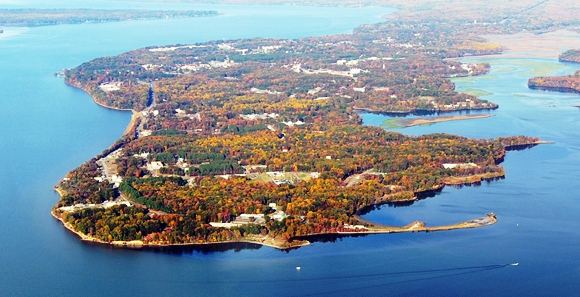
The new facility will be built near Indian Head (in Maryland) and be called the “Maryland Energetics Innovation Hub.” Think of it like a coworking space, but for “new and existing” companies making things that go boom.
According to ACMI, the hub will focus on (and recruit tenants working on):
- High-performance computing for manufacturing process modeling, simulation, and control
- Advanced uncrewed systems and energetics integration
- Advanced synthesis methods for energetics
- Advanced non-destructive evaluation for energetic systems
- Automated energetic processing and assembly methods with integrated AI
- Novel manufacturing processes for propulsion systems and warheads
- Addressing energetics obsolescence in qualified formulations
- High-precision, high-throughput non-energetic component production
ACMI will break ground on the facility in the second quarter of this year.
Speed networking: And they ain’t stopping there.
“The MEIH facilities are being designed to act as a central node in a larger network where local innovation catalyzes scaled production at multiple sites across the country, ultimately delivering higher-performing products to the warfighter, faster,” the organization said in a statement.
Dare we say we might be entering the era of… campuses of the future?