
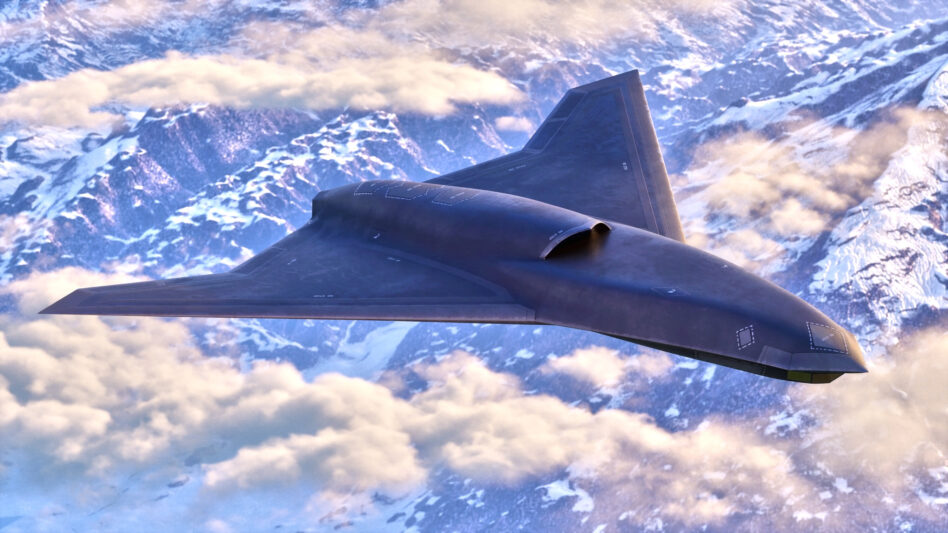
Even with a whole lot of B-2 and F-47 news this year, the Collaborative Combat Aircraft (CCA) race might’ve defined the year for the Air Force. And guess what? It’s not over yet.
Last Friday, the Air Force tapped nine vendors for the next stage, or Increment 2, of the CCA program, according to Breaking Defense.
Only right that the tiny plane craze continues up to the very end.
Robo-Wingmen: As a refresher, the CCA program is designed to bring in a bunch of large (by drone standards), jet-powered, uncrewed aircraft to fly alongside crewed fighters and carry out air-to-air, air-to-ground, EW, targeting, and ISR missions.
“Affordable mass” is the name of the game. The Air Force is planning to buy around 100-150 CCAs in Increment 1 in the late 2020s, and a whole lot more—potentially thousands—in a later Increment 2 through additional vendors. The little drone-planes are expected to cost around a third of the price of manned fighters—around $25-30M a pop.
Just right: Just because the Air Force wants CCAs doesn’t mean the quest for the Goldilocks ‘Loyal Wingman’ has been easy:
- Ideas for a CCA-type aircraft have been kicked around for a while, but the first big tranche of funding for the program came last year.
- In January 2024, five companies were selected for early design and prototyping work for Increment 1: Boeing, Lockheed Martin, Northrop Grumman, Anduril, and General Atomics Aeronautical Systems (GA-ASI).
- In April, Anduril and GA-ASI beat out the other competitors to build production-ready prototypes for the program. GA’s CCA—the YFQ-42A—took flight 16 months later, and Anduril’s YFQ-44A was right on its heels, notching its first flight in late October.
Heating up: If you thought the Anduril-GA competition right out of the gate would deter others from getting involved, think again, because everyone and their mother wants in on the CCA game:
- In September, Lockheed Martin unveiled that its secretive Skunk Works division is working on a CCA offering called Vectis.
- Boeing’s MQ-28 Ghost Bat, which the aerospace giant markets as a CCA, is under development for the Royal Australian Air Force and has made some serious progress, shooting down a drone with an AIM-120 AMRAAM missile during trials last week.
- Northrop Grumman unveiled its pitch for the CCA program, Project Talon, on the sidelines of the Reagan National Defense Forum earlier this month, telling reporters the drone wingman would fly next year.
- While not necessarily a direct pitch for the CCA program, Shield AI unveiled its X-BAT autonomous VTOL fighter jet earlier this fall. The aircraft is expected to be much larger and more powerful (read: pricier) than other CCA offerings, but with the same capabilities as a manned fighter.
Keeping things spicy: The Air Force didn’t reveal which nine vendors it tapped for Increment 2, but the contracts are early-stage “Concept Refinement” awards meant to put a range of offerings on the table, including (potentially) from foreign companies.
The initial batch of winners features a “broad spectrum” of concepts, from “more affordable, attritable concepts to higher-end, more exquisite designs,” an Air Force spokesperson told Breaking Defense. “This variety ensures that the program explores different approaches, optimizing for cost-effectiveness while maintaining the flexibility and capabilities necessary to enhance operational effectiveness.”
Like the first stage in Increment 1, the Air Force plans to down-select for prototype and production awards based on “the results from Concept Refinement and the vendor’s performance during testing,” the spokesperson said. That means it could be anyone’s ball game.
We’re not in the prediction business, but it’s looking like 2026 is shaping up to be just as CCA-crazed as this year was.