Strap in, folks. It’s time to get into the nuts and bolts.
On Monday, CA-based silicon photonic optical gyroscope (we’ll get to that) company Anello Photonics announced that it’s raised a cool $25M Series B-2 round led by MESH. New investor Washington Harbour Partners also joined the round, along with existing investors Lockheed Martin Ventures, Catapult Ventures, New Legacy Ventures, One Madison Group, IronGate Capital, and Mana Ventures.
This comes just six months after Anello raised an undisclosed Series B led by Lockheed Martin Ventures in November, followed by $20M in Pentagon APFIT funding in January.
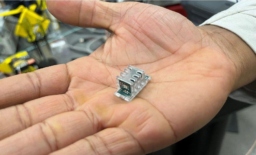
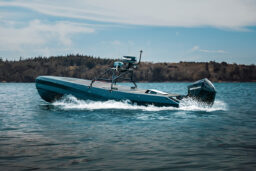
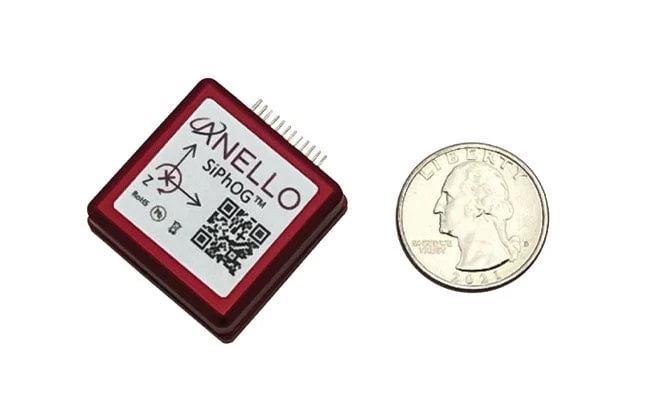
Anello CEO Mario Paniccia said the money will primarily be used to scale up production of their teeny-tiny futuristic SiPhOG gyroscopes, which let everything from drones to USVs navigate without GPS.
“We’ve moved from demand constraint to supply constraint,” Paniccia told Tectonic. “The demand we have is off the charts. I ship everything I make.”
Merry go round: Now, all y’all crypto kids probably never thought you’d have to know what a silicon photonic gyroscope is, so we’re here to help.
Put extremely simply, Anello’s tech takes the very best of Silicon Valley photonics and applies it to a nasty problem most drone operators are familiar with: navigating in GPS-denied environments.
At its core, Anello’s tech is an inertial navigation system—a family of navigation systems that rely on accelerometers and gyroscopes to determine position rather than GPS.
- Basically, a drone (say, a USV or UUV or UGV) starts from a known position, then uses accelerometers (linear acceleration) and gyroscopes (rotation) to figure out where it is from there.
- When it works, inertial navigation is huge—basically means a drone (or, like, anything else) can keep on keeping on even in fully jammed environments.
- The issue is that rudimentary gyroscopes are like, not accurate (tough when you’re carrying a bomb), and high-end fiber-optic gyroscopes (used on things like submarines and high-end cruise missiles) are uber expensive and mega huge.
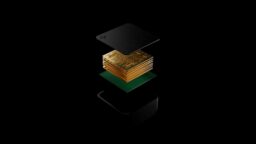
What Anello has set out to do is cram the performance of these high-end systems into a much smaller, much cheaper package using the magic of photonics (chips, baby).
- Basically, the company is using chips to do all the work of those long, fiber-optic cables on high-end gyroscopes. Their SiPhOG gyroscope is “based on integrated photonics, so it’s small, lightweight, low power, and most importantly, still has high performance, but can scale to high volume,” Paniccia said.
- The idea is the same one that underlies a lot of defense tech land—they want to make something that, like, works, but is cheap enough that it can get destroyed.
- Paniccia told Tectonic that, on land, the company’s gyroscope has demonstrated 99.9 percent accuracy over 100 km, and over 98 percent accuracy at sea. He says the gyroscope has pretty much the same performance as high-end systems.
- It’s also a “fifth the price, fifth the size, fourth the weight, quarter the power” of those high-end systems, which, FWIW, can cost over $100K.
- If you remember one thing, remember this: It’s a GPS-free navigation system that can be used across domains and is designed for the autonomous, attritable world.
“As people start to see the data, people are stunned,” Paniccia said. We’re competing with systems that are, you know, 5-10 times the cost, right? And this is a small form factor, it can be scaled to volume. We designed this for millions of units.”
Big boys: And if you’re still confused over what the heck a silicon photonic optical gyroscope is and why we care, well, all you need to know is that some of the biggest names in the game think Anello and its tech are, like, legit.
- The company’s backers include In-Q-Tel, Lockheed Martin, Catapult Ventures, and Build Collective.
- Paniccia was a former Intel Fellow and spearheaded Intel’s silicon photonics efforts. Nice, that.
- His co-founder, Mike Horton, spent most of his career in microelectromechanical systems (MEMS) and inertial sensors. Paniccia basically described them as a match made in heaven.
- They’ve also scored a few SBIRs with the Navy for hypersonics navigation and navigation in contested environments. In total, they’ve won $4.6M in contracts, according to Obviant data.
- Currently, the company’s business (they also do things like farming and autonomous vehicles) is about 70-30 defense, trending towards 80-20, Paniccia said.
BFFs: Anello has already supplied its gyroscopes to a few companies you’ll definitely be familiar with, including Havoc AI, Vatn Systems, and Blacksea Technologies.
Plus, Paniccia said people in a certain five-sided building have taken note of what they’ve built.
“I’m at the Pentagon a lot…I’m there every couple of weeks. We are going to be the navigation solution of choice for lots of these platforms,” he said. “Every time I go there, [demand] goes up 2X, 4X, 5X, 6X. In the Department of War, everything’s aggressively moving to attritable systems.”
Big ups: From here, Paniccia said, the name of the game is scale—enough gyroscopes (like, in the thousands) to supply for their customers for now, and eventually to be the go-to navigation system for all the fly-y drone-y things we put out there.
“We create solutions and products that allow people and products and things to navigate in GPS-denied or GPS-spoofed environments that go across land, air and sea,” Paniccia said. “[It’s a] technology that not only works well, but it’s small, lightweight, low power, and can scale, and it’s designed for the mass market.”