The engine biz is getting buzzy.
Earlier this week, Beehive Industries, a Colorado-based startup making 3D-printed engines for munitions and unmanned aerial systems (UAS), announced that its Frenzy engine has completed high-altitude testing and is ready for integration onto an aerial vehicle for flight tests starting early next year.
In a frenzy: Founded in 2020, Beehive kicked things into high gear in the past year, and their 3D-printed jet engines have caught the eye of a munition- and drone-frenzied Pentagon.
- Last October, they received a $12.4M Air Force contract to develop and produce a 200 lb thrust-class Small Expendable Turbine (SET) engine, which is expected to be completed within two years.
- In December, they rolled out plans for the Frenzy engine, which they describe as “a family of additively-enabled jet engines developed for small, single-use unmanned aerial vehicles (UAVs).”
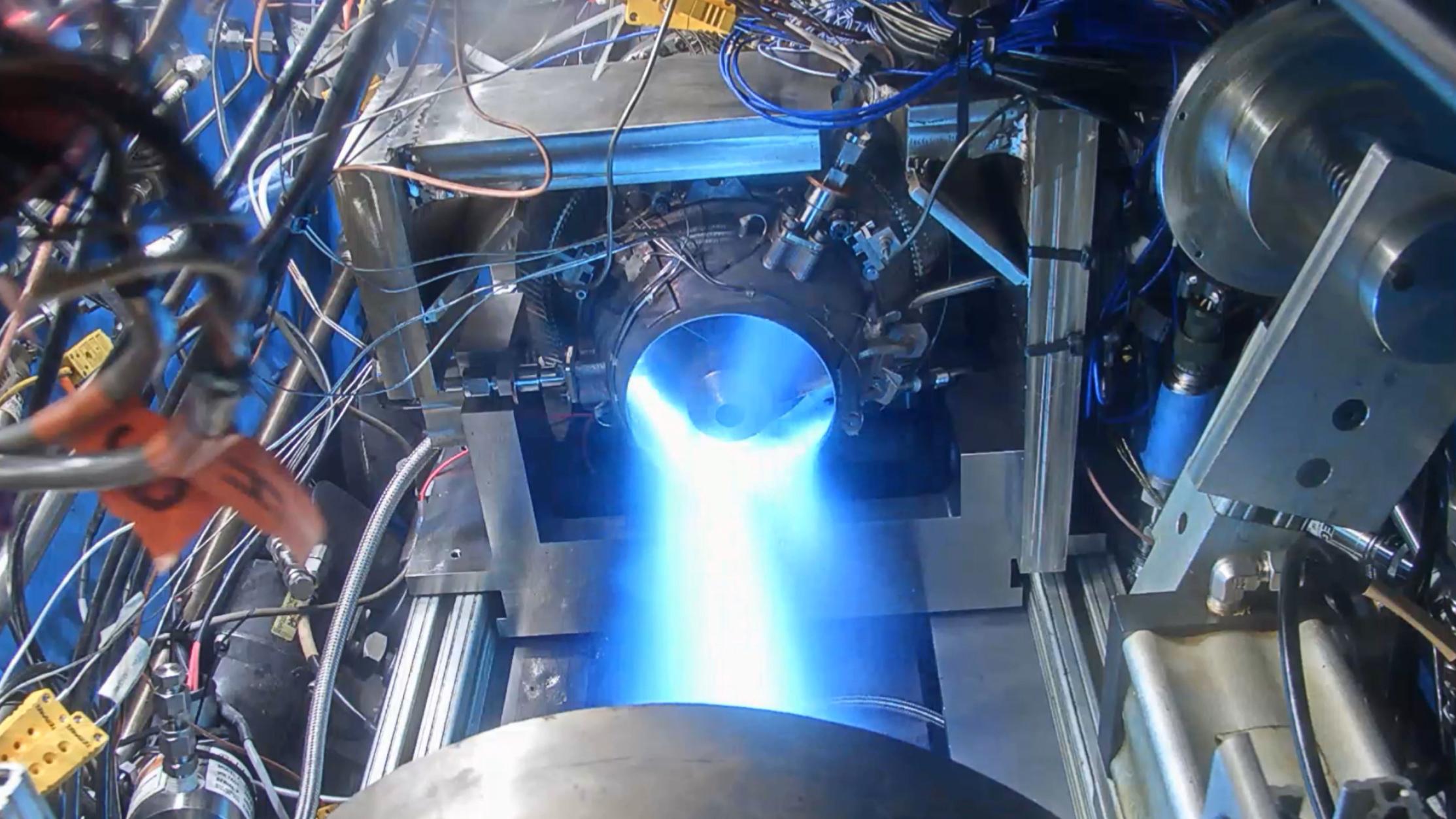
- Last May, they ran their first ground test of the Frenzy, and by September, they had already tested four individual engines, producing a new test-ready engine every six weeks.
- They shipped two engines to a government facility in Ohio for high-altitude testing in October. Those tests, conducted in a chamber simulating the environment at roughly 35,000 feet, “all met or exceeded challenging Air Force requirements,” according to Beehive.
“Our engines are on the order of 20-30 percent more efficient than a conventionally made engine, so, with the same amount of fuel, it can fly 20-30 percent further,” Gordie Follin, Beehive’s Chief Product Officer, told Tectonic. “At the end of the day, our engine costs about half of what a competitive engine would look like.”
Taking off: With the high-altitude tests complete, Beehive is gearing up for flight testing on aerial vehicles early next year.
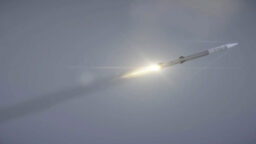
“We have partners that we are doing flight tests for, and right now, we’ve got plans to do flight tests on four different vehicles in late first quarter [or] early second quarter of 2026,” Follin said.
He couldn’t disclose who those partners are, but the aerial vehicles are the kinds of “munitions that would be launched from the wing of an aircraft or dropped in a pallet and then launched.” Boom boom.
Ramping up: They’re also planning to majorly scale up production, and soon.
At current capacity, Beehive can pump out 2,000 Frenzy engines annually, but “that’s just our starting point,” Follin said. “We’ve actually done the math, and we can scale up to more than 10,000 a year within our current footprint, just by adding CNCs (Computer Numerical Control systems), 3D printers, and powder handling equipment.”
And that’s good news, because the company is making what the Pentagon wants: Follin said they’re competing on the Family of Affordable Mass Missiles (FAMM) and the Extended Range Attack Munition (ERAM), but they’re also eying the small drone and counter-drone munition market.
Bigger and badder: Beyond its smaller Frenzy engines, Beehive picked up an Air Force study contract in March to design a 3D-printed, 1,000lb-thrust engine for the Collaborative Combat Aircraft program—building on a successful test of a 500lb-thrust prototype. The company is also developing a 700lb engine for cruise missiles.
With Pentagon demand surging for munitions, UAS, and the engines that power them, Beehive is betting that additive manufacturing can help the Pentagon “use the limited dollars it has to buy as many munitions or counter-drone systems as possible, as fast as possible.”