
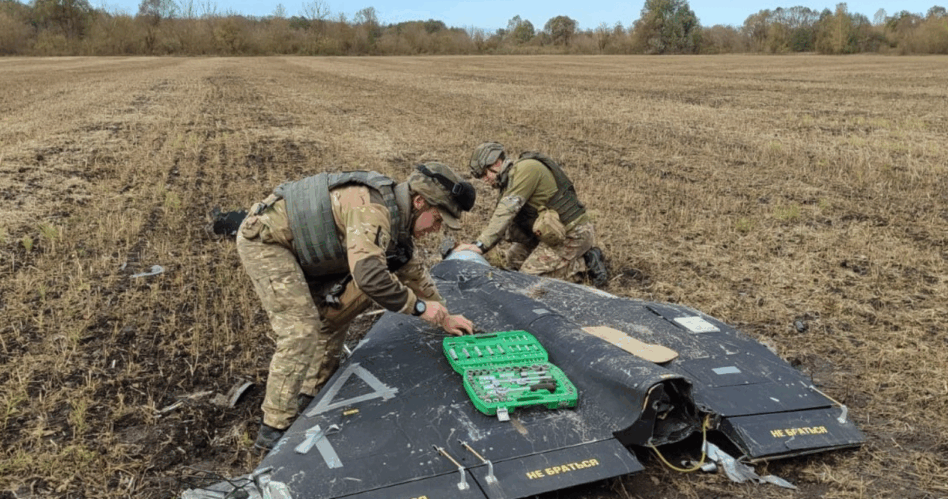
Interceptors really are so hot right now.
This morning at the London Defense Conference, UK Secretary of State for Defense John Healey announced that the MoD will buy “hundreds” of Skyhammer interceptors from startup Cambridge Aerospace as part of a “multi-million-pound” contract.
The deal covers “integration, technical support, and end user training,” and the company says it will get the MoD all of the interceptors within the next six months. Initial deliveries will kick off in May.
“With aerial threats to the UK and our allies increasing by the day, it is critical that we can defend ourselves effectively,” CEO Steven Barrett said in a statement. “Skyhammer was designed to do exactly that – bring affordable mass to protect our skies.”
Hundreds isn’t exactly Iran-and-Russia-producing-Shaheds scale, but it’s a start. We see you, Britain.
Zoom and boom: You may recall Cambridge Aerospace from when we announced they were coming out of stealth. The UK-based startup was founded in late 2024 and worked quietly building mini-missiles until they formally burst onto the defense tech scene last fall.
- The company was founded by Cambridge and MIT aerospace professor Steven Barrett, Anduril alum Chris Sylvan, and former UK defense secretary Grant Shapps. Junaid Hussain, chair and founder at holding company Auctor, also helped build the company.
The company’s got two main products:
- Skyhammer: A “high subsonic interceptor” designed to take down moderate-speed threats like Shahed drones, CEO Steven Barrett told Tectonic last year. Skyhammer flies at 700km/h and has a range of about 30 km. This is what the UK MoD is buying.
- Starhammer: A high-speed rocket-powered interceptor designed to take down more “high-speed, high-value threats” like cruise missiles, Barrett said. Starhammer flies at Mach 2 and has a range of about 10 km.
And here’s the cool part: The interceptors carry an explosive payload, but it’s a smaller one than your run-of-the-mill missile, Barratt said last year. They use a process called “sympathetic detonation,” in which they use just enough explosive to ignite the target’s payload and make it blow itself up. Cute.
Get money: With the whole “we need to figure out cheap ways to shoot stuff out of the sky and fast” thing, the company has been quite popular with investors.
- The company emerged from stealth with around $100M at a $400M valuation, backed by Accel, Lakestar, and Lux Capital.
- They’re reportedly now raising “about $200M” at a $1B valuation, just about six months later.
- They’ve set up a production facility in Cambridge and are building an SRM production facility in Norfolk.
- When we spoke to Barrett last year, the team was around 60 people. Now they’re up to 125.
Take ‘em down: And it sounds like those mini-missiles, like, actually work.
The company says it’s been doing weekly flight tests since development of Skyhammer kicked off in early 2025, and that “recent testing delivered consistent successful interceptions of Shahed-style drones in a variety of conditions, with the autonomous platforms identifying, tracking and intercepting the target.”
Lucky, that. Watch out, primes. The startups are coming for your missiles.