Making your first acquisition is a big moment in any startup’s life, and Code Metal is speedrunning it.
Yesterday, Code Metal announced that they’ve snapped up Signal Processing Technologies (SPT), a move that takes the three-year-old startup from simply translating high-level code and algorithms onto hardware systems into actually developing the algorithms themselves, starting with the signal processing space.
- Code Metal couldn’t disclose the terms of the deal.
Lost in translation: To back things up, Code Metal is building the software stack that translates, automates, verifies, and modernizes software code for “mission-critical industries,” especially defense. In simple terms (or as simple as these things get), that means:
- Translating algorithms written in high-level, legacy programming languages (like Python, C++, or MATLAB) into lower-level, hardware-specific languages and production code (Rust, VHDL, CUDA) for stuff like chips, embedded systems, and edge devices.
- Verifying that the translated code is correct, runs smoothly, and is safe enough for regulated and high-consequence environments and systems, whether that’s an aircraft subsystem, sensor, or radio.
- And, ultimately, closing the gap “between an algorithm that works in a model and a capability that works in the field,” CEO Peter Morales wrote in a blog post.
That’s been a hit with some big-time customers, including L3Harris, RTX (including Collins), Toshiba, and the US Air Force, and especially with investors—the company raised a $125M Series B led by Salesforce Ventures at a $1.25B valuation in February.
Pedal to the metal: Bringing SPT into the fold takes things up a notch in the defense space.
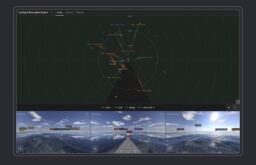
- SPT develops algorithms and systems that help machines detect, classify, interpret, and act on signals (radio waves, acoustic signals, communications waveforms, and other sensor data).
- That work touches everything from advanced comms and software-defined radio (SDR), spectrum awareness and sensing, RF machine learning, Positioning, Navigation, and Timing (PNT) systems, and autonomous sensing systems.
- It was also founded in 2019 by Joe Farkas and Dr. Brandon Hombs, who previously led DARPA’s Interference Multiple Access (DIMA) program, an initiative designed to improve military wireless communications. Seems relevant.
Full package: According to Code Metal’s EVP of Growth, Laura Shen, having SPT’s tech in the Code Metal platform means “we’re now writing the algorithm, in addition to putting it on a chip, not just taking somebody else’s algorithm and helping them get it onto a chip.”
“It’s really a peanut butter jelly thing, where all the stuff that they were doing in these spaces now gets accelerated by being able to get to the actual hardware quicker,” Morales told Tectonic. “It slots right into a lot of what we’re already doing, since we’ve already got engagements with some of the primes that [work on] signal processing.”
SPT’s founders are also staying on at Code Metal to lead its new Advanced RF Group, which will take their experience in the “ideation and algorithm space that solves the problems in the electromagnetic spectrum” and, with Code Metal’s translation software, “actually get that deployed and integrated into the systems that matter,” Morales said.
Despite having just closed its first acquisition, Code Metal has its eyes on more.
“Having the Advanced RF Group isn’t the only group we’re going to announce this year,” Morales added. “You’ll see more pushes in the space from us to really meet our customers where they are, offer quite a bit of solutions in our ability to get to hardware, and in the overall growth of the company.”