
Is it just us, or does it seem like everyone is teaming up right now?
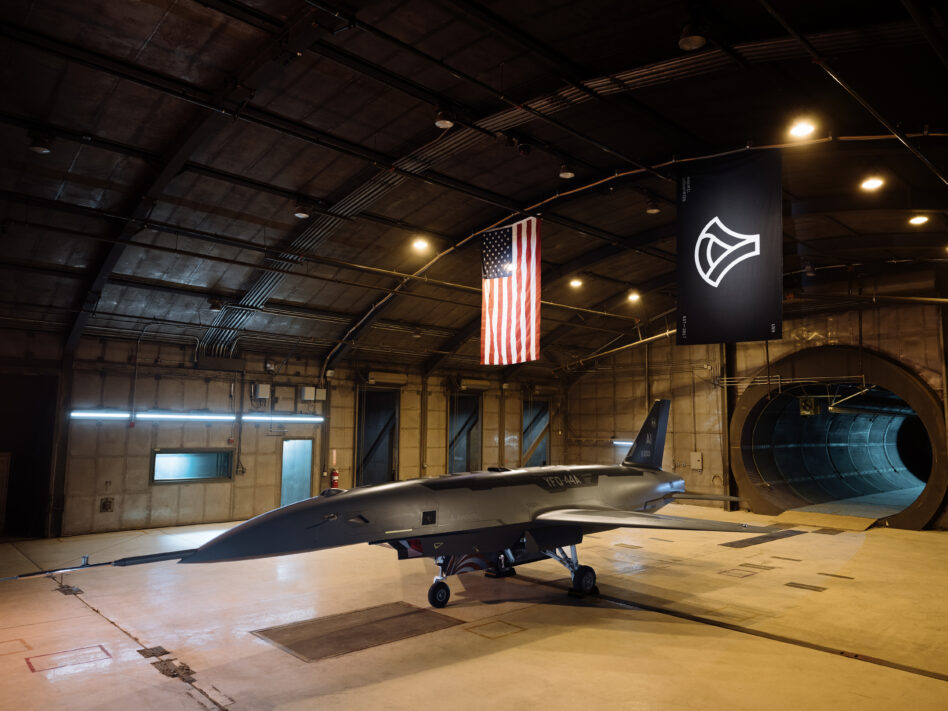
This morning, new-age defense tech testing company Nominal announced in an exclusive release to Tectonic that it’s officially partnering with Anduril to scale its testing infrastructure across Anduril’s production lines.
Nominal CEO Cameron McCord told Tectonic that his company will “provide Anduril with a common data platform for all of their hardware system testing and analysis.”
The two companies have already worked together for about 18 months, and Nominal is deployed across half of Anduril’s programs, but this new “seven-figure plus” deal (McCord’s words) will accelerate deployment across the company.
“We’ve gotten to a tipping point where Nominal has become the de facto solution for test and evaluation activities that engineers at Anduril would go to, which is really, really exciting,” McCord said.
We’ve always said it’s good to have friends in high places.
In the toolbox: We’ve been on a bit of a “behind the scenes of defense tech” kick lately, but bear with us.
Nominal is yet another one of those companies that doesn’t build the shiny things that go boom, but that is pretty critical to making sure those things actually work. The company was founded in 2022 by McCord (ex-Anduril and Lux), Jason Hoch (ex-Palantir), and Bryce Strauss (ex-Lockheed).
The all-star team set out to build a solution for one of the more annoying-yet-vital things defense companies deal with—all of the data that comes out of testing stuff.
- Nominal’s flagship software is called Nominal Core—an all-in-one workspace where engineering teams collect, visualize, monitor, and analyze hardware telemetry, logs, video, and test data in real time.
- The idea, McCord said, is to bring testing into the 21st century. “A lot of the software in the testing space hasn’t really been innovated against in decades, literally,” he said.
- Many engineers are forced to cobble together different old-school programs (which aren’t built for, say, collaboration) or use new-fangled testing software that isn’t built for aerospace and defense, he added. “It’s death by thousands of paper cuts.”
Nominal, instead, brings together all this fragmented data and testing pipelines into one central system. “[It] takes the best of some of those legacy technologies, modernizes them, [and] supercharges them in a way that is built for engineers that want to do analysis on hardware systems,” McCord said.
This is especially critical for companies that are scaling, but want to keep moving at startup speeds, he added.
“As companies [like Anduril] grow in size and scale, they go from one program, which has one data catalog, one system for testing, to 10, 20, or even more programs,” he explained. “When they do that…all of the data and analysis functions that they need to perform get extremely fragmented, and eventually it slows down their ability to test really quickly.”
Nominal’s tech, he said, allows companies like Anduril to keep their foot on the gas. “[Anduril can look at] what teams are testing, what teams are generating data, and what teams are learning. That’s where they place their bets–on those products that are going to be successful.”
Cash money: To say that Nominal has been a hit with investors and customers would be an understatement.
The company has raised a total of $102.5M at a $510M valuation, according to Pitchbook data, and is backed by some of the biggest names in the game, including Sequoia, Lightspeed, General Catalyst, and Lux.
- Most recently, Nominal raised a $75M Series B led by Sequoia last June.
- The company was also awarded a US Air Force SBIR Phase II contract to work on hypersonic weapons development last year.
- Beyond Anduril, McCord and his team also work with a whole slew of defense tech darlings, including Shield AI, Hermeus, Vatn, Scout AI, Antares, and others.
New friends: When we asked McCord if his company would notch more strategic partnerships like this one with Anduril in the future, he basically said (paraphrasing here), “Heck yeah.”
“We want to be the go-to testing platform and software infrastructure for tests for all of the major aerospace and defense primes, and even expanding outside of defense into large companies in automotive and energy,” he said.
After all, he added, testing—and learning from those test results—is pretty much the key to success with hardware.
“When you’re building a new hardware product, testing is the highest correlation activity with the success of that product,” he said. “As long as you’re iterating, and you’re generating data, and you’re learning from either tests that go well or tests that don’t go well, that is the definition of progress.”