You know how we say we love the unsexy side of defense? Well, we’re back with some news from the unsexiest place we can imagine—the land of the nitty gritty back office paperwork that makes the cool stuff actually happen.
Luckily, one startup is on a mission to make that tedious but super important work a heck of a lot easier for defense tech startups.
In an exclusive announcement in Tectonic this morning, Arkenstone Defense emerged from stealth with $35M in seed funding led by J2 Ventures to build defense tech’s back office, offering a software platform that handles everything from workforce operations to HR, payroll, insurance, security, contracting support, financial compliance, and accreditation.
- Susa Ventures, Granite Hill Capital Partners, and Artis Ventures also participated in the round.
Clean and easy: Arkenstone’s pitch is pretty straightforward: “We have all this money coming in [to defense tech], and yet what we started to realize was that Silicon Valley learned some of the lessons, but not all of the lessons about how to go to market in defense,” co-founder and COO William Treseder told Tectonic. “Building a great product that serves the warfighter is not the same thing as gaining access to the defense market…they need to use infrastructure that’s built to the Pentagon’s standard, not a bunch of clumsy, DIY stuff in their back office.”
“When you take long-term government revenue, they give you all these very specific rules to follow—all this red tape, security accreditations, data governance, all these different things—and that stuff is not the way a normal Silicon Valley company builds,” he added.
So, Treseder—an old hand in the push to bridge Silicon Valley with the Pentagon—teamed up with Peter Dixon, another veteran SV-to-DC pioneer who previously founded defense software company Second Front Systems, and Rachel Olney, a Stanford PhD and former tech founder, to build a platform that handles all of that.
The company has two main offerings right out of the gate:
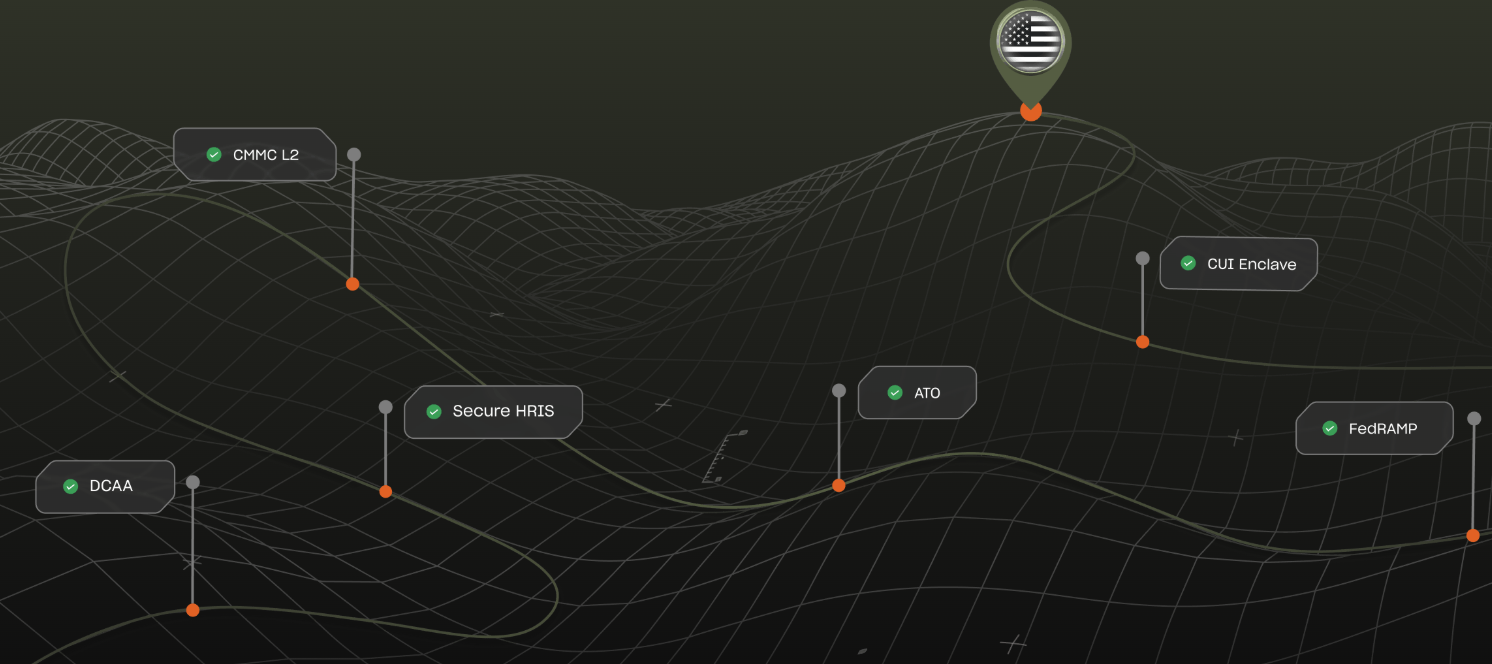
- Foundation, Arkenstone’s core product that handles compliance for FedRAMP (the government’s standardized approach to security assessment, authorization, and continuous monitoring for software), Authorization to Operate (ATO), CMMC (the DoD’s mandatory cybersecurity compliance framework), and full-lifecycle contract management.
- Cohort, which is focused on payroll, benefits, HR, and workforce operations management “for regulated and contract-driven environments.”
Money moves: Even in stealth, Arkenstone’s been making big moves, acquiring Anitian, a software company that’s been focused on this stuff for over twenty years, and integrating its suite of products into the Arkenstone platform.
The end goal, according to Treseder, is to help make Silicon Valley startups—both defense-focused and dual-use—as ready as possible to navigate the bureaucratic hellscape of government contracting.
“As a well-capitalized, aggressive, product-focused company, you should be able to put all your energy into product and go-to-market, and that’s it. You shouldn’t need to look behind your shoulder to make sure your HR systems are set up correctly, or your accounting system has the right chart of accounts,” he said. “What Arkenstone is trying to do is put all of these pieces into one platform so the government says, ‘Yes, that’s good, we trust that, and therefore I’m going to award you this contract.’”
So far, Arkenstone’s brought on about three dozen customers, but after coming out of stealth with $35M in fresh funding, they’re planning to build out the team (currently about 60) and platform to get many more on board.
- They’re also building a government-facing tool through “some strategic partnerships with the government” that “flips [the platform] around” to give the folks on the other side of the table a clear view into the compliance records and security status of new companies coming into the defense space, Treseder said.
“The more the government wants to go commercial and the faster the government wants to [move], the more stress you’re putting on a system that’s already really overwhelmed,” he added. “If you’re trying to change things in the next two to three years, the math doesn’t math, and we need to get these organizations to adopt the tech without taking the risks that are going to cause contracts to break apart.”
This all probably sounds pretty boring to the folks outside of our little defense bubble, but we’re willing to bet it sounds pretty appealing to our friends inside.