
Aviation autonomy is all the rage these days, but Beacon AI is less concerned with automating the piloting part and more focused on all of the brain-draining, paper-pushing stuff pilots and crews have to do before takeoff and in the air. And the Air Force is taking notice.
On Wednesday, in an exclusive release to Tectonic, the California-based startup announced a $4M total contract—split between an Air Force Tactical Funding Increase (TACFI) award and private match—to bring its aviation AI platform to Air Mobility Command’s operational airlift and aerial-refueling aircraft.
Taking flight: So far, Beacon AI, which raised $15M in October 2024, has won prototyping contracts with USSOCOM, Air Force Research Laboratory (AFRL), AFWERX, and, most recently, Air Force Special Operations Command, along with a handful of partnerships with commercial airlines.
Their latest contract with Air Mobility Command (AMC) hits a little different.
“This gives us a pathway to one of the first, if not the first, deployment of an AI pilot assistant on not just an operational aircraft, but a mobility aircraft,” Beacon AI CEO Matt Cox told Tectonic. “AMC has about 1000 of these. They’re also the closest proxy to the really large commercial market—[many are] the same planes FedEx and Amazon Prime use for cargo.”
Combo deal: The company is focused on developing software that helps make human pilots and crews safer and more efficient. To do that, Beacon has two main products on offer:
- Murdock: An AI-powered in-cockpit assistant designed to support pilots in various tasks, enhancing safety and efficiency during flights, which they call “R2-D2 for pilots.”
- Lighthouse: A data and flight management platform that ingests Notice to Airmen (NOTAMs), weather information, flight briefings, and other mission materials to produce risk assessments.
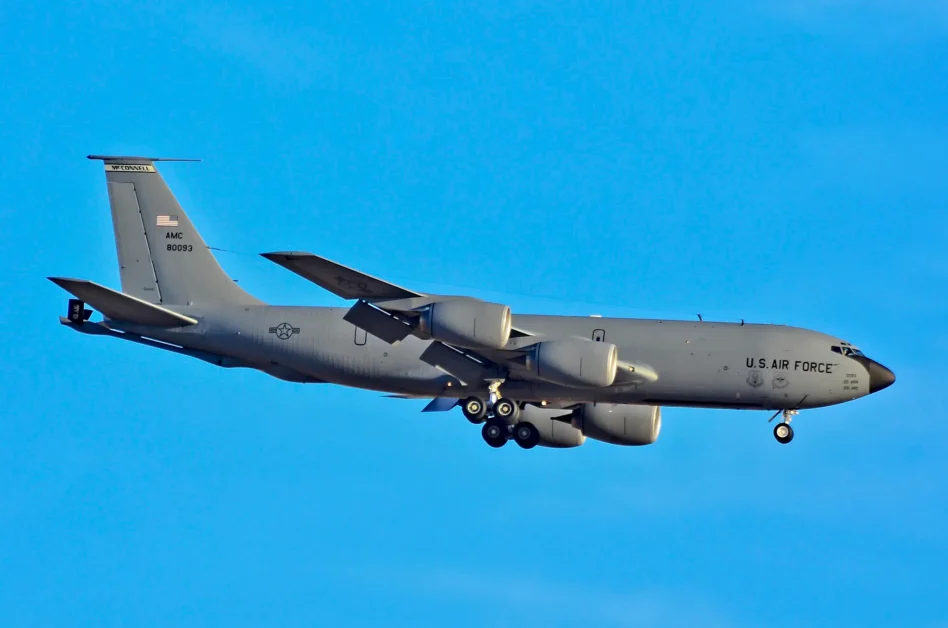
In their contract with AMC, Beacon is delivering its combined platform—both Murdock and Lighthouse—to AMC for integration onto undisclosed cargo and aerial-refuelling aircraft over the next two years. For reference, that fleet includes some big ol’ workhorses we all know and love like the KC-135 Stratotanker, C-5 Galaxy, and C-17 Globemaster.
Along with their robo co-pilot and Lighthouse, Beacon will also expand their “multi-crew insights across aircraft to include things like pilot fatigue,” Cox said. “The focus area is really pilot health, the crew, and adopting our system for a really large, mobility-class aircraft.”
Naturally, that whole pilot fatigue and health thing has been a concern for lawmakers as well, especially since these transport aircraft have been put to work ferrying fuel, weapons, and people all over the world recently.
In its FY2026 NDAA draft, the House Armed Services Committee highlighted the “significant opportunities to enhance flight safety, operational efficiency, and cost savings” and “[reduce] human error” that adopting the kind of AI-powered co-pilot software that Beacon is working on can offer pilots and crews.
Flying commercial: The tech has pretty obvious commercial applications, too. A lot of the transport jets AMC operates are variants of commercial cargo jets and airliners (the KC-135 and the Boeing 707, for example), and Cox called this latest contract Beacon’s “path towards eventual commercialization.”
“We’re trying to actually build tech that we think will help pilots fly safer and more efficiently. In order to do that, we have to get on operational aircraft,” he added. “Human flight is going to be around for a long time, and we think we’re gonna be an integral part of that.”