Dare we say it seems like the Pentagon might actually be getting with the El Segundo vibe?
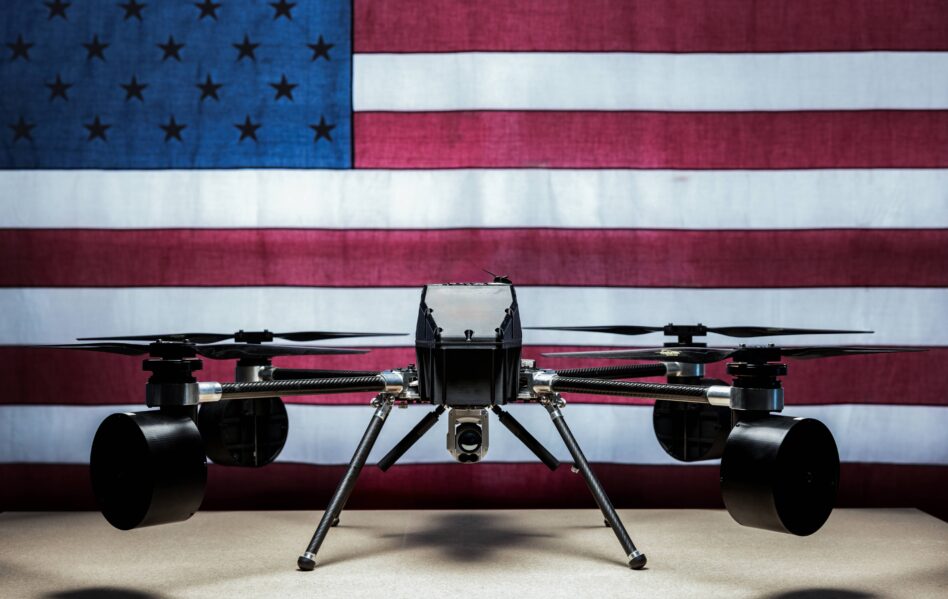
This morning, LA-based CX2 announced in an exclusive release to Tectonic that its Wraith “airborne EW system” (drone) and another yet-to-be-announced product have been selected for Design Reference Mission 3 (DRM3) under the Defense Innovation Unit’s Project G.I. for adoption by a unit in INDOPACOM.
The competition sought tech that “[enables] dispersed formations to detect farther, sustain longer, and remain undetected in contested environments,” especially in terms of EW. The procurement contract is worth $2M and comprises 30 Wraiths and 25 of the super-secret product.
The company says that it will deliver the systems to operators by the summer.
“The architecture of war is fundamentally changing,” CX2 Head of Warfare Porter Smith told Tectonic. “We had these big, large, exquisite systems. Now, you need decentralized, lower-cost things at scale…When you’ve got guys that are dispersed all over, [like in] the Indo-Pacific theater, it’s really helpful to [have] your own sensing and targeting assets that you own [and] control.”
Spectral: CX2 ain’t a new face around here, so we’ll keep this brief. The company was founded back in 2024 by an all-star team, including:
- Nathan Mintz (CEO), an ex‐EW/radar engineer at Raytheon & Boeing and an Epirus co-founder
- Mark Trefgarne (President), a tech entrepreneur behind behemoths like LiveRail and Meta
- Smith (CSO), a former a16z investor and DIU fellow
- Lee Thompson (CTO), the former head of RF engineering at SpaceX
The company basically builds products that scan the EM spectrum and help users determine where adversarial RF (like what controls a non-fiber-optic drone) is coming from. Then, they can be, like, taken out. The company’s whole motto is “find, fix, finish.”
On the wavelength: They have built a few different products designed specifically for the era of war on the EM spectrum.
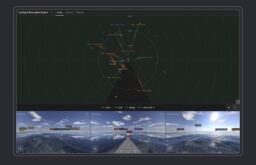
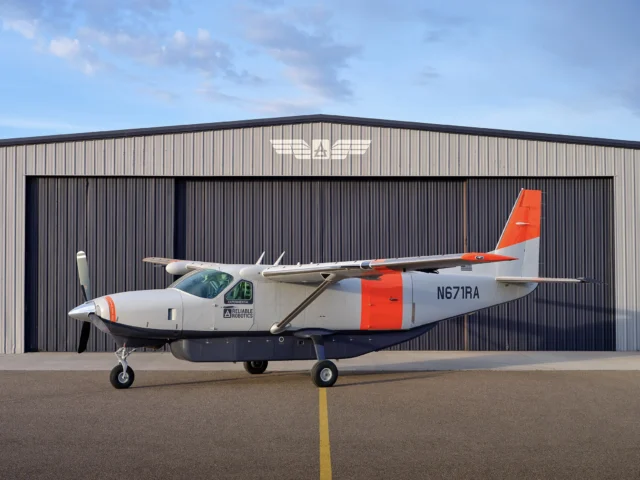
- Wraith: Basically a drone built to sense emissions—think a Group 2 quadcopter with sensors on it. The whole thing flies around and detects and geolocates RF emissions, creating a “spectral heat map of the battlefield” for assets like strike drones, Smith said. It also works in jammed and contested environments.
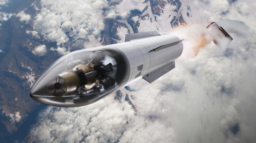
- Vadris: A platform-agnostic RF-seeking payload. Basically, the Chinese takeout food container-sized tool can plug onto a drone and figure out where RF signals—especially drone operating signals—are coming from so that controllers can be taken out. The idea is to “hunt the archer, not the arrow.”
“It is a hunter-killer pairing,” Smith told Tectonic when they unveiled Wraith last December. “Wraith goes up as the hunter and maps everything out…Vadris is then used as the killer. This creates a closed kill chain between two systems for organic ground force elements.”
The super-secret soon-to-be-announced product will be in the “RF deception space” and should be out later this year, Smith said. Spoofing ftw.
All jammed up. Smith said that in the DIU competition, Wraith and the other platform performed particularly well when GPS and comms were cut.
“We had to pass basically a GPS and command link jamming test that they set up out there, which was, is actually great to see,” he said. “It’s awesome that DIU is moving in that direction, because it’s just table stakes moving ahead for products.”
Plus, he said that the fact that CX2’s products are portable and relatively cheap makes them pretty attractive to frontline units.
“You can pack these things up in a couple of tough boxes. Of course, things will break. Of course, things will need to get fixed,” he said. “But you’re talking about hundreds or thousands of dollars on those repairs, not hundreds of thousands or millions of dollars.”
We asked Smith why he thought CX2’s products were particularly well-suited for units in the Pacific. Basically, he said it puts control of the EM spectrum in the hands of frontline operators.
“[In INDOPACOM], you’re looking at a world where units are going to be dispersed,” he said. “You could be on an island by yourself. You could be on a peninsula by yourself. You could be in a rugged, mountainous area by yourself…your ability to rely on external aviation assets that provide you the sensing and targeting capabilities that we’re providing could be very limited.”
CX2’s products basically create a unit-sized protective EW bubble.
“When [users] look at our stuff, what they like about it is they own it, they control it,” he said. “It provides a 20-25 kilometer ring around them in which they can do serious damage, and they don’t rely on anybody else.”