It’s been a big year for unmanned surface vessels (USVs), and maritime darling HavocAI might’ve found a new way to make them even more popular.
On Monday, in an exclusive to Tectonic, the Rhode Island–based sea-drone maker and The Spaceport Company, a sea-based rocket launch startup, announced a successful suborbital rocket test launch in the Gulf of Mexico that used HavocAI’s USVs for range-clearing.
The cross-domain mash-up we didn’t know we needed.
Two if by sea: If you read Tectonic, you’re probably familiar with HavocAI and their increasingly popular fleet of unmanned vessels, so let’s kick things off with The Spaceport Company.
With a rise in commercial rocket launches and the Department of Defense’s push to scale up missile testing, land-based spaceports and launch sites are getting more and more crowded. However, people still need sites where they can make things go boom.
That demand inspired The Spaceport Company to take the launch party offshore:
- The company was founded in 2022 by CEO Tom Marotta to fix the congestion at US launch sites and test ranges.
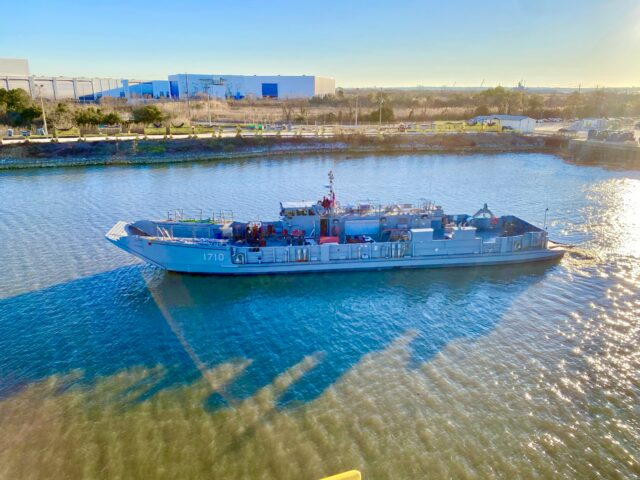
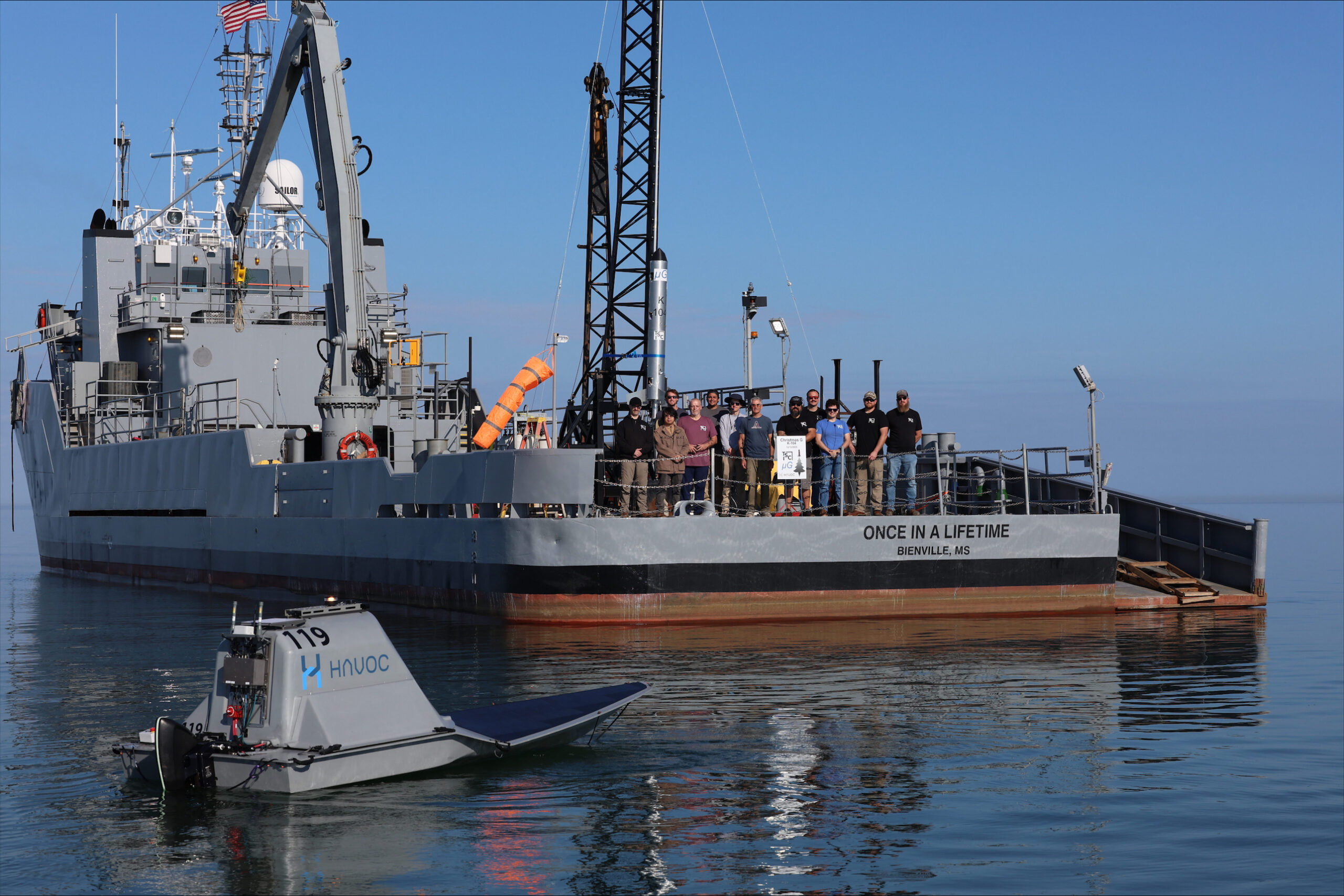
- They’re building a floating platform for orbital launches, but for now, they’re using a 180-foot retired Navy vessel called “Once In A Lifetime” (named after the Talking Heads song) for sea-based hypersonic missile and rocket launches.
- Their partners include defense contractors like Northrop Grumman, L3Harris, and rocket startup X-Bow Systems. On the government side, they’ve worked with the Coast Guard, Air Force Research Lab, Missile Defense Agency, and the DIU.
All clear: Launching anything, whether a space-bound rocket or a missile, is pretty darn complicated. “One of the challenges we have is clearing out uninvolved boats,” Marotta told Tectonic. “There is a lot of commercial maritime traffic, as well as recreational traffic, and what we typically do is hire people with boats to ask other boats to get out of the danger area.”
That’s where HavocAI and its fleet of autonomous vessels came in last week. “Autonomy is meant to replace the dull, the boring, and the dangerous,” HavocAI CEO Paul Lwin told Tectonic, and this “range-clearing mission” was all three. “That’s what these boats are perfect for.”
Friday’s launch in the Gulf of America was a “technology maturation exercise,” Marotta said.
“We built a new launch rail that we’re going to use next year to launch a sounding [or suborbital] rocket for the Air Force Research Lab. We had to go out there and test it to make sure it’s up to TRL (Technology Readiness Level) 9.”
Quick and easy: According to Marotta, HavocAI’s Rampage unmanned surface vessels (USVs) made the launch prep process a breeze. Three Havoc USVs teamed up with two crewed vessels to “quickly clear out the area” around Spaceport’s Once in a Lifetime, Marotta said. “It gave us more bang for our buck and allowed us to cover more ground with fewer people.”
In the end, “It was an absolutely flawless launch,” Marotta said, and Havoc’s USVs even helped clear the area of debris and look for the parachute after the rocket splashed down.
More than Once in a Lifetime: According to both CEOs, this range-clearing mission could be the first step in a budding partnership—and a new line of business for HavocAI.
The Spaceport Company is on contract for more launches next year, and they’re seeing a lot of demand from the DoD to “scale up the cadence” of hypersonic missile testing at sea.
They haven’t worked out the details yet, but “from where I sit, having the Havoc boats involved in those future operations could be very, very beneficial,” Marotta said. “The operation that we did today was complex and had a lot of stakeholders, but Havoc’s already proven what they can do.”
“The future of the partnership between Spaceport and Havoc is bright, and it’s gonna be exciting,” Lwin added. “We can do more things—we can put our software on their [launch] boats one day.”