Anduril is getting back to the basics.
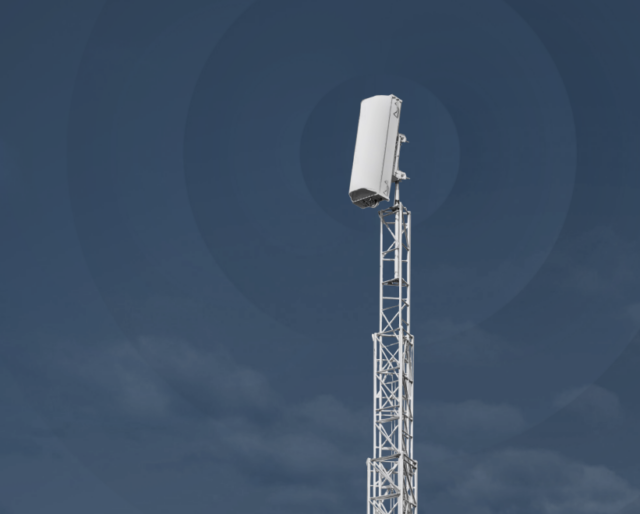
Everyone’s favorite neo-prime announced today the newest product in their oldest family of systems: a 5G Comms Sentry Tower (CST), built with Nokia and designed to deliver a bubble of connectivity in the most remote locations.
If you thought Anduril was all-in on the boomy and zoomy things, think again.
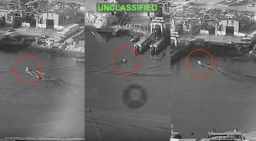
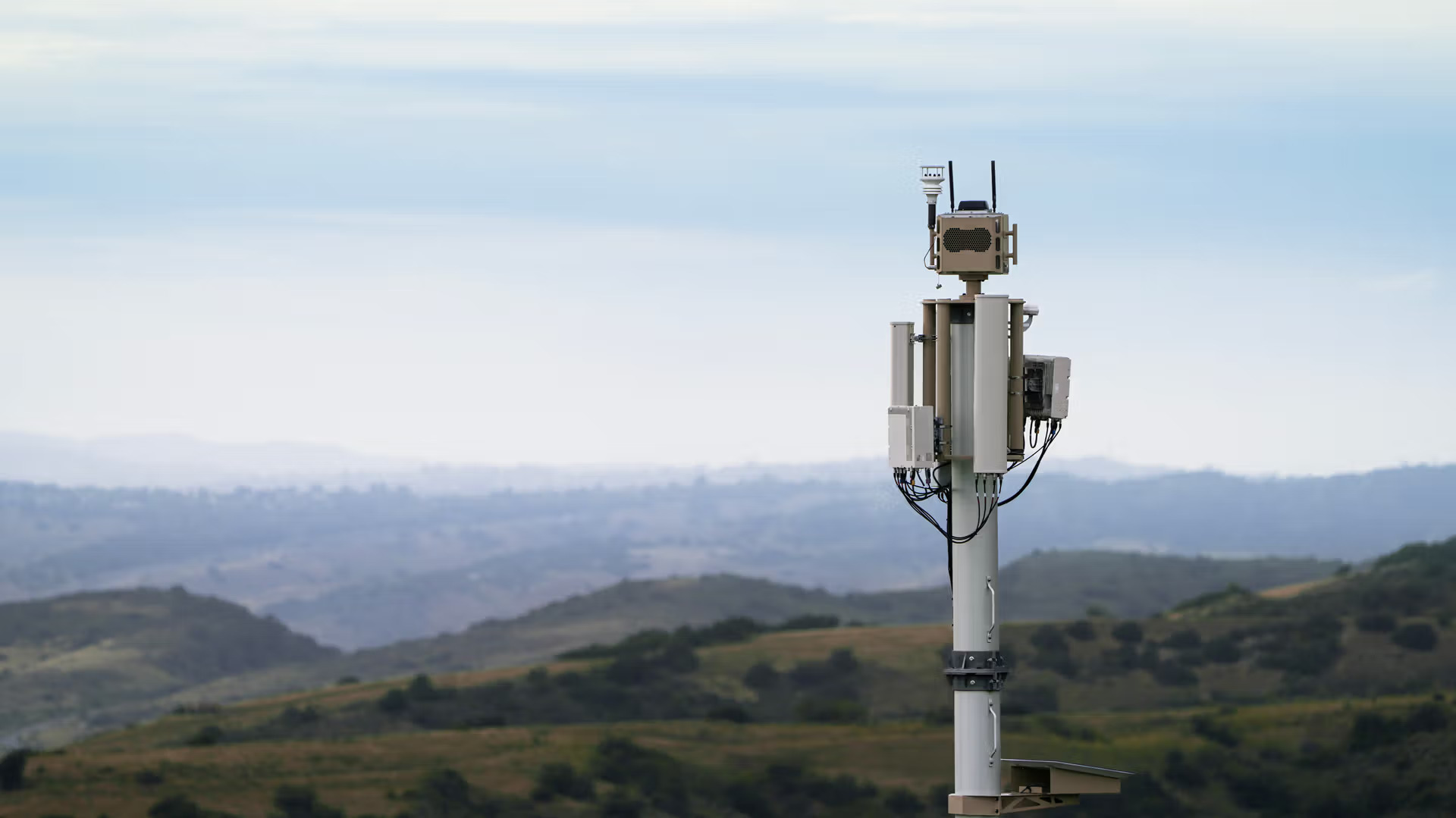
Makes sense: Anduril’s OG Sentry surveillance towers were where the defense tech goliath cut its teeth, but, in the places they’re deployed, cell service is often nonexistent and other sources of connectivity—like Starlink—don’t accommodate the amount of devices and data that the systems and their operators require.
- The Sentry systems combine sensors, edge AI, communications, and their Lattice software to detect, classify, and track “objects of interest” without requiring a ton of human intervention and oversight.
- They have versions built for maritime and cold-weather environments, as well as for long- and extended-range fixed-site autonomous surveillance.
- The Sentry’s have especially been a hit on the border, where Anduril has worked since 2019. The towers cover over 30 percent of the US’s southern land border, according to the company.
“We have hundreds of Sentry systems deployed throughout the world, and in many of those areas, the communications are suboptimal,” Anduril’s VP of Counter Intrusion, Peter Babb, told Tectonic in an exclusive interview. “We saw a massive gap—a safety gap as well as a communications gap—we could fill in partnership with Nokia Federal to turn the lights on in [those] areas.”
Since the 5G variant is built on the original Sentry architecture, adding Nokia’s miniaturized cell tower infrastructure to it didn’t take a ton of reconfiguration.
“We took the same commercial technology used in mobile network operators, scaled it down, integrated that 5G network into Anduril’s Sentry,” Nokia Federal exec Randy Coltrin said. “We reduced the footprint extensively to allow it to fit onto a Sentry product.”
Tower tech: Here’s what that new tower brings to the table:
- Each CST offers several kilometers of coverage and can be set up in under three hours. To boost the range, multiple towers can be linked together, each with its own power supply, either via solar or a generator.
- The tower runs on a private and secure network—instead of relying on commercial or foreign (remember: border) networks—integrated with Anduril’s Lattice software, and “information can be processed and disseminated in real-time,” Coltrin said.
- The tower is delivered “as a service,” meaning users pay for access instead of data usage.
- It allows both “systems deployed by Anduril and others to actually communicate with the outside world, and also allows other devices to be used within the bubble that’s created,” Babb added.
The tech is production-ready, but before we get ahead of ourselves, Anduril doesn’t have any orders on the books just yet. “We’ll be ready to ship units when we have a customer, but this is not a major leap from what we have deployed at scale with hundreds of systems,” Babb said. “It’s just finding the right customer who desires this capability.”
Given how widely deployed the Sentry towers are (and Anduril being Anduril), we’re guessing a whole bunch of government folks working on the border and bases in the boonies are going to want to get their hands on them.