We’ve talked a lot about electronic warfare recently, and it looks like we’re not stopping anytime soon.
This morning, in an exclusive interview with Tectonic, Sky Spy—a signal intelligence startup born on Ukraine’s frontlines—announced that they’ve raised a $1.6M pre-seed led by Expeditions Fund and Superangel, with participation from Freedom Fund, Sunfish Partners, Crosscourt Ventures, and Material Ventures.
“Sky Spy was built by people who’ve seen how unreliable intelligence costs lives,” CEO Arsenii Hurtavtsov said in a statement. “Our mission is simple: to give forces real-time awareness in the spectrum – because the side that dominates the spectrum dominates the war.”
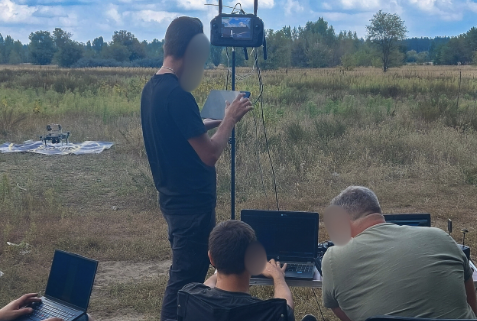
Sky Spy’s kit is already being tested by frontline units in Ukraine against Russian EW, but Hurtavtsov told Tectonic that this new pile of cash will allow the startup to build out its team, scale up production, and integrate AI into its signal detection system.
“Our goal is to basically finish the product, take it to TRL 9 in the next couple of months, and launch the production in Europe and in Ukraine,” he said.
They also want to make their signal detection system fully autonomous within the next year.
To the front: Sky Spy was founded in 2024 in Ukraine to address a pretty pressing problem— Hurtavtsov and his team wanted to build a product that was easy to use and could help frontline soldiers detect and destroy Russian EW and digital capabilities.
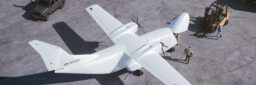
The company’s flagship product is called Agent 001, which, according to Hurtavtsov, “helps military forces to turn any UAV into an autonomous spectrum hunter.”
- The kit is UAV-agnostic, meaning it can plug into different platforms.
- It’s also customizable—there is the UAV payload itself, which is a sensor kit essentially, and “multiple antenna sets, depending on the type of missions that can be performed.”
- It’s lightweight—about 500g—compared to the industry standard of about 1–2kg.
- The kit can pick up about 2–5 emitters per mission, according to Hurtavtsov, which then get plugged into the company’s SIGINT software. That data still needs to be sifted through by a signals analyst, but it will be done by AI in the coming months.
- All of the computing happens on board the UAV through Sky Spy’s kit.
- Hurtavtsov said that the seeker kit is currently composed of parts “mostly” from the US and Europe, but still has some Chinese components (though they are trying to minimize that).
- Currently, Agent 001 can detect emissions from about 1.5km (0.93 miles) away, but Hurtavtsov they’re working up to 3km (1.86 miles).
Agent 001 costs about “$10–15,000 for the multi-rotor UAV version,” Hurtavtsov said, and for the fixed-wing flavor, “it can go up to $25–30,000 depending on the integration.”
Eye in the sky: And how does the whole thing work? Basically, the operator gets a rough idea of where a radio frequency (RF) emitter is, then sends a UAV with Agent 001 to the position.
- Sky Spy’s kit picks up emitters one by one and sends them back to the operator using the company’s software.
- The UAV then uses a camera to capture an image of the emitter’s geolocation for confirmation.
- The UAV operator can then “initiate the fire mission” using their own assets.
Hurtavtsov said that they focus on finding one emitter at a time to increase accuracy. “We are not, you know, believing in the fairy tale,” he said. “We’re not trying to find all the emitters at once. And this is actually the reason why none of the other products on the market work.”
Currently, Agent 001 is at technology readiness level (TRL) 7, and they just got their first combat validation, Hurtavtsov said. He added that with their first two missions with frontline units in Ukraine, “[they] were able to detect and geolocate multiple Russian jammers and ground control stations with the accuracy of 50 meters.”
The company has inked deals with users in Ukraine, France, Germany, and the US, and they’re still carrying out small-scale production. But Hurtavtsov said that they have identified production lines in Europe and Ukraine and, using this new tranche of funding, the company will build out full production lines in both places.
Plus, within the next year, the company also plans to “partner with two or three of the biggest drone manufacturers in NATO countries, and two or three drone manufacturers in Ukraine” for integrations, and explore expanding to different domains.