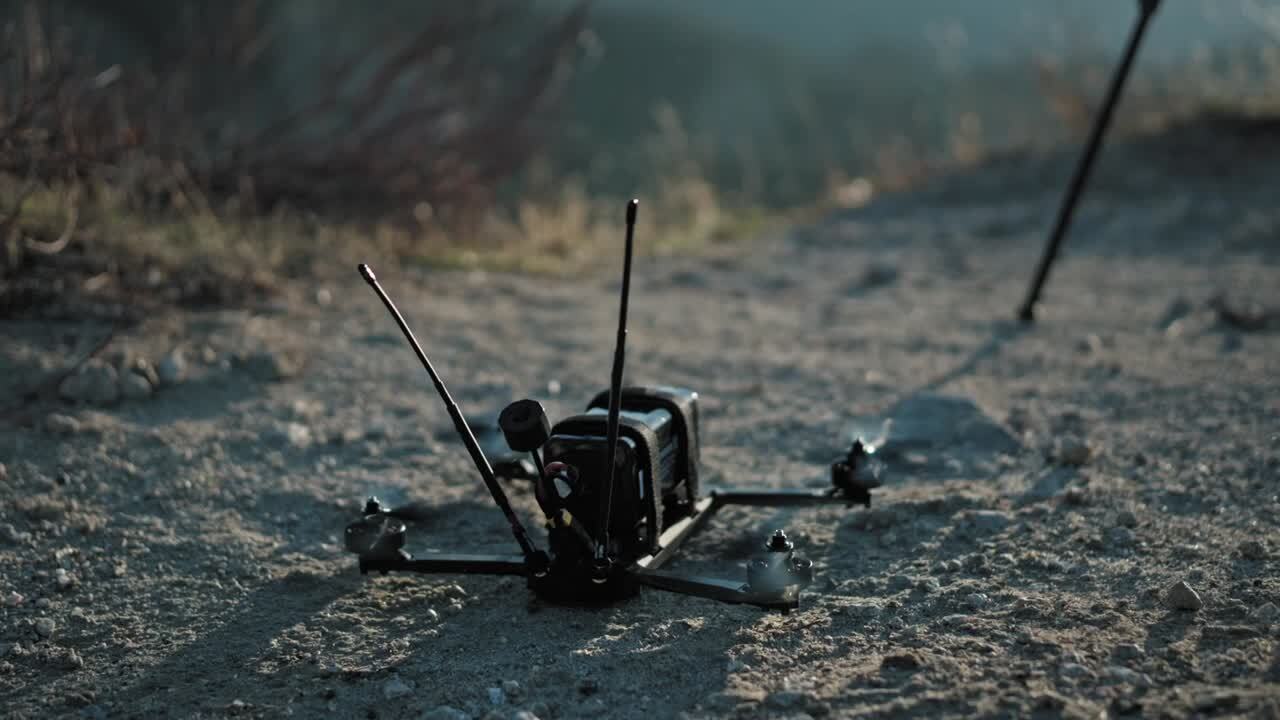
The year of the mash-up is coming to a hell of a close. This morning, in an exclusive release to Tectonic, American FPV drone company Neros Technologies announced that it’s building a fiber-optic drone with Israel’s Kela Technologies, just a week after the two companies announced an official partnership.
The drone-with-a-cord is a modification of Neros’ flagship Archer FPV, and is designed to work in “the most aggressive electronic warfare environments.”
Olaf Hichwa, Neros co-founder and CTO, told Tectonic from the company’s Kyiv office that the drone was inspired by the kit that frontline soldiers are using in Ukraine.
“We have seen [in] Ukraine that fiber optic solutions are one of the highly important tools in the tool chest,” he said. “Fiber has a lot of risks associated with it, but for those extremely hardened targets where you need manual precision, there is no match for the EW resistance that fiber offers.”
Big bucks: If you’re a regular reader of Tectonic, you’ll know that Neros is a big name in the drone dominance space.
The El Segundo-based startup was founded in 2023 by Hichwa and Soren Monroe-Anderson and is backed by major tech funds, including Sequoia Capital.
- The company raised a $75M Series B in November, bringing total funding to $121M.
- Neros builds Archer, a quadcopter FPV free of Chinese components down to the chip level that costs about $2,000.
- They’ve capitalized on the Pentagon’s drone mania: In February, they won a contract to send 6,000 drones to Ukraine, and in November, they landed another to supply the Marine Corps with 8,000 Archer Strike drones.
- The company has also been tapped for the US Army’s Purpose Built Attritable System (PBAS).
Kela Technologies is a defense darling in its own right. The company was founded in Tel Aviv, Israel, last year, and builds software and kit that integrates commercial and military systems for defense.
- The company is also backed by Sequoia and has raised a total of $99M from giants, including Lux Capital and In-Q-Tel.
Better together: Hichwa told Tectonic that Kela is providing the fiber cable, and Neros is providing the Archer drone—the fiber-optic connection will basically plug into the base of the FPV.
- Right now, the two companies have a 5km cable (meaning the drone will have a 5km range), but they’re working on 10km and 15km variants, as well. Those will be rolled out in early 2026.
- The cable itself (not the integration) has been battle-tested in Israel, Hichwa said, and based on where he took the interview, it sounds a lot like the fiber drone could be tested in Ukraine soon.
- Right now, the fiber Archer variant is not equipped with explosive or kinetic payloads, but Hichwa says that’s the first upgrade they’ll be releasing. The company plans to have a fiber drone kitted out with a go-boom payload—likely a fragmentation charge—early next year.
- The drone is remote-controlled and “completely manual” up until strike, Hichwa said. While that means it needs a pretty switched-on human operator, it also means that the drone is completely un-jammable.
Hanging by a thread: Un-jammable is one thing, but we were curious how robust the cord itself is (ever seen a strong gust of wind hit a kite?)
Hichwa said that Kela had worked hard to build a fiber-optic cable that balances weight with strength and flexibility. He couldn’t get into the details, but said it’s a “material science question” and that the connection has performed well in tests.
“There are a lot of reasons why a cable could snap, he said. “But the Kela-Neros solution has been thoroughly tested and performed significantly better than other options during our testing.”
He and the team recognize that fiber has major limitations, but felt it was important that operators have the option when everything is jammed and nothing else will work. “It’s not like fiber replaced RF links or onboard edge compute. Fiber just offers another set of capabilities which end up benefiting our warfighters,” he said.
In the family: Hichwa said that maintaining their whole “no China” thing was particularly challenging with fiber drones—most drones-with-a-cord, he said, use two chips that are primarily sourced from China.
“We were in Ukraine in 2023 and 2024 when fiber was first coming out, and we took apart a lot of the fiber solutions,” he said. “We were impressed by the engineering, but it was a very Chinese development…Every single fiber offering I’ve ever seen [has] these two Chinese chips, including a very small Chinese FPGA.”
So, it was up to Neros to develop an alternative. Hichwa said they redesigned the media converter board from the ground up using only American and European designs and silicon.
- The printed circuit board is fabricated in Europe
- The cable is from Israel
- The drone itself is built in Neros’ factory in El Segundo
“It’s a fully China-free approach to designing these systems,” he said. “The American industrial base needs solutions that are designed to be manufacturable without reliance on our adversaries.”