It’s been a big last few years for small, inexpensive drones (and the companies that build them), but larger platforms have remained pretty firmly in the realm of the expensive and exquisite.
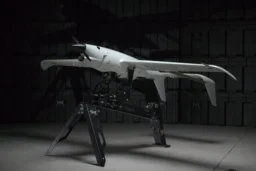
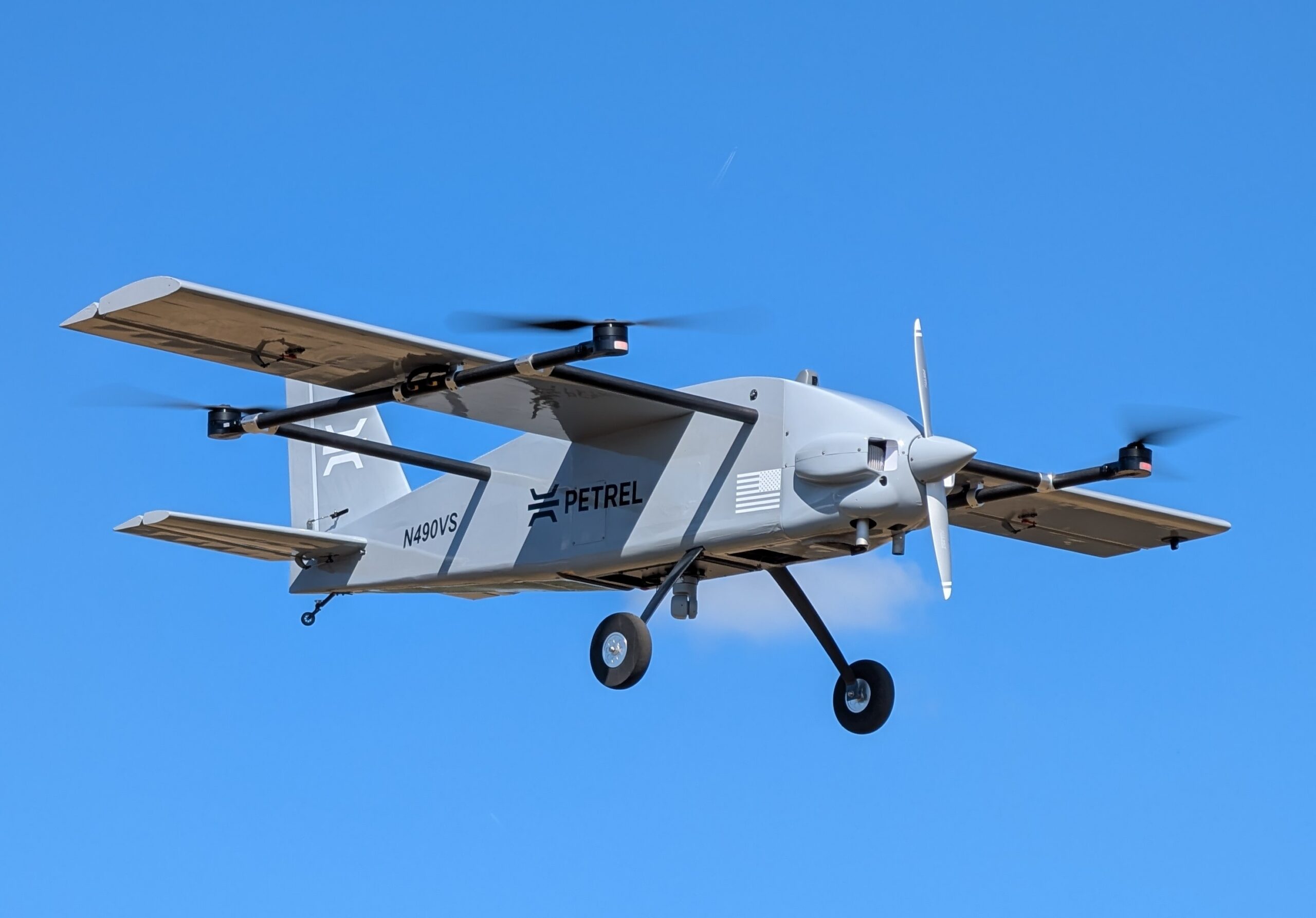
Today, in an exclusive release to Tectonic, Florida-based Petrel Technologies emerged from stealth to change that. The startup is building a low-cost, Group 3 (i.e., larger) vertical takeoff and landing (VTOL) drone that they say is exactly what the Pentagon needs for everything from ISR to cargo and one-way strike missions.
Banners to bombs: You might be thinking, “Oh, great, another drone company,” but we’re gonna stop you right there. Petrel’s backstory and drones are a little different than the ones you might be used to.
Founded by college friends Jacob Stonecipher and Chris Rothe (a former Green Beret), the company got its start in aerial advertising four years ago. Back then, the company was called Sustainable Skylines and built drones to tow banners over Miami Beach.
“We initially tried to find an off-the-shelf drone that could handle the unique banner payload, but everything was too expensive and couldn’t handle the 1,000-square-foot banner, which acts like a sail or a parachute behind the aircraft and causes varying drag and a ton of vibrations,” Stonecipher told Tectonic. “So we ended up building something ourselves.”
Wood is good: Stonecipher and his team settled on an airframe made from a blend of carbon fiber and balsa wood, which “has been used in aviation for a hundred years, is one of the highest strength-to-weight ratios of naturally occurring materials on earth, and is an elite vibration dampener for UAS sensors and avionics,” Stonecipher said. “It’s also incredibly repairable in the field for end users, and extremely low cost.”
Petrel’s pivot: When Rothe got out of the Army after spending time in Eastern Europe with the 10th Special Forces Group, he saw what his old college buddy built at Sustainable Skylines and thought, “Damn, we could have used this in the military.” He decided it was the “perfect time to build a company together and pivot.”
Aside from the unique material, Petrel’s first post-pivot offering has some pretty impressive specs coming out of stealth:
- It’s a larger Group 3 UAS with an 11-foot wingspan, a maximum takeoff weight of roughly 100 pounds, a payload capacity of 30-50 pounds, and six to eight hours of endurance based on configuration.
- As a Vertical Take Off and Landing (VTOL) aircraft, it’s “launcher-independent” and can be “configured for ISR, tactical resupply, kinetic payloads, and, given our price point, as a one-way deep strike platform,” Stonecipher said.
- Because of the simplicity of the material and design, the drone comes in at around $90,000 per unit, and Petrel says it can be assembled in four minutes.
- And last but not least, it’s powered by Petrel’s in-house autonomy software that allows the drone to operate “autonomously from launch to land,” and they’ve built “mission-specific autonomy software for things like [small drone] mothership platform configuration.”
Hot launch: It’s still early days for the Petrel team, but they’ve raised $3.5M in pre-seed funding from family offices and are already seeing interest from a range of military customers.
- The company was down-selected by INDOPACOM for island logistics experiments in the Pacific and will be embedding the tech with end-users at the Army’s XVIII Airborne Corps at upcoming exercises.
- They’ve also flown the aircraft for users at the Army’s Joint Readiness Training Center (JRTC) in Louisiana, the 101st Airborne at Fort Campbell in Kentucky, and have tests planned with the Army Aviation Center of Excellence at Fort Rucker in April.
Ultimately, Petrel’s goal is to get that small drone fever to catch on with larger platforms.
“There’s been fantastic movement in the drone world with Unleashing Drone Dominance, but that’s all centered around and somewhat over-indexed on small Group 1 and 2 [drones] with limited range and payload,” Stonecipher said. “At Petrel, we’re really focused on bringing real, attritable technologies to higher-payload, long-endurance mission sets.”
We’ve said it before, and we’ll say it again: Everyone loves a tiny plane.