It’s a Picogrid party, and everyone’s invited.
Today, in an exclusive release to Tectonic, integration startup Picogrid announced that the US Army tapped them to make sure a whole bunch of different sensors, radars, C2 systems, and effectors worked together during a recent sensor-to-shooter counter-drone and force-maneuver exercise at the National Training Center in the Mojave Desert.
The exercise with the US Army’s 1st Cavalry Division included tech from major industry players like CHAOS Industries, Echodyne, and DroneShield, with Picogrid’s Legion platform acting as the glue to tie them all together.
No one makes friends faster than a hardware integrator.
Team player: The goal of the exercise was pretty straightforward: Over the course of two weeks, 1st Cav wanted to see how capabilities from different vendors could be integrated to protect maneuver elements vulnerable to aerial threats.
The only way that all of this different tech could play together was using something like Picogrid’s Legion.
- Legion fuses information from different systems to integrate assets, streamline data, and feed it into popular platforms like ATAK, Palantir’s Maven Smart System, and, in this case, the Army’s Forward Area Air Defense C2 (FAAD-C2) system.
- On top of Legion, Picogrid’s Expeditionary C2 Nodes (ECN)—called Helios, Lander, and Portal—provided the physical hardware infrastructure and edge computing connecting the different assets in the field.
- That all sounds like a good deal for Picogrid’s partners (they’ve got a big network), but Picogrid doesn’t charge them for Legion or their ECNs. They’re betting that the Pentagon wants all of their fancy new tech to work together, and that they’ll be the ones to make it happen.
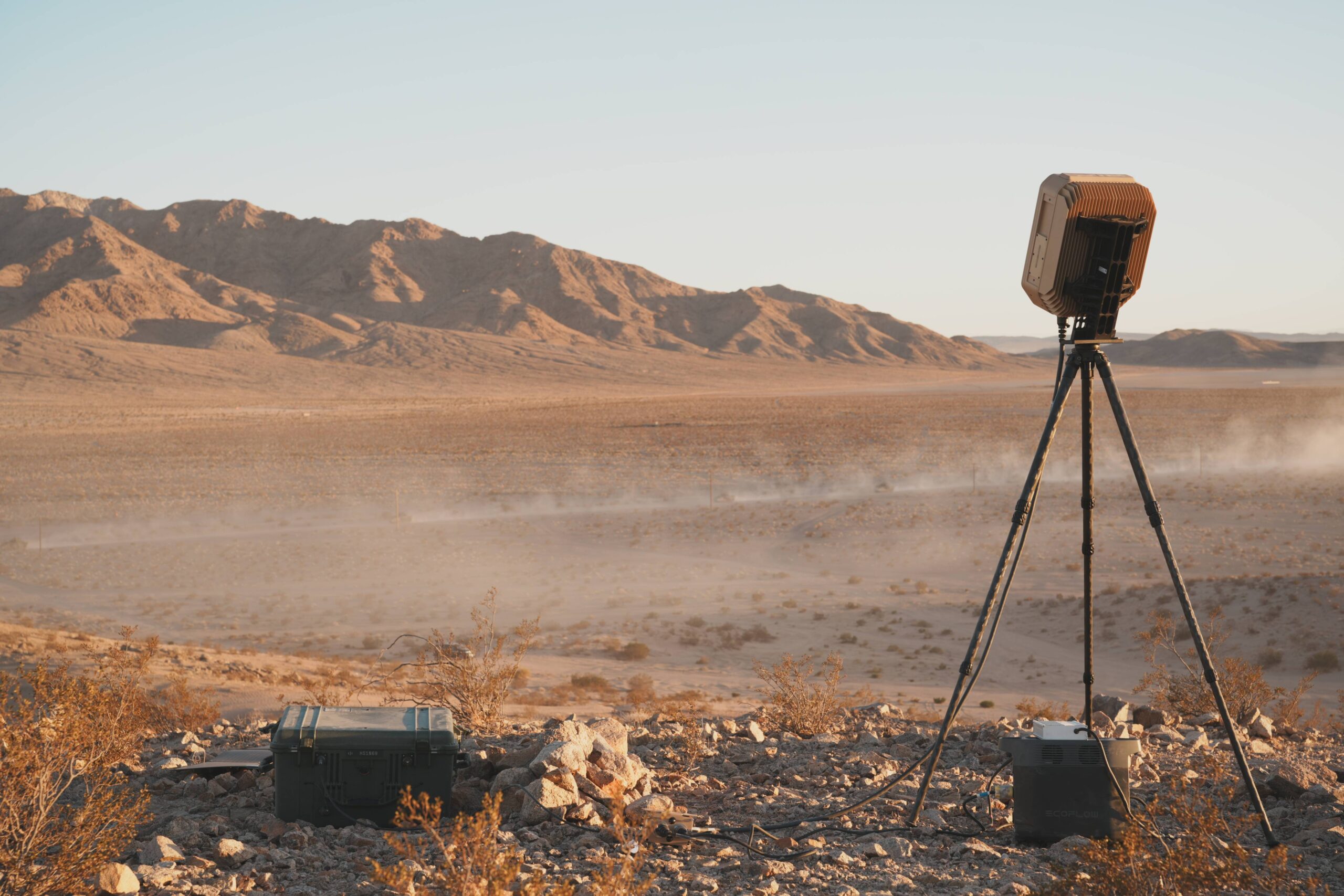
Training day: During the exercise, 1st Cav and Picogrid put Legion to the test in a realistic training environment, using things like acoustic sensors and radars to provide integrated sensor-to-shooter aerial protection for maneuver elements and mobile assets like the Bradley Infantry Fighting Vehicle.
“Based on the inputs from the microphones, we were able to cue radars from multiple manufacturers,” Picogrid co-founder Martin Slosarik told Tectonic. “We fused the tracks from different radars, and then cued FAAD-C2 to do an interception.”
Put simply: Legion told those vulnerable (and pricey) radars to turn on only when a threat was detected. They then fed that radar data into the 1st Cav’s C2 system to track, target, and take out the hostile UAV.
Sounds helpful, and according to Slosarik, it went pretty well.
“It was successful, and it was the first time that the Army has done something like this for a mobile maneuver element on the battlefield,” he said. “NTC is different than other exercises—it’s truly the place where the department validates and certifies the unit’s ability to fight wars.”
“This exercise was a coalescence of Legion’s value proposition for the army, and really the best example we have to date,” Slosarik added. “We’re at a tipping point where we’re moving from the prototyping efforts towards large-scale production and towards procurement.”
Who said you can’t team your way to the top?