
Coming at you live from the picks-and-shovels side of defense tech.
Today, VectorNav—which makes high-performance Inertial Navigation Systems (INSs) and Inertial Measurement Units (IMUs) for a whole range of zoomy and boomy things—rolled out a major upgrade to its accelerometer and gyroscope platform in an exclusive release to Tectonic.
The upgrade is designed for super-high G-force acceleration and maneuvers. Zoom zoom, indeed.
Stay steady: If you haven’t heard of VectorNav, there’s a good chance your favorite drone or rocket company has.
Founded way back in 2008, the company is an OG in the INS and IMU scene. Put simply, they make the things that let high-speed and acceleration vehicles measure motion and maintain accuracy, stability, and positioning during high-G impact and maneuvering.
VectorNav’s INS is made up of three parts:
- Accelerometer, which measures linear acceleration.
- Gyroscope, which measures angular rate.
- Magnetometer, which measures the rough heading of whatever the platform it’s mounted to.
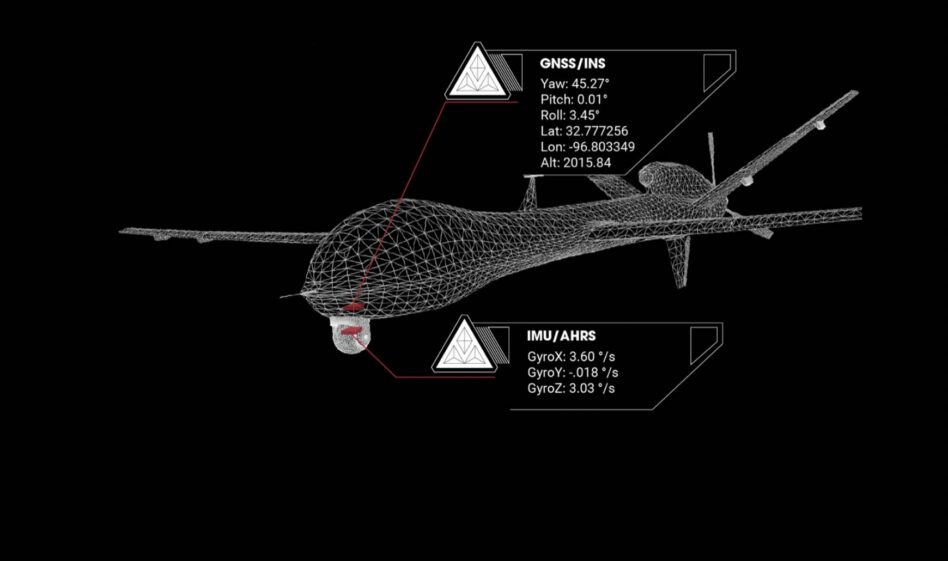
Basically, it functions like your inner ear—you can move your head around and still have a rough idea of where you’re pointing and situated. Combined with a Global Navigation Satellite System (GNSS) or another positioning system, the whole package—the biggest version of which fits into the palm of your hand—offers a positioning, navigation, and timing (PNT) solution for targeting and ISR platforms, even in GPS-denied and degraded environments.
That’s especially important for—and in high demand from—customers making Group 2-3+ UAS, hypersonics, interceptors, and other high-G maneuvering vehicles. That includes USVs, too.
New tech: VectorNav’s new products are taking things up a notch.
The company is rolling out 90G and 250G accelerometers and 4000 degrees-per-second gyroscope ranges across its inertial measurement unit (IMU) and inertial navigation system (INS) product line, enabling vehicles undergoing dynamic flight maneuvers and rapid launch acceleration to maintain PNT accuracy even in higher-impact, higher-G missions.
“We didn’t want to change the sensors that the Tactical Series [IMUs and INSs] used, because our customers are happy with those, and those 99 percent of the time work just fine,” VectorNav co-founder and president John Brashear told Tectonic. “We added a whole new set of sensors to it, so it’s basically like a separate IMU, and you’re really two IMUs in one.”
“You’re getting an IMU that has a much higher dynamic range, up to 250 G, which covers almost every possible application because it’s really hard to get above 250 G acceleration,” he added. “And then the 4000 degrees per second covers almost every possible application in terms of angular rate.”
Moving fast: Those saturation events—when sensors and PNT systems get, in a word, discombobulated—are increasingly common as UAS and hypersonics zoom and boom even faster.
“If you saturate at any point, even just for a millisecond, you can get a drastic error with your position and your velocity solution,” Brashear said. “Those errors can be large enough that they can compromise your ability to meet your mission requirements.”
Boomtown: With the number of new speedy drones, hypersonic missiles, and loitering munitions coming to market, VectorNav is seeing booming demand—and they’re making big moves to meet it.
- Currently, the company pumps out over 50,000 units per year at its facility in Dallas.
- They recently snapped up a 100,000-square-foot facility where they’ll double or triple production in the next few years, according to Brashaer.
That sounds like pretty good news for a whole lot of the companies we write about every day.