
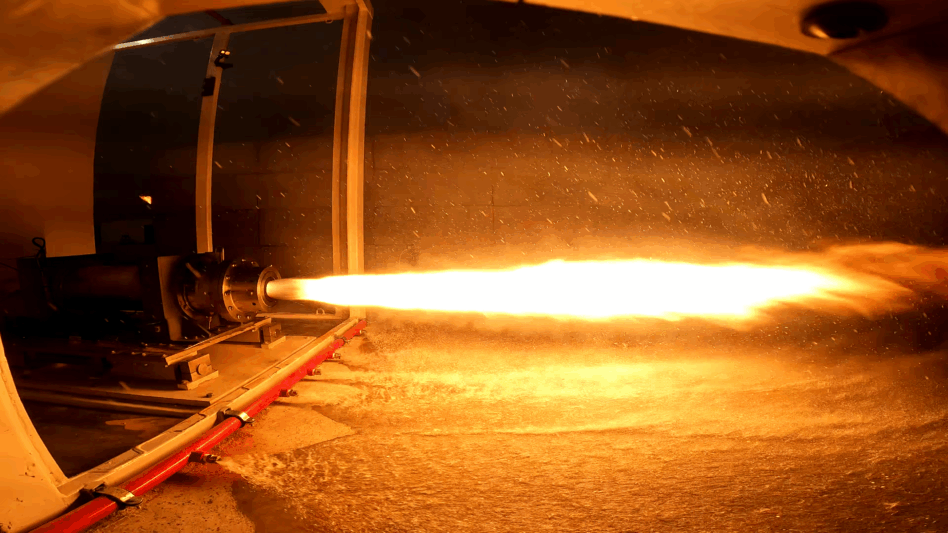
Welp, everyone really be out here just forming cliques.
Yesterday, 3D-printed propellant hotshot (get it) Firehawk announced that it’s teaming up with manufacturing startup UNION to “[bring] together UNION’s software-defined factory platform and metal parts manufacturing with Firehawk’s advanced energetics and propulsion manufacturing platform.”
In particular, the two companies say they’re banding together to work on 155mm production “with potential expansion into energetics and propulsion systems.”
“By combining our capabilities with UNION’s software-defined factory platform and advanced metal-parts production, we are building disciplined, practical readiness workstreams that strengthen resilient domestic production at scale,” Firehawk CEO Will Edwards said in a statement.
Factories of the future meet new-age go-boom. Couldn’t think of a more 2026 mashup if we tried.
Built better: Firehawk is a regular around here, so let’s kick things off with UNION. The company was founded waaaay way back in 2024 in Dallas, TX, and set out to reimagine the way defense manufacturing works.
The main idea is that smart factories are a kind of weapons stockpile in and of themselves—if you have enough factories that can churn out vital kit, you’ll be prepared for the next conflict.
- The company says it uses autonomous, AI-powered manufacturing and data-driven production oversight to build what’s needed real quick.
- UNION’s production lines are designed to be modular and flexible.
- The company says it can build everything from “munitions to critical mission systems.”
The secret sauce, at least according to UNION’s site, lies in its two software products:
- Faction: UNION calls this its “command” platform. Basically, it’s a factory-controlling system that “replac[es] disconnected legacy systems with intelligent agents that take action in real time.”
- Fabric: This is what UNION calls “the execution layer,” where machines can learn from changes and mistakes. It “transforms disconnected machines into responsive systems” and helps them configure and adjust without a ton of human input.
The idea is that these two systems learn over time—making production faster and better the more you do it. This, according to the company, makes UNION’s production facilities “ready for conflict, and engineered to outpace anything the world has seen.”
And at least a few investors seem to like the idea: UNION raised a $51.3M seed (yes, seed) led by Regulus Global and BVVC last year and is reportedly already seeking a Series A.
New and improved: Like UNION, Firehawk has taken a novel approach to a pretty legacy industry. The company was founded back in 2019 by Edwards and set out to change the way propellant, rocket motors, and solid rocket propulsion systems are built.
- We’ve told you a million times, but SRMs and other propulsion systems are built primarily by a few primes and are in super short supply. It’s an industry ripe for disruption.
Firehawk’s flagship product is a 3D-printed propellant grain that enables faster production and consistent performance. The company also builds:
- Solid rocket motors (SRMs) across different classes powered by the propellant.
- Base bleed motors (also using the propellant) for artillery and rocket artillery to reduce drag and extend range.
- Hybrid rocket engines that combine 3D-printed solid fuel grains with a liquid oxidizer, making a throttle-capable engine that is cheaper and quicker to produce than full liquid rockets.
Firehawk, too, has raised a (technical term) shit-ton of money—about $80M in total, including a $60M Series C last summer.
- They’ve also inked a series of partnerships at home and abroad, including with Hanwha and the Czechoslovak Group (CSG).
- They’ve scored contracts with AAL, AFRL, and AFWERX, too.
Better together: From the sounds of it, the initial collaboration will be on the base bleed side of things—Firehawk will build the propulsion system, and UNION will chip in the metal parts and assembly to make the whole thing, well, a munition.
And good thing, too—155mms are famously in short supply, particularly because of high demand in Ukraine and from Western allies who’ve emptied their stockpiles against that pesky Russian bear.
“UNION builds software-defined, automated factories with traceability so the U.S. and our allies can rapidly surge critical production when required,” UNION CEO Garrett Unclebach said in a statement. “Our alignment with Firehawk brings complementary strengths together across metal parts and energetics to strengthen readiness and reduce friction in the pathways that matter.”