It’s always a good sign when the customer comes back for more.
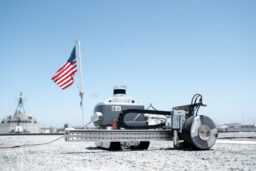
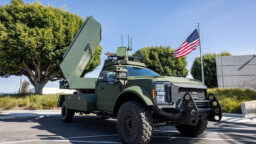
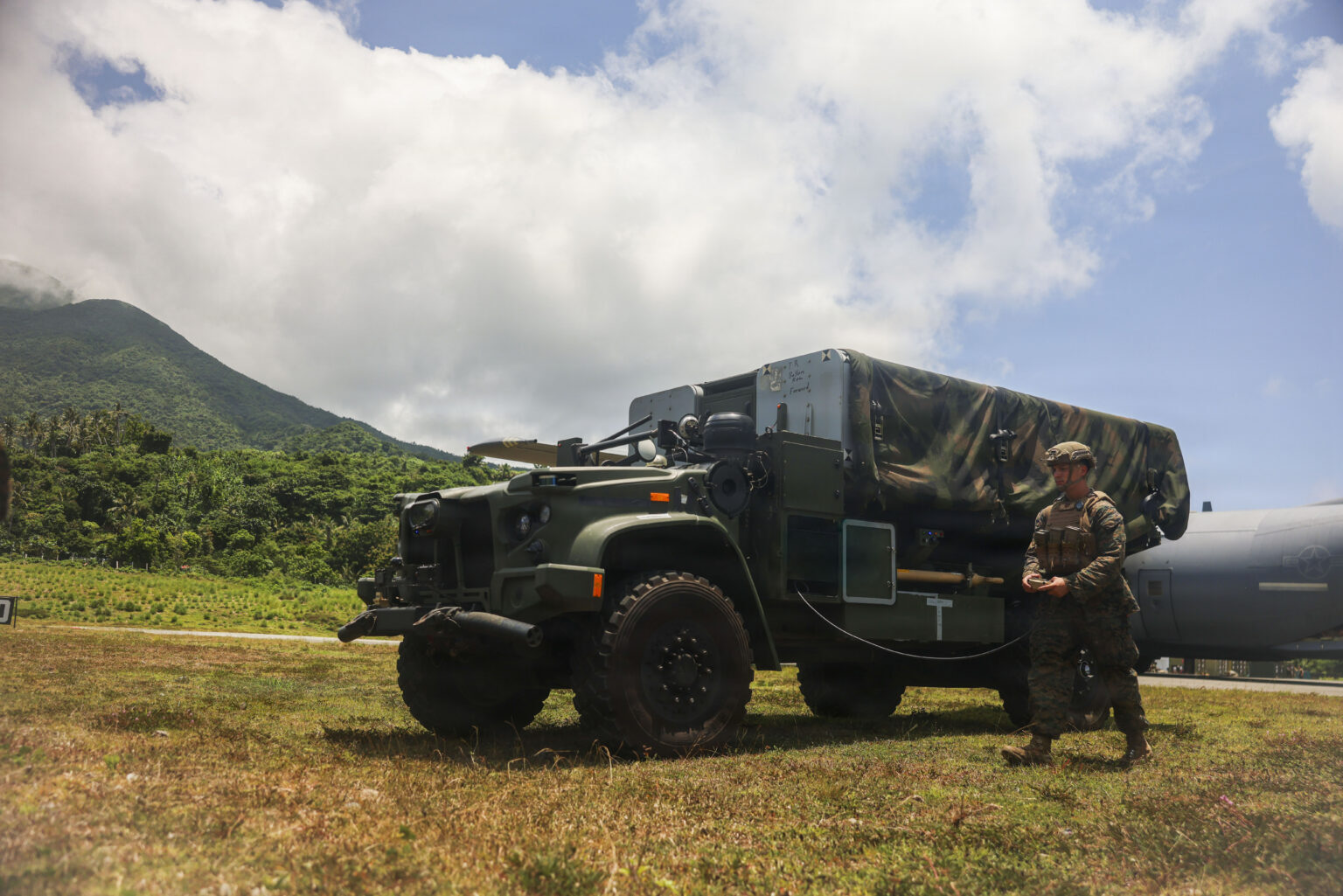
Yesterday, ground autonomy hotshot Forterra announced that they’ve (along with prime partner Oshkosh Defense) scored a Block 2 production contract from the Marine Corps for their Remotely Operated Ground Unit for Expeditionary Fires (ROGUE-Fires) system.
The award consists of two orders—134 units already delivered and an expected 44 to come—totaling $92M. This marks the military’s largest-ever public production contract for ground autonomy, according to the company.
“The current fight demands autonomous systems that increase force effectiveness, extend operational reach, and preserve combat power in contested environments,” Forterra Vice President of Defense Pat Acox said in a statement. “By integrating AutoDrive into ROGUE-Fires Block 2, we’re advancing a more survivable and mobile approach to sea control from the land domain.”
“A rogue battery is able to project dramatically more fires than an equivalent number of humans in a conventional missile battery,” Forterra CGO Scott Sanders added to Tectonic. “It gives the Marine Corps a lot of optionality and flexibility when it comes to reducing the number of people that it takes to deploy offensive fires.”
Fast friends: The Forterra-Oshkosh partnership is a mash-up for the ages.
The two companies formally announced that they were teaming up to build an autonomous launcher last fall at AUSA, and since then have been churning out ROGUE-Fires systems like hot cakes.
Here’s how the whole setup works:
- The base vehicle is made by Oshkosh (a Joint Light Tactical Vehicle (JLTV)), and is topped with a launcher. The initial prototype was built with RTX weapons, but now the setup “supports integration with the MLRS Family of Munitions (MFOM)” and payloads can be swapped out based on need. Sanders said the Block 2 vehicles will have Kongsberg weapons on them (under a different contract).
- Forterra’s AutoDrive autonomy stack makes the vehicle all “look ma no hands,” though there are still humans in the loop for the whole missile-launching part of things.
- The system is C130 transportable and designed to be deployable to (and operable in) even the most out-there places. Say, like, on a teeny-tiny island in the Indo-Pacific.
- ROGUE-Fires could be hidden near a crucial waterway, for example, and then Marines could remotely fire missiles at incoming enemy ships if things got hairy.
- The idea behind the Forterra-Oshkosh system—and the ROGUE Fires program as a whole—is to massively reduce the number of humans needed for launches, Sanders said. The fewer people deployed in these vehicles, the fewer lives that are at risk.
“There are still humans in the loop, they’re still deployed with these systems, but instead of having to have two people per firing platform, you have zero,” Sanders said. “If you think about a convoy that might typically have 30 or 40 people in it, you can get that down to two to four people.”
Gimme gimme gimme: Under this new order, Oshkosh and Forterra will continue work with the Marines through 2031.
- Oshkosh was first awarded the ROGUE-Fires contract back in 2022, and the prime’s vehicles were the “first semi-autonomous ground system fielded by the U.S. military,” per the company.
- This Block 2 contract introduces the Forterra autonomy stack and “expanded weapon system integration to support Expeditionary Advanced Base Operations (EABO) and distributed long-range precision fires missions.”
- The integration of AutoDrive also means the Block 2 vehicles will be able to continue operations even in contested, GPS-denied, and jammed environments. That’s kind of Forterra’s whole thing.
- The companies expect to deliver about 44 more systems under this contract, but that could increase if things go well.
Big ups: Beyond being a major win for Forterra itself, this is a pretty huge moment for autonomous systems as a whole, Sanders said. This contract takes UGVs out of the concept and prototype world and makes them something, like, actually real and fielded.
“There’s a ton of hype around maritime and air, and ground sometimes gets forgotten,” Sanders said. “But this is the first program of a record for an autonomous vehicle—air or maritime [included]—that’s actually in the field and going to operational end users in INDOPACOM.”