Well, the US certainly didn’t slow things down while we were all eating pretzels in Munich.
In case you missed it: On Thursday, the US Air Force announced that it’s kicked off integrating and testing the mission autonomy packages for the Collaborative Combat Aircraft (CCA) program. That’s the software brains, basically, that will make those tiny little planes we know and love fly and fight without human pilots.
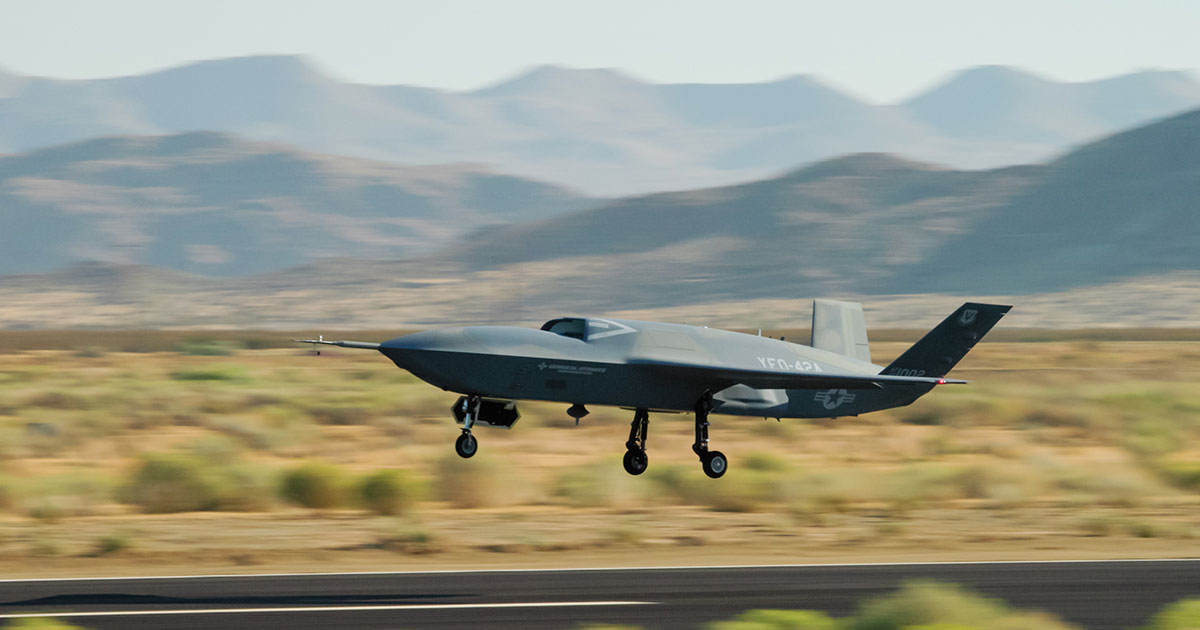
Plus, they officially confirmed who’s teaming up against whom: Shield AI will build the autonomy stack for Anduril’s CCA (the YFQ-44A), while RTX subsidiary Collins Aerospace will make General Atomics’ version (the YFQ-42A) go all look-ma-no-hands.
Primes against the new kids on the block. We love it.
Wee little plane: You guys are probably sick of hearing about CCA by now, but we’re obliged to keep giving you information (rules of the game), so we’ll keep it quick.
- Put simply, the program exists because the Air Force (and also the Navy and maybe also the Army) wants tiny little fighter-like drones that can fly and fight alongside full-sized, human-piloted ones. Force multiplication FTW.
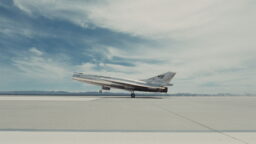
- Anduril and General Atomics won the competition to build production-ready prototypes for the Air Force program in April 2024. GA’s YFQ-42A model took flight for the first time in August 2025, and Anduril’s took off in November.
- The little drone-planes are expected to cost around a third of the price of manned fighters—around $25-30M a pop—and the Air Force wants to buy hundreds of them by the end of the decade.
- Shield AI and RTX were rumored to be building the autonomy brains for the program late last year, but this is the first time it’s been officially confirmed.
Open relationship: While GA and Anduril are the finalists for this phase (Phase 1) of the CCA program, the Air Force is keeping its options open: The service tapped nine unnamed companies for “Phase 2” of the program in November.
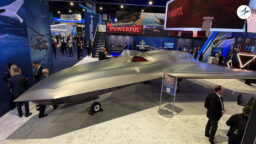
- Other companies, including Lockheed Martin, Boeing and Northrop Grumman, have all also unveiled concepts for “loyal wingmen.” Primes hate to be left out.
- Across the pond, Helsing has unveiled its own concept for a European drone wingman: the CA-1 Europa.
- The Navy, Marine Corps, and also maybe the Army are all working on their own versions of the CCA program. (Everyone loves a tiny little plane.)
Big brains: The beginning of autonomy integration for the Air Force is a pretty big step for the CCA program—after all, drones ain’t drones without the software that replaces a pilot.
Here’s how the whole thing is going down:
- The two companies’ software is being integrated via a government-owned Autonomy Government Reference Architecture (A-GRA).
- Shield AI is plugging its flagship Hivemind autonomy software into Anduril’s CCA, while Collins is integrating its Sidekick Collaborative Mission Autonomy software into GA’s model.
After the Air Force announcement, GA was quick to say that it had already flown YFQ-42A using Sidekick in February. Shield AI, for its part, said that Hivemind has been “successfully integrated” onto Anduril’s YFQ-44A and that they expect flight tests in the coming months.
Let the games begin, baby.