
Big day for the unsexy side of defense.
On Thursday, military logistics startup Rune Technologies announced that they’ve scored a $2M Direct to Phase II SBIR contract with the US Army in support of the service’s PORTAL (Predict, Optimize, Recommend, and Track for Adaptive Logistics) program.
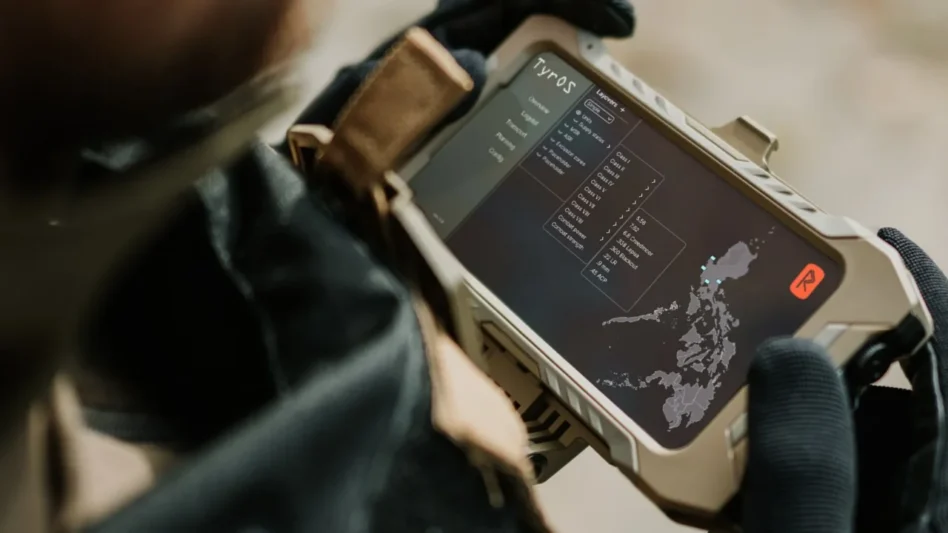
The company says that over the next 18 months, it will partner with the 1st Cavalry Division in Fort Hood to deploy its flagship TyrOS platform across “multiple echelons.”
“The Army faces increasingly complex logistics challenges as near-peer adversaries develop capabilities to disrupt traditional supply chains,” David Tuttle, co-founder and CEO of Rune, said in a statement. “This contract validates our approach of building software that works at the tactical edge, where decisions get made, rather than relying on distant servers that become unavailable in contested environments.”
Sexyback: Rune is famously the origin of our “unsexy” category of defense tech coverage.
The company was founded back in 2024 by Anduril alums David Tuttle (CEO) and Peter Goldsborough (CTO) to, basically, bring sustainment into the modern era.
The company’s flagship basically takes AI and applies it to the v v arduous task of sustaining and doing logistics for the military.
- TyrOS uses predictive AI and tons of data to track and move gear, fuel, food, and parts around more quickly across domains than legacy sustainment systems.
- It’s built to operate on low-connectivity edge devices down to “the crappiest Dell laptop,” as CEO David Tuttle told Tectonic last year, and runs “down to the lowest tactical levels so that we can feed consumption, expenditure, and personnel data up echelon.”
- The company was tapped by both Anduril and Lockheed Martin to be part of their team for the Army’s NGC2 competition. Very open, very modern, very 2026.
And the company has pulled in a nice amount of cash from VCs. Last summer, Rune raised a $24M Series A led by Human Capital, and in September, an undisclosed amount from In-Q-Tel. In total, the startup has raised about $30M; other backers include Andreessen Horowitz and Point72 Ventures.
Rune also has a CRADA with the Army and a research partnership with the U.S. Marine Corps Warfighting Laboratory.
Testing, testing: In a statement announcing the contract, the company said that this new SBIR with the Army “recognizes that Rune’s predictive logistics technology has already achieved sufficient feasibility” and “allows the Army to accelerate adoption by supporting rigorous military testing and integration with existing systems.”
Over the next year and a half, the Rune team is going to work to plug TyrOS into the Army’s many, many existing systems, including the Joint Battle Command Platform and Global Combat Support System-Army.
The company will also do “rigorous field testing with operational units”—basically, making sure what they’re building is actually working for operators.
“Rune will be developing their capabilities based on Warfighter feedback during collective training in challenging missions meant to emulate threats of capable adversaries,” SSG Mickey Reeve, program manager for PORTAL, said in a statement.
We’re guessing the First Team is pretty pumped to try something besides pen and paper.