
Look away, pirates: The Pentagon’s research agency is on a mission to make it a little bit harder to mess with unarmed vessels, and they’re betting that maritime autonomy hotshot Saronic can help them get there.
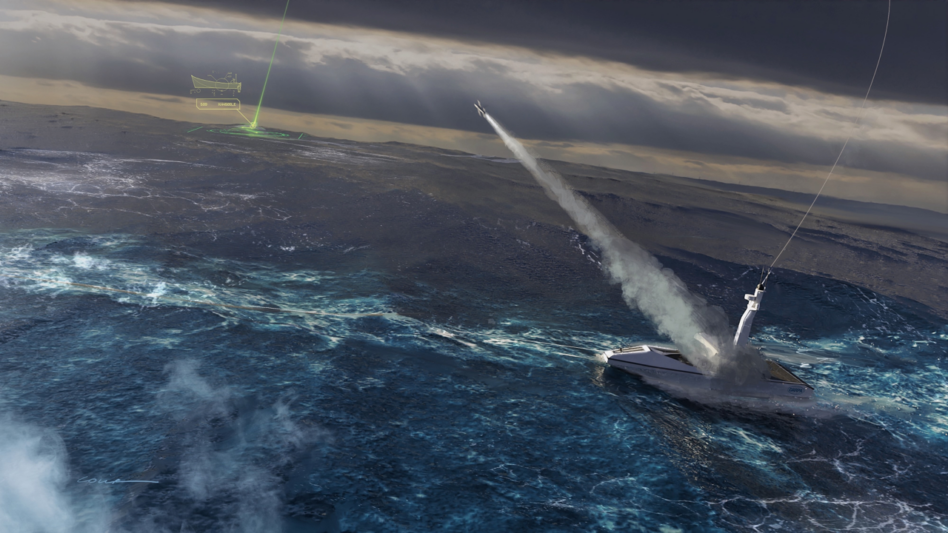
Last week, DARPA tapped Saronic and three others to design and develop a semi-autonomous escort vessel under the Pulling Guard program, which aims to help unarmed logistics ships counter maritime threats, especially hostile unmanned surface vessels (USVs).
No one tell the Houthis.
Sea lane security: DARPA’s Pulling Guard program, put simply, is designed to leverage USV technology to improve the survivability of vulnerable logistics vessels (like commercial shipping and naval logistics) against asymmetric threats.
- The program is broken into two focus areas: the first covers the development of the autonomy-enabled platform, and the other focuses on the sensor and kill chain development.
- The platform DARPA’s requesting will be “semi-autonomous,” meaning that it’ll have a “remote supervisor in the loop who retains authority for engagement decisions,” but enough autonomy to allow operators to supervise “multiple systems over a secure connection.”
- The program is planned for two phases, starting with an 18-month Development Phase and a second 21-month Integration, Manufacturing, and Commercial Transition phase with a reduced number of performers.
- For the first phase, DARPA selected Saronic, RTX, Charles River Analytics, and Leidos, awarding each an Other Transaction Agreement (OTA) contract.
From scratch: Saronic’s portfolio of USVs includes the 180-foot-long Marauder, their flagship 24-foot Corsair (Saronic’s largest ASV in high-rate production), 40-foot Mirage, and 60-foot Cipher (the latter two are still in development), but they’ll be starting from scratch on the Pulling Guard Program.
“We’re going to design, develop, test, and go through the whole ideation process with DARPA and with industry partners in the other focus areas to develop the capability that will be an autonomy-enabled modular vessel,” Saronic’s VP of Growth Nick Stoner told Tectonic. “We’re looking to build a flexible unmanned maritime platform capable of integrating the specific sensors and effectors that can protect logistics vessels.”
If the company’s successful in the first program, that big ‘ol shipyard they just invested $300M into in Franklin, Louisiana, could get a whole lot more busy.