The drone interceptor world is, like, hotter than hot right now, and investors aren’t showing any signs of backing down just yet.
This morning, Singularity emerged after two years in stealth with an $80M Series A led by Khosla Ventures and Felicis, a $400M valuation, and a mission to deploy “low-cost air defense systems at scale.”
- Seed investors AE Ventures and NEA participated in the round, alongside Harpoon, Menlo Ventures, New Vista, Decisive Point, Y Combinator, Long Journey, and others.
- They aren’t revealing the product or many details just yet, but CEO Jack Oswald told Tectonic it’s a “missile-based air defense interceptor” that’s “providing a meaningful breakthrough on performance, but also on cost.”
Born in the battlefield: Singularity’s story, like many other new-age defense startups, started in Ukraine.
During a visit to Ukraine two years ago, Oswald met with air defense commanders, operators, and wounded soldiers, where he was told about the growing threat of Shaheds, glide bombs, and increasingly larger and faster strike systems.
He then returned to the US to build “the type of air defense system they wish they had when [the war] broke out,” he said. Part of the reason they’re so secretive about the product’s details is that they still have a team operating in Ukraine.
Stealthy as can be: That said, we managed to get a few hints about what, exactly, Singularity is building (and what about the technology led investors to put $80M into the stealth startup).
- According to Oswald, the interceptor isn’t like the smaller, man-portable interceptors widely used in Ukraine, or the more common Coyote and APKWS laser-guided rocket-based interceptors the US uses. It’s not a stopgap solution, but something that “provides a breakthrough with enough advantage so that we’re not in that cat-and-mouse game where the offense adapts a little bit, and defense [responds].”
- The missile-based interceptor is ground-launched from a platform Oswald described as a “combination” of a custom-built launcher and those already in use (though smaller than one launched from a HIMARS). It also connects to standardized and preexisting C2, radar, and fire control systems.
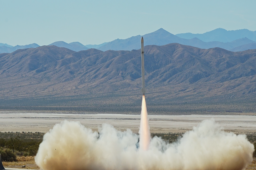
- Singularity, notably, has also built all of the interceptor’s subsystems—including the rocket motor—which helps them maintain a rapid pace of iteration and testing. Oswald says Singularity is flight-testing the system “multiple times a month.”
“It’s very difficult to start from a clean sheet and build a more conventional kinetic air defense system, really from scratch, and that’s what we’ve done,” he said. “The capability is coming along quickly, and we’re tracking towards deployment in the near term.”
- They’re “collaborating closely with the Army, Navy, Air Force, JIATF-401, Ukraine, and a bunch of foreign partners,” and have “aligned with all of them internally on the capability [they] need and the requirement,” he added.
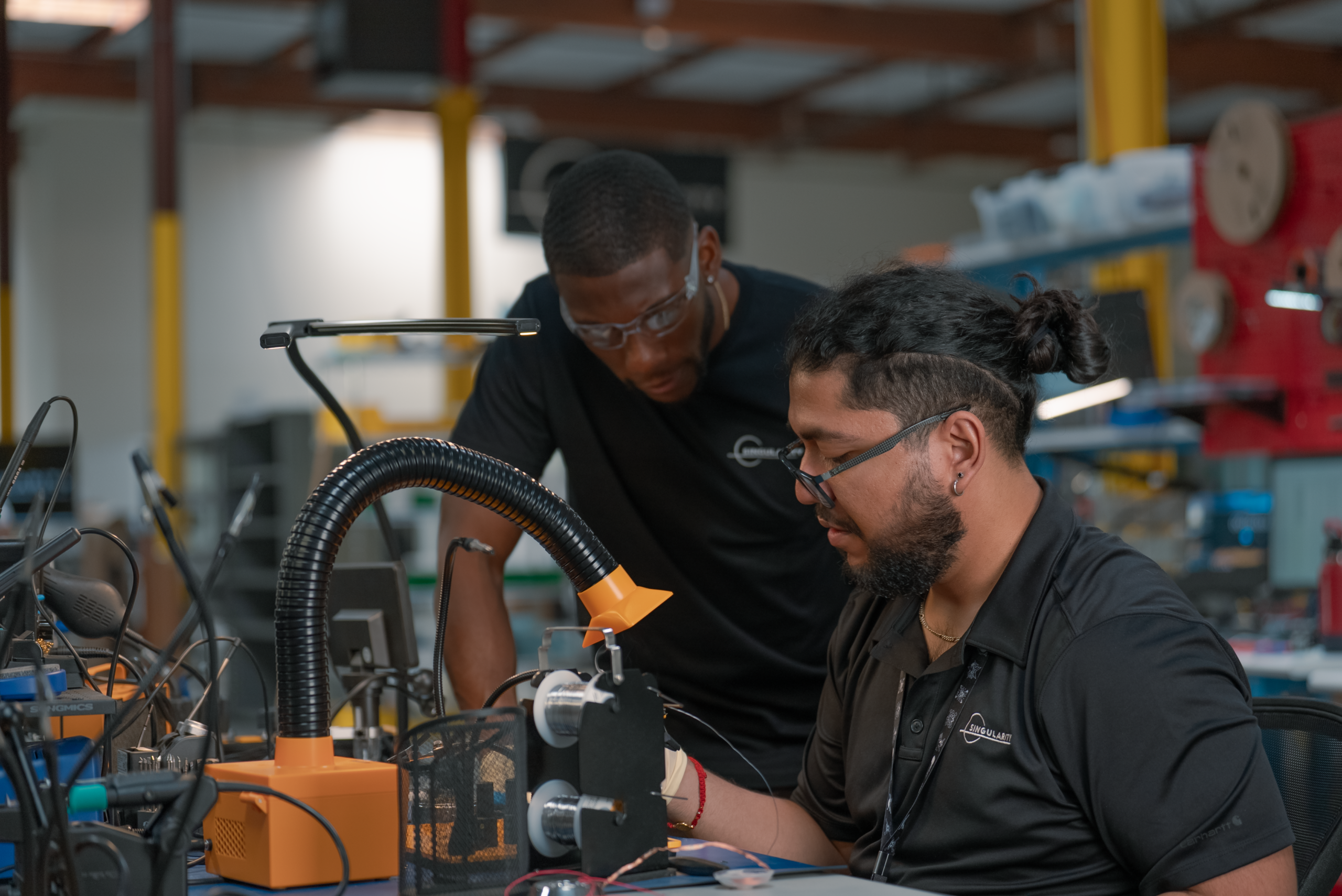
Cheap and plenty: The main thing Singularity is bringing to the table, per Oswald, is a manufacturing approach that resembles the car-making process (their VP of manufacturing “stood up the [Tesla] Model X production line”).
The startup is laser-focused on scale, and the bulk of this fresh $80M is being funneled into building “production lines larger than any air defense production lines in the United States.” Ambitious, to say the least, but if there was ever a time to produce ahead of demand, it’s now.
“Right now, it’s akin to a drought for air defense systems, specifically lower-cost systems that get after the 90 to 95 percent of targets that we’re getting after,” he said. “After the Iran War kicked off, every air defense system was just being rushed out to CENTCOM, but if every single air defense line in the West was running at max volume today, we wouldn’t have 1 percent of what’s needed.”
“Normally, the valley of death is like, you’ve got something, and now we’re going to go spend years and hundreds of millions of dollars qualifying the system, and is anyone going to buy it at the end of the day?” he added. “There is no doubt anyone’s going to buy [our product] at the end of the day. Everyone needs it so urgently…[and] we don’t need things fielded that are perfect. We just need them in volume.”
We’ll have to wait and see how much of a seller’s market it really is when Singularity unveils its product in the next few months.