
Turns out the leap across the pond goes both ways.
This morning, UK-based USV company Kraken Technology Group announced that they’ve scored a coveted $49M cap OTA with United States Special Operations Command (USSOCOM) to develop and prototype “novel uncrewed surface and subsurface vessel technologies to enhance maritime capabilities for U.S. special operations forces.”
This marks the first direct US contract for the company and a bit of a transatlantic coup in the ever-so-popular maritime autonomy space.
“We are honoured to partner with USSOCOM in support of its mission to field disruptive maritime capabilities,” Mal Crease, CEO of Kraken, said in a statement. “This OTA represents a validation of our technology roadmap and underscores the critical need for next-generation uncrewed platforms.”
Say it with us: everyone loves a tiny little boat.
Speed run: Kraken has had a hell of a few years. The UK-based maritime autonomy startup was founded by former speedboat racer (yes, really) Crease back in 2020, and since then has been laser-focused on small, unmanned boats that can, well, go really freaking fast.
The company builds a few different vessels:
- K3 Scout: A speedboat-like USV that comes in three sizes—Medium (8m long, 600kg payload, and top speed of 55 knots), Heavy (12m long, 2,000kg payload), and Max (18.6m long, 10,000kg payload, and a range of 2,000 nautical miles).
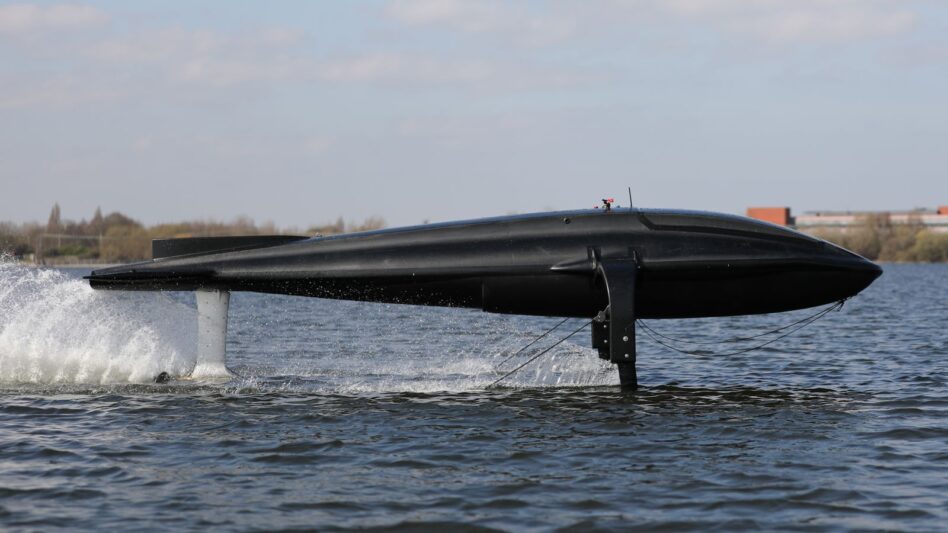
- K4 Manta: Kraken’s stealthy uncrewed surface-subsurface vehicle (USSV), built for both fast surface transit and covert submerged missions. They partnered with L3Harris on it.
- K5 Kraken: A concept-stage 15-meter-long speedboat with optional crew and heavy weaponization payloads.
The Scout is by far the company’s most popular model—it costs around £250,000 ($338,100) per unit, and Kraken has already sold over 100 this year alone, according to Crease. Customers include the UK’s Ministry of Defence and other NATO governments.
Cash money: The whole “small boat go fast” thing has been a hit with investors and partners around the world, too.
- While the company has not publicly released details on its latest funding round, it’s been backed by funds including the NATO Innovation Fund (NIF), the UK National Security Strategic Investment Fund (NSSIF), and Superangel.
- Back in August, they signed an agreement with German shipbuilder NVL to scale production, and, in September, they inked a partnership with American autonomy giant Applied Intuition to accelerate autonomy testing and integration for Kraken’s USVs.
- They also have existing partnerships with BlueHalo, L3Harris, and Leonardo, among other defense giants.
Just this week, Kraken announced a few heavy-hitting additions to its advisory board, including former US Secretary of State Mike Pompeo. Good friend to have, we’d say.
Build up: As part of the USSOCOM agreement, Kraken says it will focus on vessels that “leverage cutting-edge materials, stealth characteristics, and modular mission payload integration.”
If you’re paying attention, that sounds a lot like the science fiction-y Manta. However, newly announced Kraken CCO Erica Dill-Russell told Tectonic that the contract will extend far beyond that.
“We worked really closely with SOCOM on the development of Manta, but, critically, this is not just focused on [that],” she said. “This gives us the ability to develop and work together with [SOCOM] to consider the maritime space and what platforms or capabilities are needed.”
The OTA ceiling, she added, also gives them the flexibility to play around with new tech and new vessels. “This enables us to really get after things that we are currently talking about, but also to add more work to this, which is really exciting.”
Try it out: Kraken says it’s already participated in two SOCOM innovation cycles with the UK and Norwegian governments, and will continue to hone its tech alongside operators so “U.S. forces maintain a decisive edge in complex operational theatres.”
Dill-Russell also said that this contract will help clear the way for Kraken tech to deploy across the US services. The company is already working “really closely” with the Navy, she added.
Look out, maritime autonomy world. The British are coming.