
The Golden Dome may be facing some serious price-tag questions, but it doesn’t look like that’s tamped down anyone’s interest in next-gen missile defense.
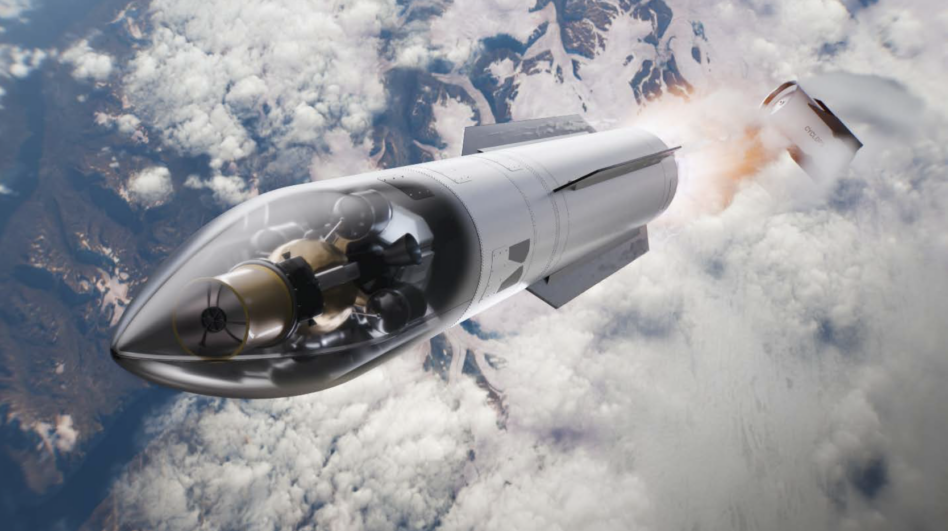
This morning, defense startup Long Wall—the artist formerly known as ABL Space Systems—announced that it’s building a “new, surface-launched, exoatmospheric interceptor to defeat missiles in the midcourse phase of flight,” called Cyclops.
The missile-hitting-missile (yes, that’s what an interceptor is, kids) is designed to be way cheaper than your typical interceptor, like the Navy’s SM-3. Those can cost up to about $30M a pop—Long Wall says its model can be mass produced at “a fraction of that cost.”
“There are multiple elements of the missile defense architecture that are worthy of improvement, but in our view, midcourse surface-launched interceptors are the greatest unmet need,” Long Wall Founder and CEO Dan Piemont told Tectonic.
Low in stock: In case you’re new around here (welcome!), missile defense and interception is one hell of a hot topic. Everyone—from the US to Ukraine to Taiwan to Australia—wants the latest and greatest in missile defense, especially since Trump’s whole Golden Dome thing. And defense tech startups (looking at you, Castelion) are stepping in to fill the need.
- The best-in-class interceptors used by the US and allied militaries (like THAADs and Patriots) are hella expensive and hard to produce. If the war in Ukraine has taught us one thing, it’s that stockpiles of these exquisite missiles get depleted real fast—and it’s not easy to replenish them.
- As Piemont pointed out, in their 12-day war against Iran, the US “used a material fraction of the interceptors in this class that have been procured all-time.” An estimated 80 SM-3s were launched from US Navy destroyers, and about 150 THAADs fired against Iranian missiles, just to name a few.
“It will take years to replenish that inventory, despite it being depleted over just two weeks in a conflict without a major power,” he said. “Imagine what would happen in a conflict 5x as large or 10x as long.”
Bigger and badder: Cyclops isn’t the kind of mini-missile we’ve seen a lot of in the anti-drone fight. While Piemont and Long Wall wouldn’t give us exact specs, he said the interceptor is “positioned at the upper end of the range of interceptors in the U.S. arsenal.”
“It deploys an exoatmospheric kill vehicle at high velocity and has a range that’s relevant for theater and continental defense, not just point defense,” Piemont said. “ Cyclops is designed to handle high closing velocity engagements and overcome certain countermeasures.”
He says this class of missile—most closely resembling the SM-3—is also convenient because it can be pretty easily integrated onto existing US launchers. Long Wall has their own containerized launcher (meant to be easily deployable), but Cyclops is also “designed for compatibility with existing land and sea-based launchers.”
“[This interceptor is] able to meet a range of missions, from counter-ICBM homeland defense to upgrading the IAMD systems of allies,” Piemont added. “Everything from MRBMs to ICBMs and hypersonic glide vehicles are in its target set.”
Hard fork: Long Wall (née ABL) hasn’t always been into missile defense. The company was founded (as ABL) back in 2017 by Piemont and Harry O’Hanley (SpaceX veterans) and set out to make small-satellite launch vehicles and other launch infrastructure.
- The company struggled to get its rockets into orbit—the company suffered a series of technical failures and delayed launches in 2023 and 2024.
- ABL rebranded to Long Wall in February 2025 and pivoted to missile defense and hypersonic tech.
- The company declined to comment on whether they had received contracts for these interceptors.
Piemont says that they’ve been testing the missile since earlier this year and are planning further tests and demos for 2026. He added that Long Wall “can produce over one hundred Cyclops rounds per year in [their] existing facilities,” but the idea is that Cyclops is designed from the ground up to be produced at a much, much larger scale.
“The U.S. hasn’t produced a truly new interceptor in this class for decades. They’re all derivative of old designs,” Piemont said. “The most important outcome of these differences is that Cyclops is designed to be easy to produce in large volumes at a much lower cost.”