
The counter-drone space may be busy as hell, but it seems that hasn’t deterred California-based Mach Industries.
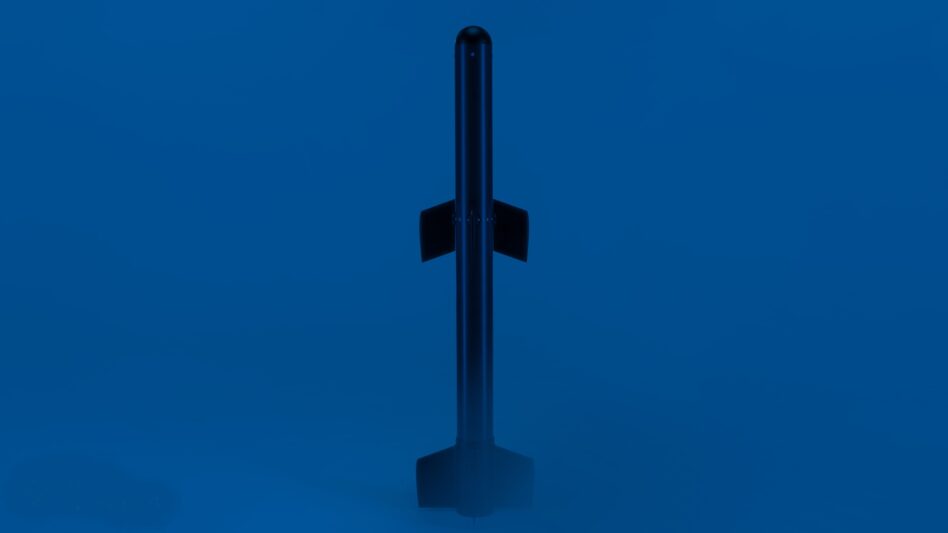
This morning, the MIT-dropout-founded defense tech startup unveiled Dart: their new low-cost interceptor designed to take down Group 1-3 drones, plus an internally developed ground-based radar system to go with it.
If Mach loves one thing, it’s trying out new flavors of drones.
Mach makin’ moves: Mach Industries has developed a knack for making headlines since then-19-year-old Ethan Thornton launched it in 2023 (Thornton is now 22).
The company raised a $100M Series B at a $470M valuation last June, led by Bedrock Capital and Sand Hill Road goliaths Khosla Ventures and Sequoia Capital. So far, they’ve got a few products already in late-stage development at their flagship new-age, “flexible factory” called Forge (a kind of defense manufacturing WeWork):
- Viper: An unmanned jet-powered VTOL. The Army Applications Laboratory awarded them a contract to build a cruise missile variant in 2024.
- Glide: A high-altitude glider with a strike system capable of long-range, low-signature delivery.
- Stratos: A persistent high-altitude “in-air satellite” platform for ISR and communications.
That’s all well and good, but interceptors are hot, drones are scary, and Mach wants in.
It’s a Darty: Like Glide and Viper, Mach’s foray into the counter-unmanned aerial system (c-UAS) space is all about the boom-boom.
- Mach calls Dart a “self-contained, end-to-end counter-UAS system spanning detection and tracking, command-and-control, and engagement.” It’s designed for both small drone swarms and larger, speedier Group 3 threats, like those nasty Iranian-Russian Shaheds.
- The interceptor is a few feet long and is powered by a solid rocket motor. Asked whether Mach developed the SRM in-house, Thornton told Tectonic that they’re “not saying that yet.”
- Dart relies on RF and inertial guidance to find targets “as they come in for final approach,” and is built to pack a punch with an explosive frag payload when it does.
- As for the price point, Mach is “targeting being a good bit cheaper than the assets we look to intercept … a lot cheaper than a Shahed, let’s say,” Thornton said.
“The drone defeat problem is so acute,” Thornton told Tectonic. “It’s very clear that this is a large portion of the way future wars will be fought, and right now, [RF and gun-based] methods aren’t very future-proof. The key challenge became, how do you kinetically defeat many UAVs at the same time at a cost point lower than the UAVs themselves?”
Right now, Dart—which has been under development for about six months—is in the flight-testing stage, and the team is focused on honing guidance and control. Mach is looking to “start doing our first intercepts in theater this year, which would then have us in production sometime in 2027,” according to Thornton.
Full package: Dart may be the headline-maker, but Mach quietly dropped that they’re also working on an in-house Frequency Modulated Continuous Wave (FMCW) ground radar system designed to offer a full-package counter-drone solution.
While Thornton “isn’t opposed” to making the FMCW interoperable with other interceptor systems, he says it’s “certainly tailored for Dart.”
“Dart is a semi-active system where the ground radar actually paints the target for Dart, and that’s part of how we get the interceptor so cheap,” he added. “The reason we did a ground radar is so that Dart can be kind of perfectly optimized to do what it needs to do.”
Even with Dart in its nascency, Thornton’s thinking bigger—and smaller. “We’ll continue to iterate on the Dart architecture a lot, building larger and smaller versions,” he said. “I think we’ll ultimately look to build layered RF sensors” to scale the full-package platform.