
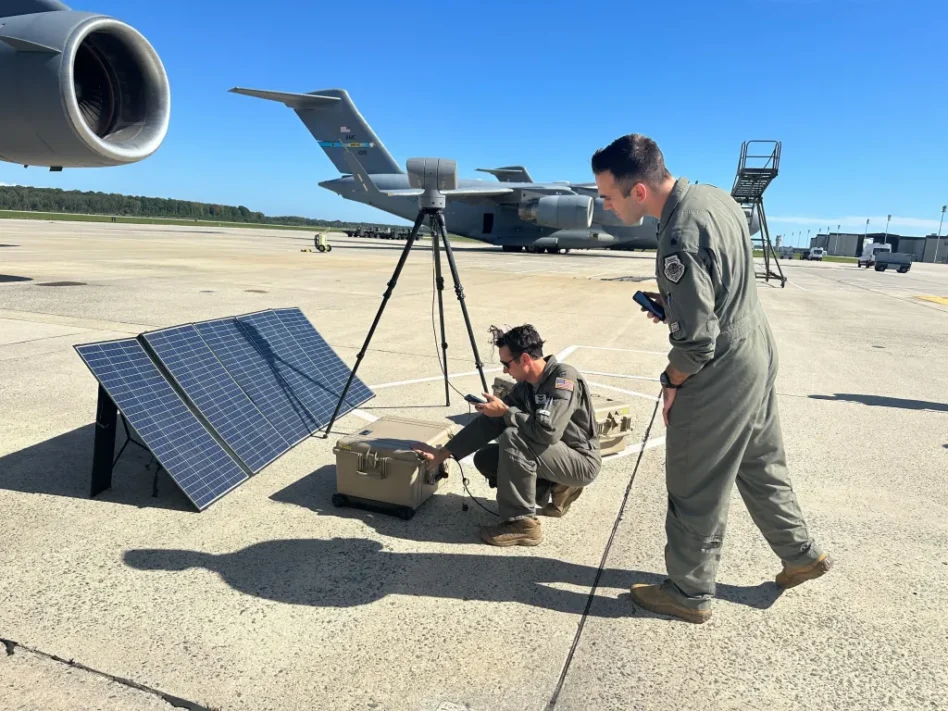
If you thought the defense tech world on this side of the pond comes to a standstill during DSEI, think again. This morning, integration startup Picogrid announced a $3.2M Air Force contract win to bring their Legion software and Helios hardware to help the Air Force’s growing number of autonomous systems play nice.
Picogrid has a few offerings working to unify all those (many, many) drone, autonomy software, sensor, and robotics platforms out there, but Legion and Helios caught the Air Force’s eye the most:
- Legion: Picogrid’s flagship data platform that fuses information fed from different systems to integrate assets, streamline data, and connect to operational tools like the Army’s Android Tactical Awareness Kit (ATAK).
- Helios: A portable and rapidly deployable hardware platform that integrates multi-network communications, edge computing, and sensors, and lets operators quickly connect ISR systems and mobile devices to DoD networks.
Connective tissue tech: Under the contract, which Picogrid co-founder and CEO Zane Mountcastle told Tectonic is very hush-hush, the Air Force will use Legion to allow operators to connect new systems to a single platform that sends information up the chain to command centers. With the number of new systems from different manufacturers coming online and into the hands of warfighters, that added interoperability could be pretty handy.
“The big thrust of this contract is integrating systems across multiple domains,” Mountcastle said. “This is not just drones. It’s the drones to be fed information from ground sensors, or ground sensors triggered based on other assets.”
As part of the contract, Picogrid will also make some improvements to Helios to make the hardware lighter to carry and easier to manufacture.
Teaming up: In the era of defense tech partnerships, Picogrid may have been the trendsetter. The company has built a comprehensive ecosystem of over 50 companies that use its Legion integration software. That includes radar startup Echodyne, drone maker Skydio, threat detection company ZeroEyes, and French interceptor drone guidance software startup Alta Ares.
For the Air Force, Mountcastle said that the partner ecosystem helped validate Legion’s integration capabilities across a patchwork of different technologies. And there’s always room for more friends on the Picogrid team.
“There’s some funding [in the contract] that opens up the opportunities for additional Air Force units to get their hands on the tech and use it in some of their operations,” Mountcastle said, adding that Picogrid’s looking to add a few more partners this year.
“It’s a compounding effect. The bigger we get, the more networks and systems we support, which means the more partners we bring in, which means the more customers we can serve,” he said. “You have this really strong compounding flywheel that’s only possible if you build your company in a way where your incentives are aligned with your partners.”