Well, the Europeans aren’t showing any signs of slowing down on the drone front. On Friday, German ISR UAS company (and STARK forefather) Quantum Systems announced that it has raised a €180M ($209M) Series C extension at a €3B ($3.49B) valuation, led by Balderton Capital.
This comes on the heels of a €160M ($186M) raise in May, also led by Balderton, bringing total funding this year to €340M ($395.5M) (quick maths). Rana Yared, the Balderton GP who led both deals, said that her firm doubled down because—put simply—Quantum has performed even better than she expected.
“We felt that the hypothesis that we had backed—which is an extraordinary engineering team running a long-term, durable business helping Europe secure its security and resilience—was proven out in spades in the last six months that we have been invested,” she told Tectonic.
European drone dominance, here we come.
Drones4lyfe: Quantum Systems—and its co-founder and now co-CEO, Florian Seibel—are kind of legends in the European drone space. The company was founded by a team including Seibel, Armin Busse, and Tobias Kloss all the way back in 2015, and set out to build autonomous systems that could “redefine how aerial data is collected, analysed, and turned into action.”
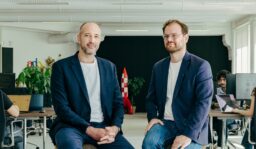
The company is now run by Seibel and co-CEO Sven Kruck, who joined the team in 2022. They make a few different fun flying products, including:
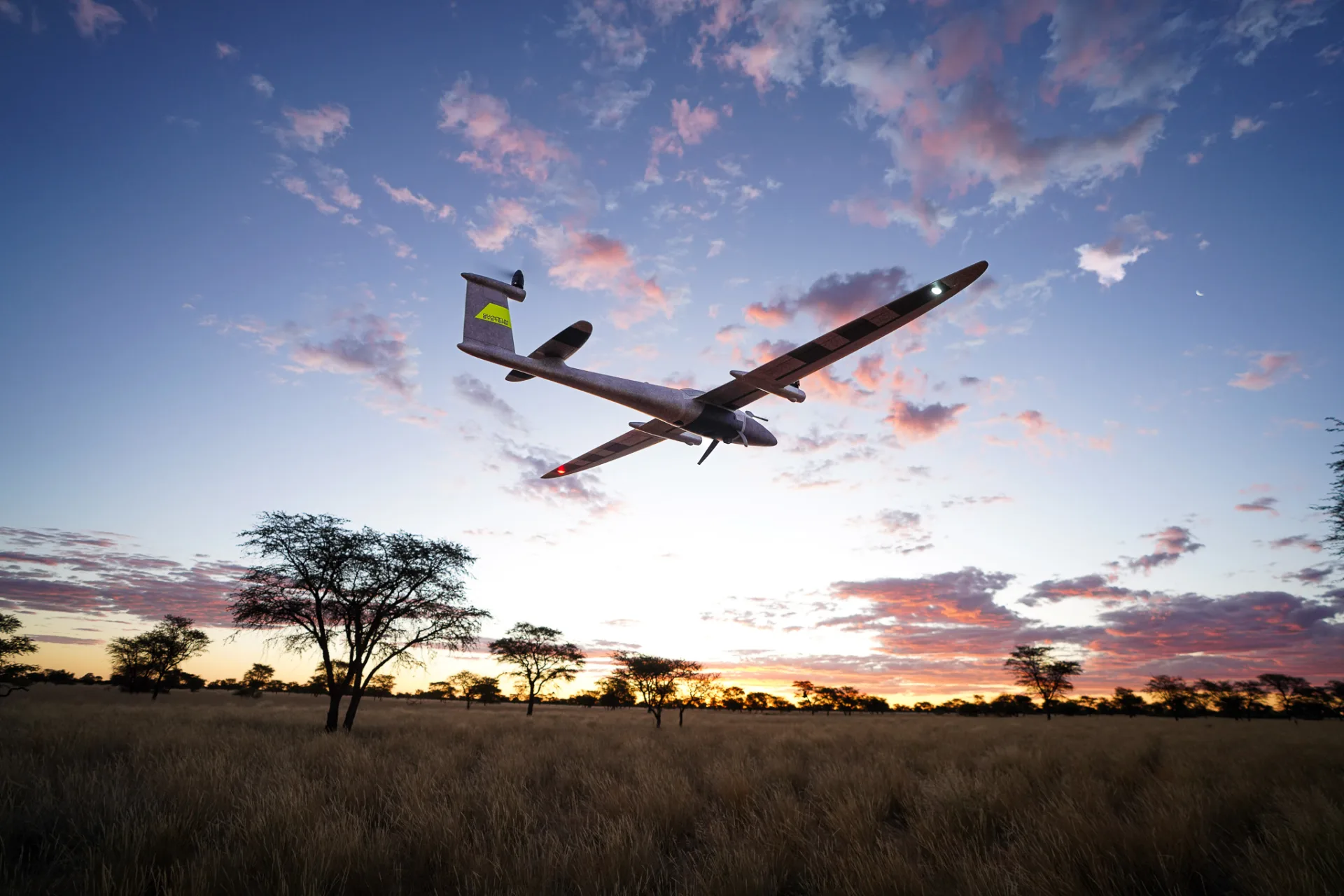
- Vector: A mid-range ISR eVTOL drone
- Trinity: A fixed-wing drone for mapping
- Twister: A short-range ISR drone
- Reliant: A long-range ISR drone
You’ll notice that none of these drones go boom—at least not yet.
At least partially thanks to pressure from its early backers, Quantum has remained laser-focused on non-kinetic unmanned systems, while STARK—which was founded by Seibel in 2024—sticks to the more weapon-y stuff. Yared said this is a large part of why the firm has been so successful.
“From a Quantum point of view, I’ve certainly seen the acceleration that focus has given,” she said. However, she did add that the company—along with its board—revisits this focus frequently.
“There is a constant reevaluation of whether the context that led to that decision in 2024 is the right context, and I think that that applies not only to strike versus ISR, but how much energy to expend on commercial versus non-commercial…also around different mediums, like air versus land,” she said.
Up and up: 2025 has been a hell of a year for Quantum. The company:
- Hit unicorn status in May after that initial €160M ($186M) Series C.
- Expanded operations in the UK and says they will be making a €50M investment in the country in the next five years.
- Bought up Germany’s AirRobot, a supplier of copter drones for the Bundeswehr, Nordic Unmanned UK, the British arm of a Norwegian drone company, and SpleenLab, a German company that builds “AI software for autonomous systems.”
- Inked partnerships with companies including Skyports, Planet, and Ukrainian firm Frontline.
- Launched a “multi-domain command and control platform” for drones called MOSAIC UXS.
- Opened a 135,000-square-foot US production and integration facility in California.
And they’ve managed to make money while doing all of this. The company has scored contracts with militaries and governments around the world, including the US, Germany, Spain, Romania, Australia, and Ukraine, and is expected to close out this year with about €300M in revenue, up from €110M in 2024.
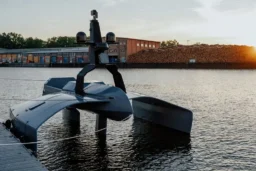
Think bigger: It sounds like Quantum Systems’ ambitions go way beyond small-ish UAS. In a statement, the company said that “the new capital will fuel its multi-domain expansion across air, land, and maritime use cases” and “accelerate its AI, software, and hardware development across all domains, connected by the multi-domain mission software MOSAIC UXS.”
“Triple unicorn status is a testament to our team’s ability to build systems and a company that performs in the most demanding real-world conditions. We will now accelerate our development of hardware, software, and AI to become the defining leader in multi-domain unmanned systems,” Seibel said.
Yared said that this cross-domain applicability and dual-use appeal are a big part of why she and her firm back Kruck, Seibel, and their team—sure, the tech is hyped because of global insecurity, but she wanted to invest in something that is relevant even without war.
“We want a company that withstands, exists, and thrives with peace,” she said. “So, it was really important that there be [a] really strong dual-use case in whatever we ended up investing.”