It’s a rare week when we write about more contracts than we do investments, but here we are.
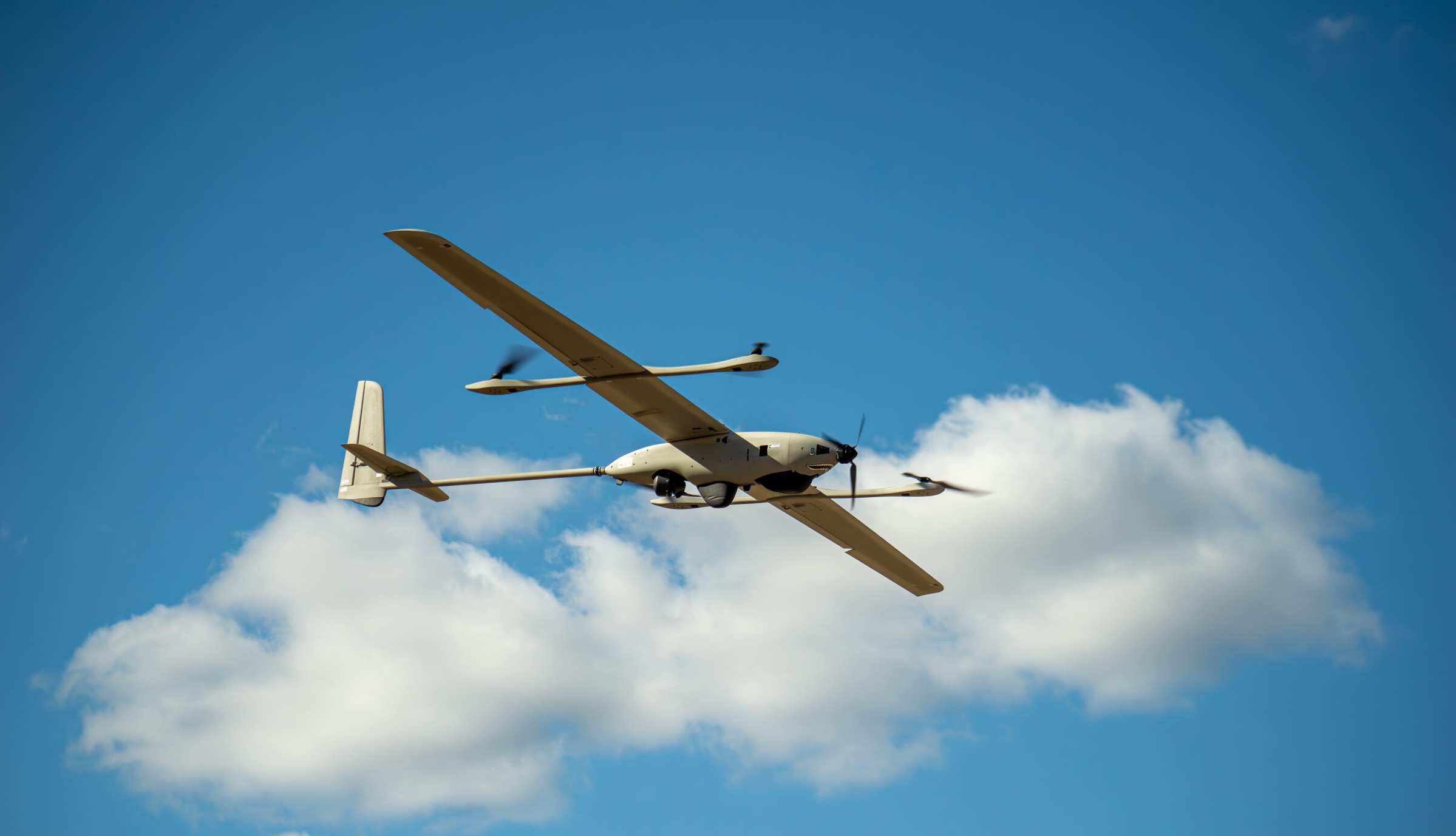
This morning, space and defense giant Redwire ($RDW) announced in an exclusive release to Tectonic that it’s been awarded $20M in follow-on orders from the Navy and Marine Corps Small Tactical Unmanned Aircraft Systems Program Office (PMA-263) for a new, advanced navigation version of its Stalker drones.
Redwire has already delivered over 250 Stalkers to PMA-263 for the Marine Corps—think of this as an upgrade that will boost capability for “long-range reconnaissance missions where drones must operate in contested, GPS-denied environments over vast distances.”
Down to earth: Redwire actually started out more in the space game—initially, it was a roll-up by AE Industrial Partners of a bunch of different space businesses, founded in 2020.
They set out to build the picks-and-shovels of space infrastructure—think solar arrays, sensors, and other satellite components, as well as space robotics and in-space services.
- A lot of the company’s growth (market cap is at $1.92B as of this morning) has come through acquisitions—including an in-space 3D printing company called Made in Space, a solar array company called Deployable Space Systems, and a sensor company called Adcole Space.
- Last year, they expanded into the drone business with their acquisition of Edge Autonomy for a cool $925M.
Eye in the sky: So far, the drone side of things has remained pretty focused on ISR. They’ve got a few different models brought over as part of the Edge acquisition:
- Stalker Block 30: An SUAS for long-range reconnaissance. This is what USMC is using.
- Stalker Block 40: An upgraded version of Block 30 with “doubled flight endurance and payload capacity.” It’s also bigger.
- Penguin Mk2.5 VTOL: A fixed-wing VTOL that looks a lot like an old-fashioned prop plane. It’s got the “long endurance and long range to address multi-mission operations,” according to the company.
- Penguin Mk2X: A “long endurance, long range UAS [with] an endurance of up to 25 hours (payload dependent) and a line-of-sight range of 180 km.”
Rack ’em, stack ’em: And that new-ish drone business has been booming.
- Last summer, Redwire scored a prototype phase award for the U.S. Army Long Range Reconnaissance (LRR) for Stalkers kitted out to “enable extended surveillance and intelligence gathering operations in contested environments.”
- In September, the company announced that it won a contract to deliver Stalkers to an unnamed “European NATO country.”
- In November, they signed a contract with Frontex (the European Border and Coast Guard Agency) to supply “its Penguin C VTOL uncrewed aerial systems (UAS) and Octopus gimbal camera payloads to the Croatian Border Patrol.”
- They’ve also signed deals with the Ukrainian Armed Forces to send their Penguin C VTOL drones to the front.
- Stalker is also on the Blue UAS list—meaning it’s approved for use across the DoD.
Upgrade ya: This new contract is basically an upgrade package for those pre-existing drone orders from USMC and PMA-263.
- The new advanced navigation version of the Stalker Block 30 drone provides “enhanced situational awareness, improved target tracking, and greater operational flexibility for intelligence, surveillance, and reconnaissance (ISR) missions, in highly contested electronic warfare (EW) environments.” Jam or be jammed, innit.
- Each advanced navigation kit consists of the drones themselves as well as “ISR camera payloads; short, medium, and long-range ground control stations; and all associated support kits.”
- The company says that the transition from traditional Stalker Block 30 to the advanced navigation version will provide USMC with a “significant increase in capability” and resilience, especially in jammed and contested environments.
“Advanced Navigation is critical for long-range reconnaissance missions where drones must operate in contested, GPS-denied environments over vast distances,” Steve Adlich, President of Redwire Defense Tech, said in a statement.
Let’s hope this doesn’t mean the Russians have figured out what frequencies our drones are flying on…