Welp, the cash money just keeps on flowing.
Yesterday, aviation autonomy company Reliable Robotics announced that it’s raised a cool, cool $160M to “accelerate deployment and scale production of the Reliable Autonomy System (RAS).” That’s their flight autonomy stack that basically takes any plane and makes it a drone.
The round was led by Nimble Partners, with continued support from Eclipse, Lightspeed, Coatue, and Pathbreaker Ventures. New investors, including AE Ventures and RTX Ventures, also joined the cap table.
“We’re on a mission to make aviation safer and expand the world’s access to aviation for commercial and military customers,” Reliable Robotics co-founder and CEO Robert Rose told Tectonic. “We’re now 180 employees. We’ve raised [over] $300 million. Now…we’re all about scaling and delivering operations this year.”
Dare we say 2026 might finally be the year that aviation goes all, “Look ma, no hands?”
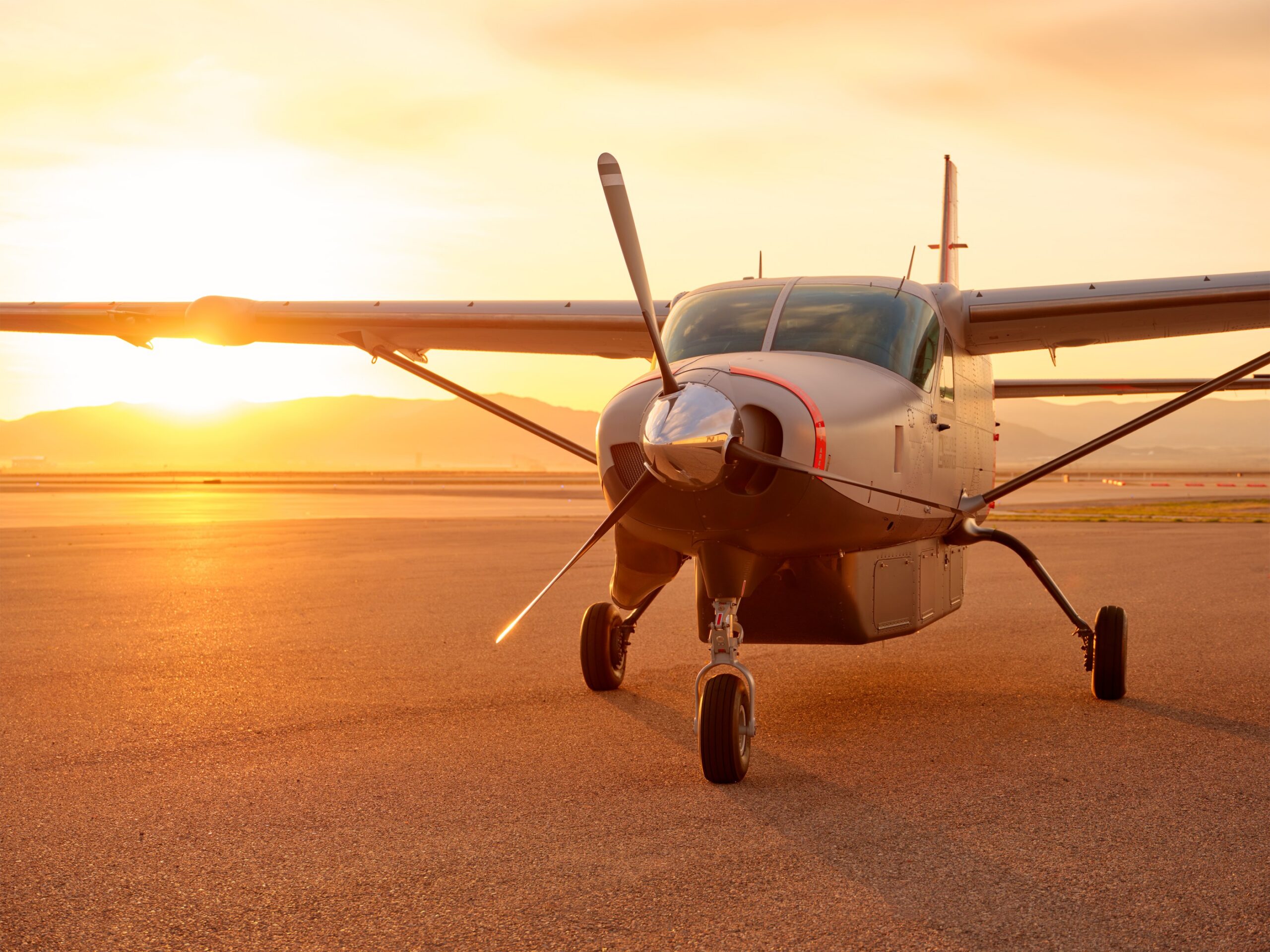
Hands-free: This isn’t the first time we’ve covered Reliable Robotics. Last summer, the company scored a $17.4M AFWERX contract to turn the Cessna 208B Caravan into a remotely piloted cargo hauler for the Air Force.
- The company takes existing aircraft like the Caravan and turns them into pilot-free flight systems. “The company’s automation system is designed to work on any aircraft, in any airspace, and to directly address the most common causes of aviation incidents,” according to a Reliable statement.
- The RAS is basically made up of avionics and software (“A lot of boxes,” according to Rose) that you install onto existing planes.
- The stack works for both optionally piloted (where the pilot is there but doesn’t need to touch buttons unless disaster strikes) and fully remote (no pilot) flight.
- According to the company, they’ve got “commitments for over 200 systems from commercial and military customers,” most of them commercial.
- Rose told Tectonic that they’re closing in on full FAA certification for the system. “One of our largest focuses in the company has been on the certification of autonomous systems,” he said. “Within the last year and a half to two years, we started to unlock these final stages of certification planning with the Federal Aviation Administration.”
Believe it or not, building all of this has taken less than a decade.
Run it up: Reliable was founded back in 2017 in Mountain View by a pair of SpaceX alums—Rose and Juerg Frefel—and since then, they’ve been on a bit of a speed run.
The company:
- Landed a Phase II SBIR under AFWERX’s “Autonomy Prime” program to put its autonomy kit through real-world flight trials in 2022.
- Picked up a $3.6M TACFI—basically bridge funding—to keep those trials rolling in 2024. That same year, it scored a multi-year Indefinite Delivery, Indefinite Quantity (IDIQ) contract to extend its tech to Air Force airlift and tanker fleets.
- Scored that $17.4M Air Force contract last summer, focused on long-haul cargo in INDOPACOM.
- Teamed up with NASA on detect-and-avoid and comms-resilience research, a partnership that’s grown into a full Space Act Agreement.
- Signed a collaborative R&D agreement with the Air Force last year to sync efforts on autonomy development. They have worked on a study adapting their tech to the KC-135 Stratotanker—the same model that crashed over Iraq, killing six service members, earlier this year.
Rose said that they’re in the aviation autonomy game to work against exactly those kinds of tragedies.
“You think about pilots that are going out and doing a 15-16 hour mission, needing to come back and safely land the aircraft,” he said. “Auto land provides a huge safety benefit there, as well as just managing the aircraft and emergency conditions.”
Big ups: Going forward, it sounds like the name of the game for Reliable is scale.
- The Reliable-powered Cessna will be operational for the military this year, Rose said.
- They expect to begin commercial operations in 2028—but they need to deliver a lot more “evidence” to regulators to get that full certification, Rose said. That will require more aircraft and more flight hours, which means they need a lot of cash and a lot of people. “To deliver, we need to scale the team. We need money. So, that’s where the big raise number came from,” he said.
Use what ya got: The good thing is, however, that Reliable is using aircraft (like the Cessna) that, like, already exist. That means there are people who can build them, supply chains that can sustain them, and demonstrated uses for the aircraft on both the military and commercial ends of the spectrum.
“[The Cessna is] a commercial aircraft. It’s probably the world’s most popular cargo airplane by sheer quantity…here’s a very sophisticated, robust supply chain for managing this vehicle,” he said.
“This aircraft is already manufactured today in Independence, Kansas,” Rose added. “I think it’s funny when people talk about…the re-industrialization of America. I just want to be like, ‘Dude, like, we’re already industrialized. Go to Independence, Kansas.’”
Look out, Toto.