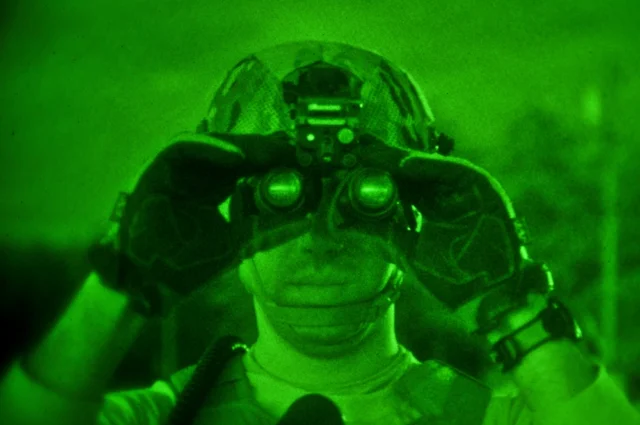
We all know autonomy is all the rage right now, but Scout AI is taking it to the next level.
Yesterday, the California-based startup announced a $100M Series A co-led by Align Ventures and Draper Associates to, put simply, build the AI brain for the future of autonomous warfare. For those keeping score at home, that’s the largest defense tech Series A in US history.
That’s a big-time jump from the company’s $15M seed round a year ago, but the technology the company’s building is about as sci-fi as it gets, which is just what the Pentagon is looking for.
Fast and Fury-ous: Scout AI’s robo-brain, Fury, is a fundamentally different type of autonomy than pretty much anything else on the defense tech scene. This isn’t just driving or flying along pre-programmed routes. It’s unmanned, fully agentic decision-making using onboard AI models custom-built for war. It sounds insane, so we’ll try our best to break it down.
Robo-brain: Fury is what’s called a Vision-Language-Action model, an AI model based on an LLM (Scout uses an undisclosed hyperscaler’s foundation model) that essentially works as a closed-loop decision-making brain onboard any number of systems. In function, it turns perception into action.
- Vision: Perceives images or video (what’s happening?)
- Language: Interprets goals, command instructions, and context (what should be done?)
- Action: Executes decisions in the physical or digital world (do it)
“Our whole thesis is that the future of unmanned warfare is distributed compute across the battlefield of varying levels,” Scout AI CEO and co-founder Colby Adcock told Tectonic in an interview. “You might have really large compute clusters that are running massive foundation models—trillion parameter models like ChatGPT—that are beaming out all of these tasks, and smaller inference GPUs running 100 billion parameter models that are deeper into the fight, and then even smaller ones on each individual platform distributing commands to each asset.”
“They’re all headless—meaning inseverable—so if you cut off any of the heads, they all still understand the mission, and they’re all able to collaborate together to have an end effect,” he added.
War AI: In practice, Scout AI trains Fury for combat by training it on rules of engagement; Tactics, Techniques, and Procedures (TTPs); and putting the model through countless real-world and simulated reps (for the boom-y mission sets) to collect as much of that precious data as possible. “That’s how you get the levels of reliability the customer cares about, and that’s the biggest thing that we’re focused on now,” Adcock said.
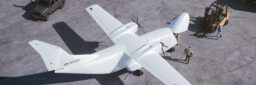
- Right now, the company is focused on air and ground systems, but they’re planning to venture into the maritime world in the near future.
- Scout AI has also developed a C2-based autonomous vehicle orchestrator called Ox, which ingests C2 sensor data and commander intent before relaying the data and instructions to swarms of multi-domain assets, each with onboard, independent AI agents that autonomously communicate and re-task.
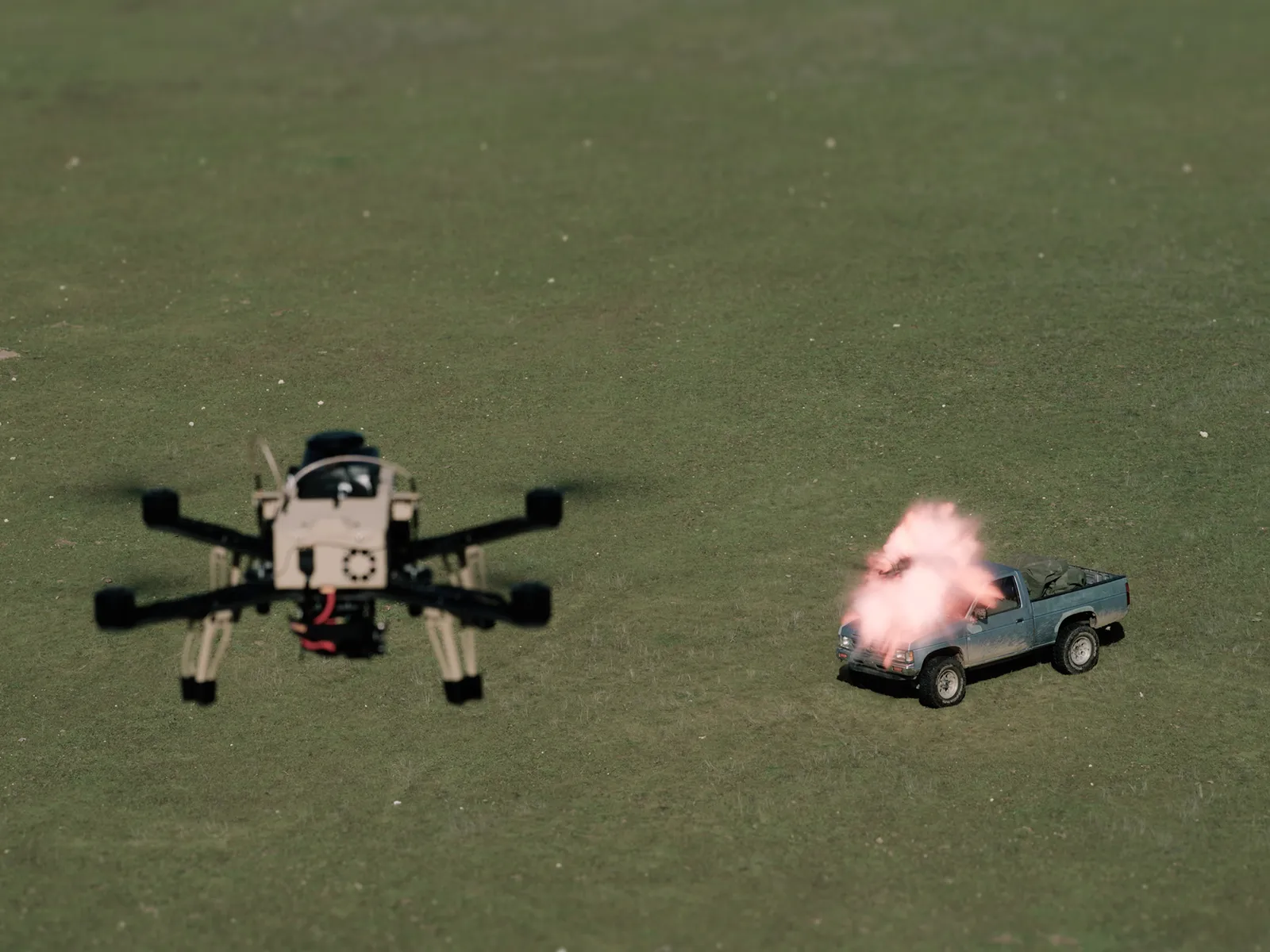
- Scout AI recently demoed a fully autonomous end-to-end strike mission based on a fairly basic prompt: “Fury Orchestrator, send 1 ground vehicle to checkpoint ALPHA. Execute a two-drone kinetic strike mission. Destroy the blue truck 500m East of the airfield and send confirmation.” As we said: sci-fi shit.
First mover: The reason Scout AI was able to secure that $100M Series A a year out of stealth is pretty much because no one else is doing this, at least for the use-cases they’re working on—and because it costs a lot of money to both train models for them and snap up the precious Silicon Valley AI research talent capable of doing so.
“It’s kind of crazy, but nobody’s doing this yet, and one of the reasons we raised such a big round is to solidify our first mover position in this space,” Adcock said. “What I mean by first mover is, even with LLMs, there’s this compounding effect of data: the more data that you throw at it, the smarter the system gets, and it’s the same with VLAs.”
“Today, we’re above where traditional players are in terms of capability, but we are going to be so far past that a year or two from now, when we have light years more data than we have today,” he added.
The project is ambitious and, in the words of Trae Stephens, companies are raising “kamikaze rounds” that may not pan out, but Adcock is confident that Scout AI is building the future of warfare the Pentagon is sprinting towards.
“You really need to believe two things: Do you believe that the future of warfare is unmanned, and do you believe that AI is an important part of unmanned warfare?” he said. “If those answers are yes, then the AI brain is probably the most scarce resource and most valuable asset on the battlefield, and we’re the ones that are developing that.”