Our friends over at Shield AI are having quite the start to the year.
Yesterday, the San Diego-based autonomy giant announced that it’s been tapped by the US Navy to compete for $800M in ISR services with its VTOL V-BAT drone.
AV—FKA AeroVironment—also announced that it had been selected to compete for the contractor-owned, contractor-operated (COCO) ISR initiative a few weeks back.
“V-BAT has delivered more operational outcomes than any other Group 3 VTOL UAS,” Shield AI Co-Founder and President Brandon Tseng said in a statement. “We aren’t just bringing the V-BAT product and service to the Navy; we’re bringing a world-class team with a wealth of operational experience and the ability to produce undeniable outcomes for our warfighters.”
Looks like the Tseng brothers and their team are already putting that sweet, sweet $2B to work.
Big ups: Shield AI needs no introduction ‘round these parts, so we’ll keep it quick.
- The company was founded back in 2015 by brothers Brandon and Ryan Tseng and since then has become one of the biggest players in the autonomy game.
- Their secret sauce is autonomy software called Hivemind, which both powers their drones and is sold as a standalone product. Hivemind was tapped as the brains for the Air Force’s CCA program earlier this year, and accounts for about half of Shield’s business.
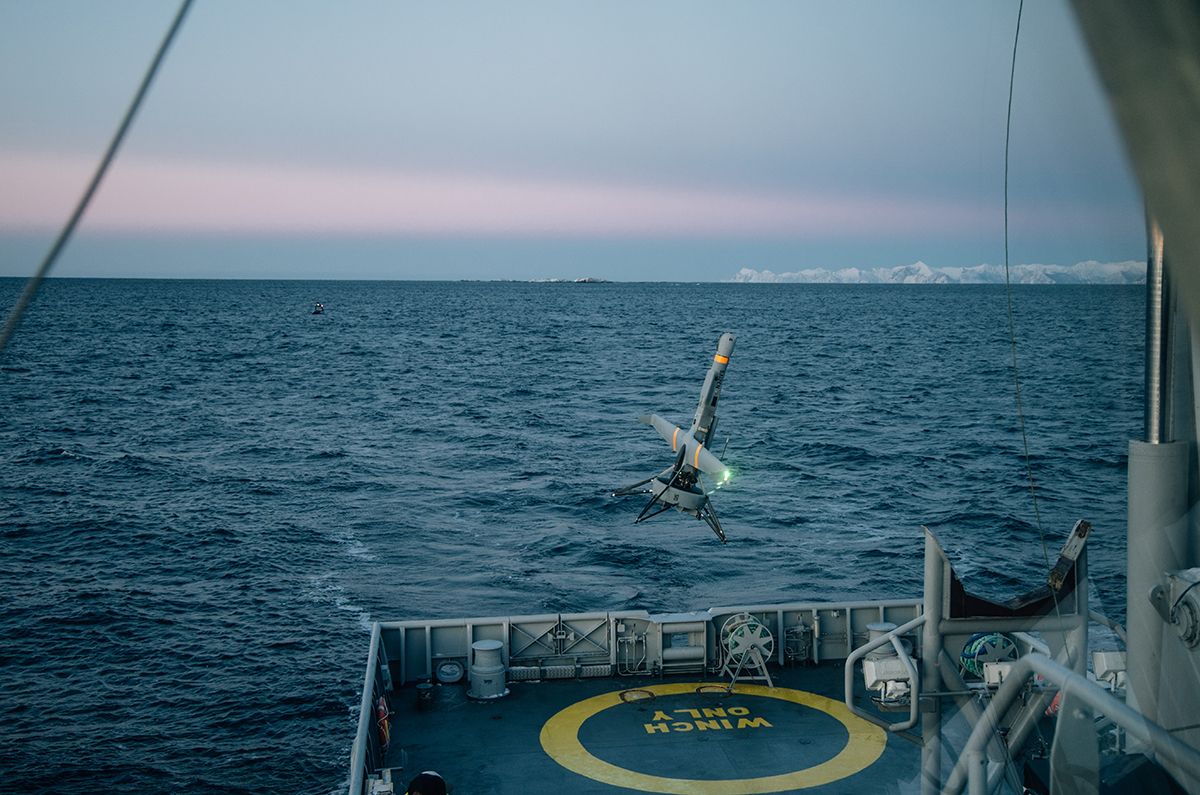
- Shield AI’s flagship drone is called V-BAT—that’s what’s been selected by the Navy for ISR. The nine-foot-tall VTOL drone has proved quite popular among US military customers (including the Coast Guard for drug seizures) and around the world, from Japan and India to Armenia.
- Late last year, they also announced they were building the X-BAT autonomous VTOL fighter jet (or mega-CCA), measuring 26 feet long with a 39-foot wingspan (and a $27M price tag). Think F-16, but make it a drone.
And they’ve raised a (technical term) shit ton of money to do all of this—they’ve raised a total of $3.16B (most recently that mega $2B Series G) at a $12.07B valuation.
Put me in Chanel: The program that Shield has been selected for is called COCO ISR (cute!), which (to put it simply) basically aims to upend the way the Navy does business.
Here’s how it works:
- Think of COCO ISR as SaaS—surveillance as a service.
- Basically, rather than the Navy buying (or building) ISR drones, sensors, or aircraft themselves, they’re buying the outcome—ISR feeds and mission data—from private contractors.
- The Navy defines a mission—say, monitor the Strait of Hormuz—and what exactly they need (like what kind of sensors can be used).
- Selected vendors—like Shield, AV, and other legacy providers—compete to provide ISR for that mission.
- The winning vendor then works with the Navy, providing everything from aircraft to maintenance to ground control and sometimes even data analytics.
Open relationship: The idea is that because the Navy doesn’t have to deal with annoying things like procurement and sustainment, it can get what it needs—ISR data—faster. Like, within weeks or months instead of years.
It also gives the Navy a lot of flexibility. Say Shield or AV isn’t living up to their promises—the Navy can always swap over to another vendor.
Dare we say that Silicon Valley logic might actually finally be making its way to a certain five-sided building?