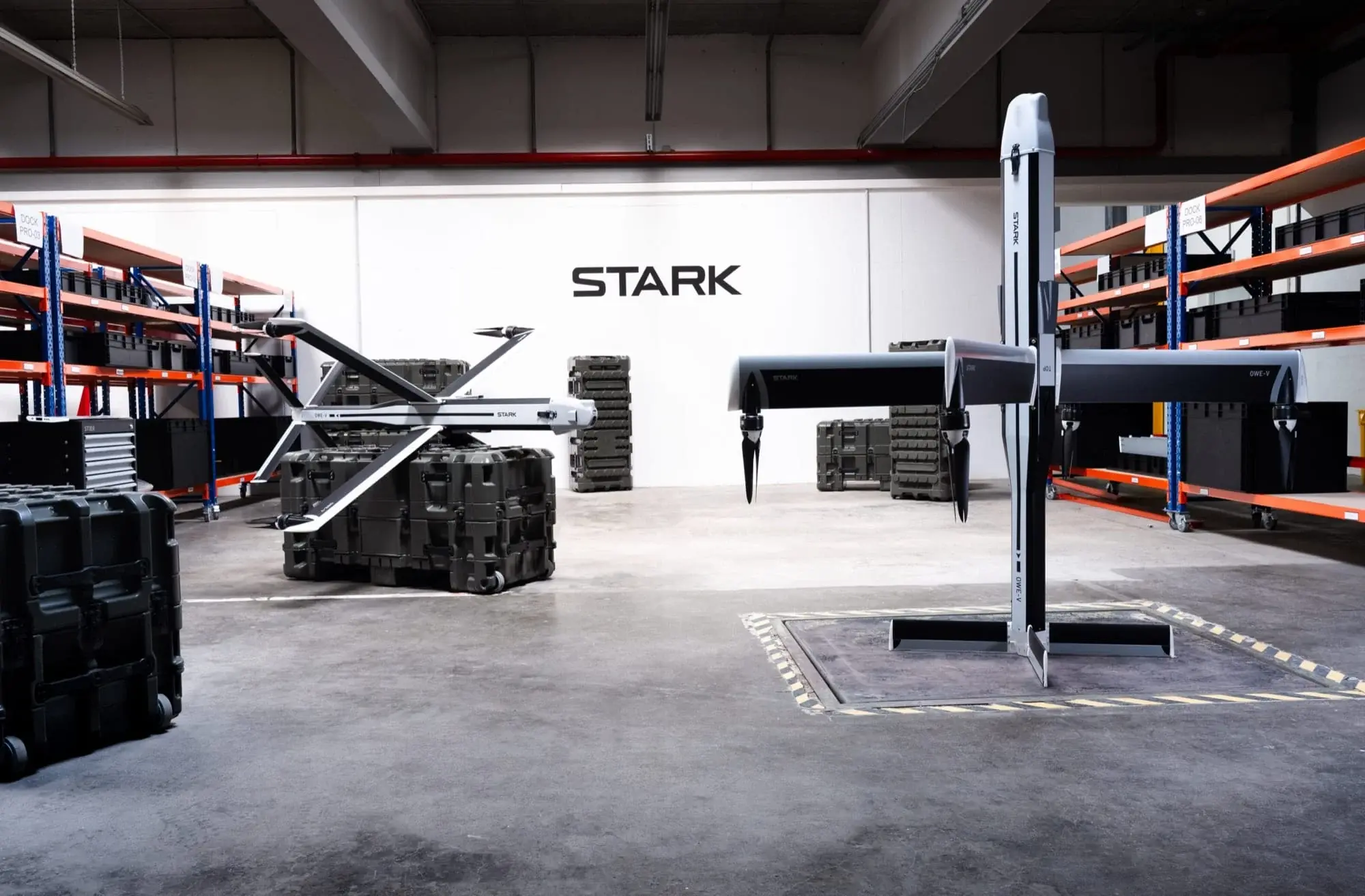
Well, it’s been quite the week for the German defense tech scene. Yesterday, the Financial Times reported that the country plans to award a whopping €900M contract for kamikaze drones to three homegrown producers: STARK, Helsing, and Rheinmetall.
Under the contract, according to the FT, each producer would supply the German military with about 12,000 drones for about €300M apiece. Helsing’s been tapped for its HX-2, STARK for its Virtus, and Rheinmetall for an armed drone called the FV-014, and the drones are expected to go to the newly activated German 45th Brigade in Lithuania.
The deals aren’t quite cemented yet—they still need to be approved by Germany’s parliamentary budget committee—but if they go through, they’d be the biggest contracts to date for the two startups.
Zeitenwende, indeed.
Alles gut: Philip Lockwood, Managing Director for STARK International, couldn’t confirm or deny that STARK had won one of the contracts when asked by Tectonic (Bundeswehr tings).
However, he said that there’s been a pretty clear shift in Germany’s willingness to buy new and fun drones, especially from nontraditional defense companies like his.
“It’s very clear from reports from Germany…that they intend to buy many, many thousands of unmanned systems of many different types and sizes, and loitering munitions play a key role in that,” he said.
Plus, he added, “Germany is very much reorganizing its defense forces, plugging capability gaps and looking to be the leading nation in Europe when it comes to its defense forces and the role that it plays for European security.” That means they’re going to need lots and lots of drones, and fast.
Pretty please: These rumored contracts come just days after Germany unveiled a whopping €377B ($440B) military procurement wishlist for 2026 and beyond. We covered that on Tuesday, so we won’t bore you with the details, but the high-level takeaway is that Germany wants a ton (like, a shit-ton) of new kit and serious numbers of drones.
- The list contains billions in tactical drones (especially Rheinmetall’s LUNA NG), hundreds of new ground vehicles, Diehl Defence-made missiles, IRIS-T air defense systems, munitions, and millions of rifle rounds.
- The country is pretty clearly putting a premium on the whole “made in Germany” thing—€182B in contracted projects are going to German firms. Lucky for Helsing and Stark.
- Earlier this month, Germany also announced a planned $11B investment in military drones.
Churn ‘em out: So, the Germans want drones. And they seem pretty serious about shelling out cash for them. But are companies like STARK really ready to pump out tens of thousands of strike drones, like, right now?
Put simply: no. To sprinkle in a bit more nuance: no, but STARK is building up its manufacturing capacity fast so it can.
“STARK cannot build 12,000 drones today,” Lockwood said. “The intent and the aim, however, is that…once we get into 2026, STARK will have the capacity to produce 1000s of drones over the course of next year.”
He added that the company is building up its manufacturing capacity—including in Swindon, in the UK—in order to meet this goal. But getting to Ukraine-levels of drone production, he said, requires both manufacturing capacity and a supply chain that is ready to meet the surge.
“Right now, [STARK is] ramping up the various components and sub-components [suppliers] and making sure that they have their long-tail supply chain in order,” he said. Announcements like those out of Germany this week make that ramp-up a whole lot easier, he added. If suppliers and companies like STARK know that there’s a market and customer for what they’re building, they’re going to be a lot more willing to build out manufacturing capacity.
“If we don’t have announcements from major countries like Germany or Poland, the UK or France, or Italy…of purchases of systems in the serious thousands or tens of thousands, then there’s nothing that’s going to incentivize that supply chain,” he said.
Elephant in the room: It’s worth noting that both Helsing and Stark have had some reported issues with their drones.
- Back in April, Bloomberg reported that Helsing’s HF-1 drones and Altra software were having trouble on the battlefield in Ukraine. Users said the software was glitchy, and that the attack drones were “criticized by frontline soldiers and military experts as significantly more expensive and not as effective as comparable products.”
- In an article out earlier today, the FT reported that STARK’s Virtus drones “failed to hit a single target” during two exercises with the British and German militaries in recent months. For what it’s worth, Helsing’s newer HX-2 drone apparently did pretty well.
Lockwood, for his part, said that he disagreed with the way the article presented the poor performance in exercises as failure. He said that experimentation is part of building something new, and that sometimes, well, experiments don’t work.
“If [failed trials] aren’t happening to you, either you’ve just brought an older variant, you’re not pushing the limit enough, or you’ve really lucked out. Or sometimes the variant’s good, but you’re going to need to update it for the next time,” he said. These exercises are chances to try out new things, he added.
But really, why didn’t the drones work as intended? Lockwood said it had to do with a bit of a hardware and software update timeline mismatch.
“Hardware development [happens in] roughly three-month cycles. Software development [has] roughly two-week cycles in terms of the innovative feedback loops,” he said. “Those timelines don’t always match up and link up. Sometimes that causes challenges. That’s the biggest thing that we faced.”